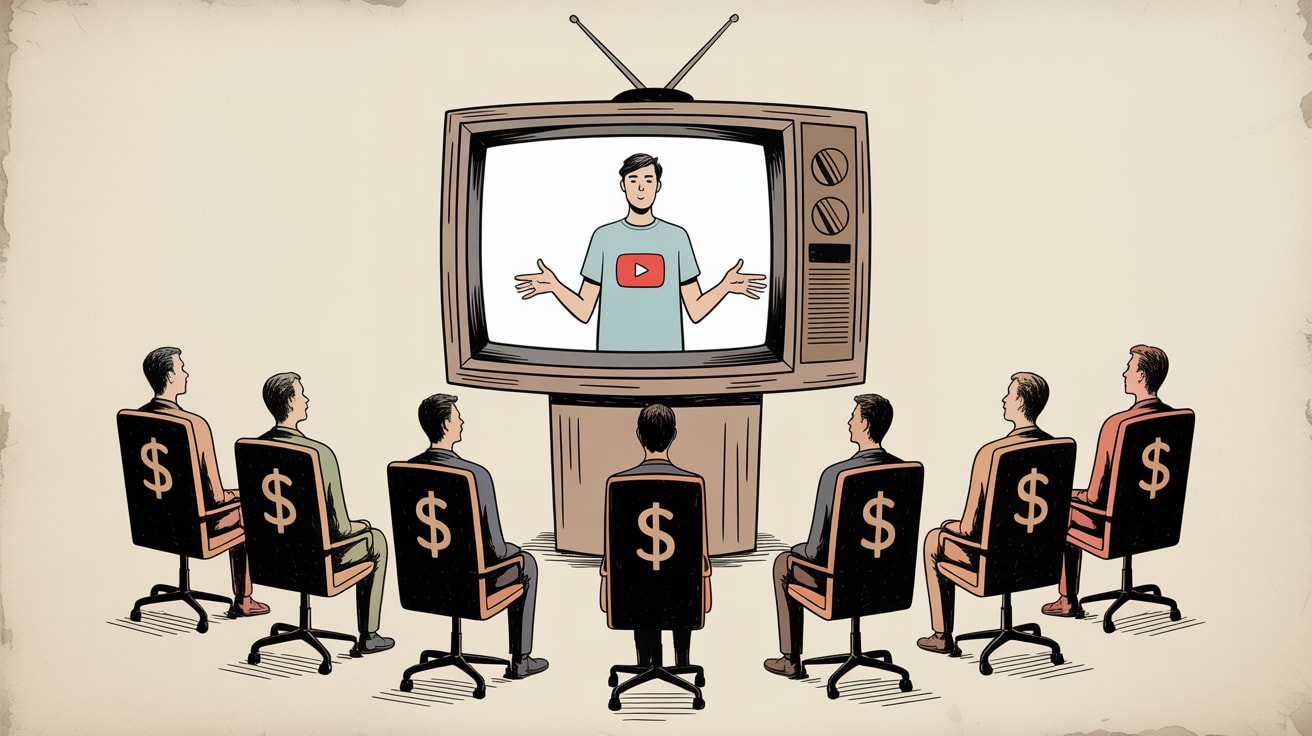
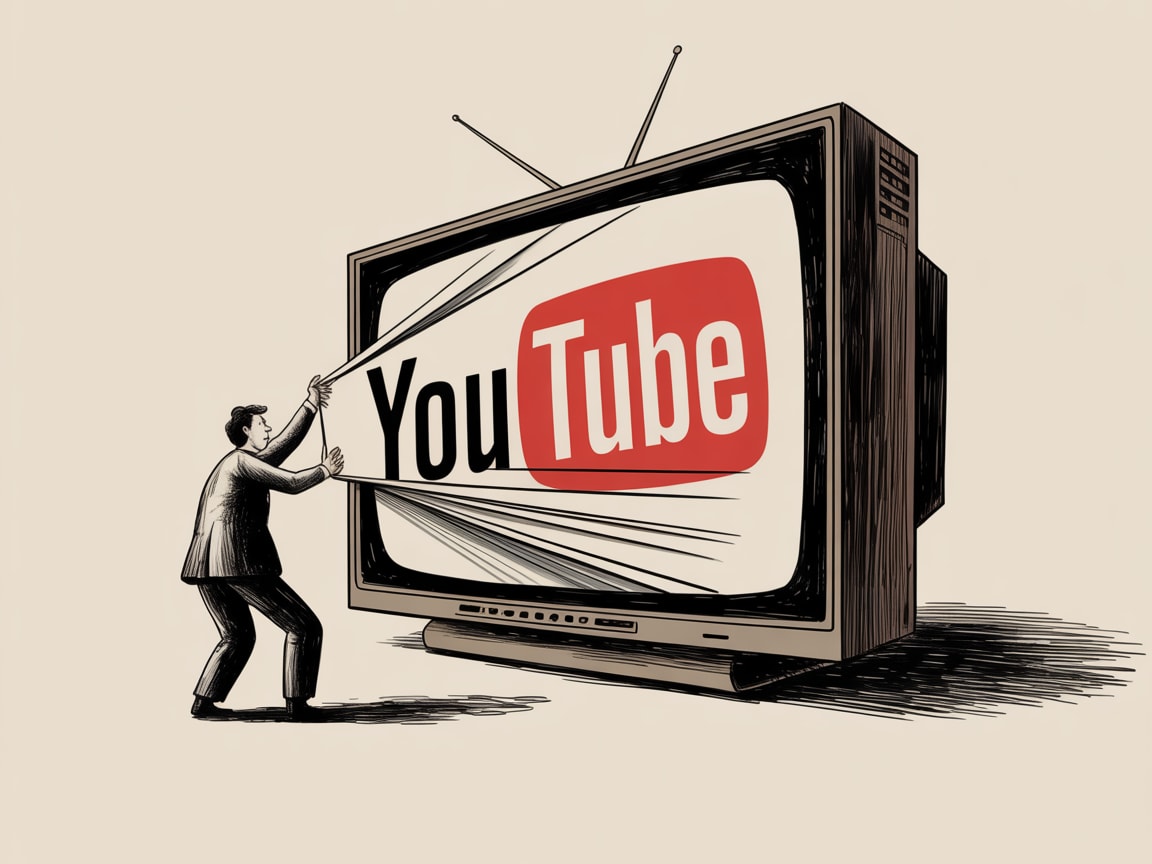
YouTube is pitching brands on TV-level reach, but leaning on creators to make that case undermines the authenticity that makes YouTube worth buying.
YouTube reaches more adults on connected TVs in the US than any individual cable network. That number is real, it is auditable, and it is exactly the kind of thing a media buyer can put in a deck without flinching. So why, at its annual upfront pitch, does YouTube keep wheeling out creators to do the convincing?
AdExchanger’s Alyssa Boyle put her finger on the tension neatly: platforms have always used talent to warm up buyers — the traditional TV upfront is essentially a variety show with a media kit attached. But YouTube has spent years positioning creator authenticity as its structural advantage over broadcast. The moment it borrows the peacocking conventions of the medium it is trying to displace, it invites a fair question: if YouTube is just TV with better data, why is the CPM conversation still so complicated?
The Authenticity Trap YouTube Built for Itself
YouTube’s competitive differentiation was never reach — broadcasters had reach. It was the parasocial intimacy between creators and audiences, the sense that the endorsement was real rather than contractual. That positioning worked spectacularly for direct-response advertisers and mid-funnel brand plays. It is less comfortable when YouTube is trying to justify brand-safe, top-of-funnel budgets that have historically lived on network TV.
The problem is that using creators to validate the platform’s TV credentials quietly undermines that same authenticity argument. If MrBeast on a upfront stage is interchangeable with a network star on a network stage, the differentiation evaporates. Brands in Southeast Asia are already navigating this ambiguity: KOL-driven campaigns on YouTube Thailand or the Philippines work precisely because the creator feels independent. The moment the creator is visibly part of a platform’s sales apparatus, that independence — and the trust that comes with it — gets murkier.
What the Data Actually Justifies
Here is where YouTube has a stronger case than its showmanship suggests. Connected TV viewing on YouTube across Southeast Asia has grown sharply as smart TV penetration rises in markets like Vietnam, Thailand, and Indonesia. Nielsen-equivalent measurement through third-party integrations is increasingly viable. Programmatic access to YouTube inventory through Google’s DV360 gives media teams the targeting precision that linear TV simply cannot match — household income proxies, intent signals, remarketing against first-party CRM lists.
That is a compelling stack. It does not need a creator cameo to land. What it needs is cleaner measurement commitments and more transparent brand-safety reporting — two things that tend to get overshadowed when the conversation pivots to influencer energy and platform buzz.
For MarTech teams evaluating YouTube as a CTV buy rather than a social buy, the practical shift is significant: you are now thinking about frequency capping across screens, reach curve modelling, and share-of-voice against streaming competitors — not engagement rates and comment sentiment.
The Omnicom Bernbach Move Is a Useful Mirror
Almost simultaneously, Omnicom announced Bernbach — a dedicated global agency built exclusively for Volkswagen, named after the creative legend who gave VW its “Think Small” identity. The symmetry with the YouTube conversation is not accidental.
Omnicom is essentially making the same bet YouTube is making: that unified, integrated talent deployed under a single coherent structure outperforms the assembled-coalition model. “Best-of-Omnicom” is the holding group equivalent of YouTube’s “best-of-creator-ecosystem” pitch. Both are arguing that curation beats fragmentation.
The difference is that Bernbach has a clear accountability structure — one client, one P&L, measurable outcomes tied to Volkswagen’s commercial performance. YouTube’s creator showcase has no equivalent discipline. Creators are independent businesses with their own brand considerations. Their presence at an upfront does not translate into guaranteed inventory, consistent brand safety, or predictable pricing.
For brand leaders watching both moves, the lesson is structural: integration promises only hold when they are backed by contractual clarity and shared measurement. A bespoke agency model delivers that. A talent parade at an upfront event does not.
What Buyers Should Actually Be Asking
If you are a media director in Southeast Asia evaluating YouTube’s CTV proposition for a 2026 brand campaign, the creator showcase should not be the deciding variable — in either direction. The questions that actually matter:
Measurement: Can YouTube provide brand-lift studies calibrated to your specific market, not US-panel benchmarks? For markets like Indonesia where third-party measurement infrastructure is thinner, what is the fallback methodology?
Inventory quality: What proportion of your buy will run in-stream on content with verified viewership versus on the long tail of low-quality uploads? YouTube’s brand-safety controls have improved, but the default settings are not always conservative enough for regulated categories like financial services or alcohol in markets with specific advertising codes.
Cross-platform frequency: If your audience is also exposed to your brand on TikTok, Meta, and LINE, how does YouTube’s measurement system deduplicate reach? Most MarTech stacks in the region are not yet wired to give you a clean answer to that question without custom integration work.
These are the conversations that justify a media investment. A creator’s enthusiasm for the platform they are paid to create on is not.
YouTube’s TV ambitions are commercially rational and arguably correct. The viewing behaviour data supports the repositioning. But the platform needs to decide whether it is selling authenticity or selling reach — because the upfront strategy is currently trying to sell both, and the combination is making neither argument as clearly as it should.
As more Southeast Asian advertisers shift upper-funnel budgets toward streaming environments, the platforms that win will be the ones that lead with rigorous measurement frameworks rather than talent showcases. The question is whether YouTube gets there before its more disciplined streaming competitors do.
At grzzly, we work with brand and media teams across Southeast Asia who are trying to make exactly these calls — figuring out where YouTube, Meta, and programmatic CTV actually belong in a regional media mix, and how to hold platforms accountable once the upfront energy fades. If you are rebuilding your 2026 video strategy and want a second opinion from people who have seen what actually converts in this market, Let’s talk.
Sources

Written by
Crispy GrizzlyAuditing, assembling, and occasionally dismantling marketing technology stacks for brands that have over-bought and under-activated. Precision over proliferation.