
K-means is costing your CDP its edge. Here's why spectral clustering reveals customer segments your current model can't see — and what to do about it.
Most CDPs in production today are running segmentation logic that was architected for a simpler customer. K-means clustering — the default workhorse behind most “intelligent” audience builders — assumes your customers arrange themselves into neat, spherical blobs in feature space. They don’t. They never did.
The result: campaigns targeting segments that look clean on a dashboard but perform raggedly in market. If your CRM is sitting on two years of unified behavioural, transactional, and declared data and your open rates still feel like a coin flip, the problem may not be your creative. It may be your clustering algorithm.
Why K-Means Fails the Unified Profile Test
K-means works by minimising the distance between data points and their assigned cluster centroid. That’s elegant — and deeply limiting. When customer relationships involve non-linear affinities (a Grab superuser who shops Shopee weekly but only converts on LINE flash deals, for instance), Euclidean distance measures miss the structural connections entirely.
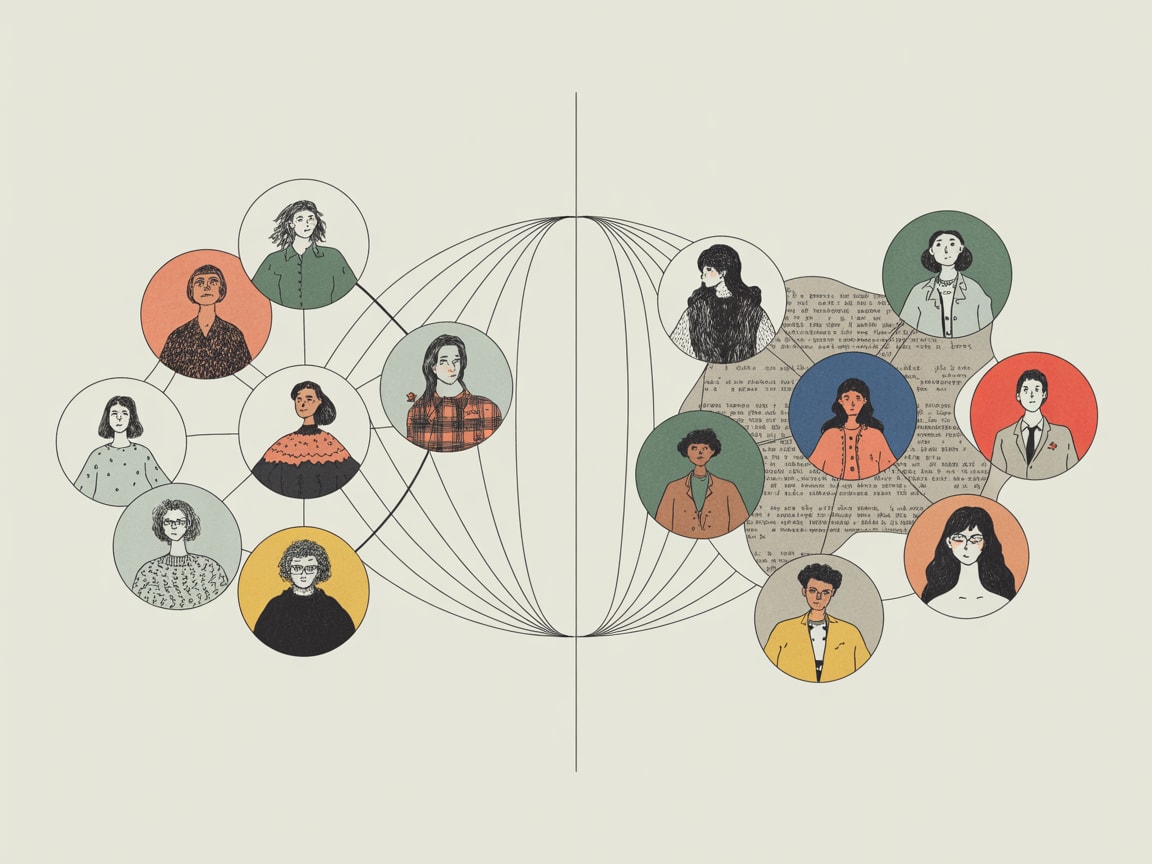
Spectral clustering, as Towards Data Science recently detailed in Rukshan Pramoditha’s breakdown of the method, takes a fundamentally different approach. Rather than working directly in feature space, it constructs a similarity graph from your data — mapping relationships between customers — then applies eigenvector decomposition to that graph to find natural groupings. The result is an algorithm that can identify clusters of any shape, including the concentric rings and interleaved arcs that regularly appear in real behavioural data.
For a CDP housing blended transactional and behavioural signals, this matters enormously. Customers who share similar purchase cadences but come from entirely different browse-path topologies will be separated correctly by spectral methods — and lumped together by K-means.
The Infrastructure Cost Conversation
The honest objection: spectral clustering is computationally heavier. Building and decomposing a similarity graph across millions of unified profiles is not a weekend cron job. This is where recent progress in vector search infrastructure becomes directly relevant.
Towards Data Science’s Oleg Tereshin documented how pairing Matryoshka Representation Learning (MRL) with int8 and binary quantization can reduce vector search infrastructure costs by up to 80% — while preserving retrieval accuracy above acceptable thresholds. The mechanism is conceptually transferable: rather than storing and comparing full-resolution embeddings of customer profiles, you work with compressed representations that retain the structural relationships needed for spectral analysis.
For SEA markets specifically — where cloud infrastructure costs are a real constraint for regional marketing teams operating on shared tech budgets across five or six country units — this cost profile changes the calculus. An 80% reduction in vector infrastructure spend can make spectral clustering operationally viable for audience sizes that would have been prohibitive twelve months ago.
What This Means for Activation, Not Just Analysis
Segmentation that lives in a data warehouse is wallpaper. The question is always: does this translate into better activation?
Spectral clusters tend to produce more coherent behavioural subgroups — meaning the people inside a given segment genuinely share interaction patterns, not just demographic proxies. When you push those segments downstream to Lazada Sponsored Discovery, LINE OA broadcast targeting, or Shopee Ads audience uploads, you are working with groups whose next likely action is structurally similar. That is the condition under which personalisation actually performs.
Implementation caveat worth being straight about: spectral clustering requires you to specify the number of clusters in advance (much like K-means), and the similarity graph construction requires decisions about how you define “nearness” between customer profiles. Get the affinity function wrong and your eigenvectors will faithfully reveal the wrong structure. This is not a plug-and-play upgrade — it requires a data scientist who understands both the algorithm and the business logic embedded in your unified profile schema.
The practical path for most teams: run spectral clustering as a challenger segmentation against your existing K-means baseline on a high-value audience (lapsed purchasers, cross-category browsers), measure downstream activation performance over 60 days, and let the numbers arbitrate.
Reframing the CDP Licence Fee Argument
CDP vendors consistently sell on data unification — the promise that stitching together your behavioural, transactional, and declared data creates a profile more valuable than the sum of its parts. That promise is only redeemable if your downstream analytics can actually exploit the complexity of a unified profile.
K-means cannot. It will take your beautifully architected unified customer record and flatten it into segments that could have been produced from a single data source. Spectral clustering — particularly as infrastructure costs become manageable through quantization approaches — is the analytical layer that lets the unified profile earn its full value.
For marketing directors evaluating CDP renewals or vendor pitches in 2026: ask your platform what clustering methods are available beyond K-means, and whether they support custom similarity functions. If the answer is vague, that is useful information about how seriously they take the activation layer.
Key Takeaways
- Spectral clustering identifies non-linear customer segments by analysing relationship graphs rather than feature-space distances — making it structurally better suited to unified CDP profiles than K-means.
- Quantization techniques like MRL with int8 compression can reduce the infrastructure cost of similarity-based clustering by up to 80%, making it viable at SEA-scale audience sizes.
- Treat spectral segmentation as a 60-day challenger test against your existing baseline on a high-value audience before committing to a full migration — the algorithm requires tuning that is specific to your data schema.
The deeper question worth sitting with: if your CDP’s segmentation logic hasn’t evolved since the platform was implemented, how much of your “data-driven” personalisation is actually being driven by data — and how much is being driven by the assumptions baked into an algorithm nobody has questioned in three years?
Sources

Written by
Velvet GrizzlyArchitecting the unified customer profile — stitching together behavioural, transactional, and declared data into platforms that actually earn their licence fee.