
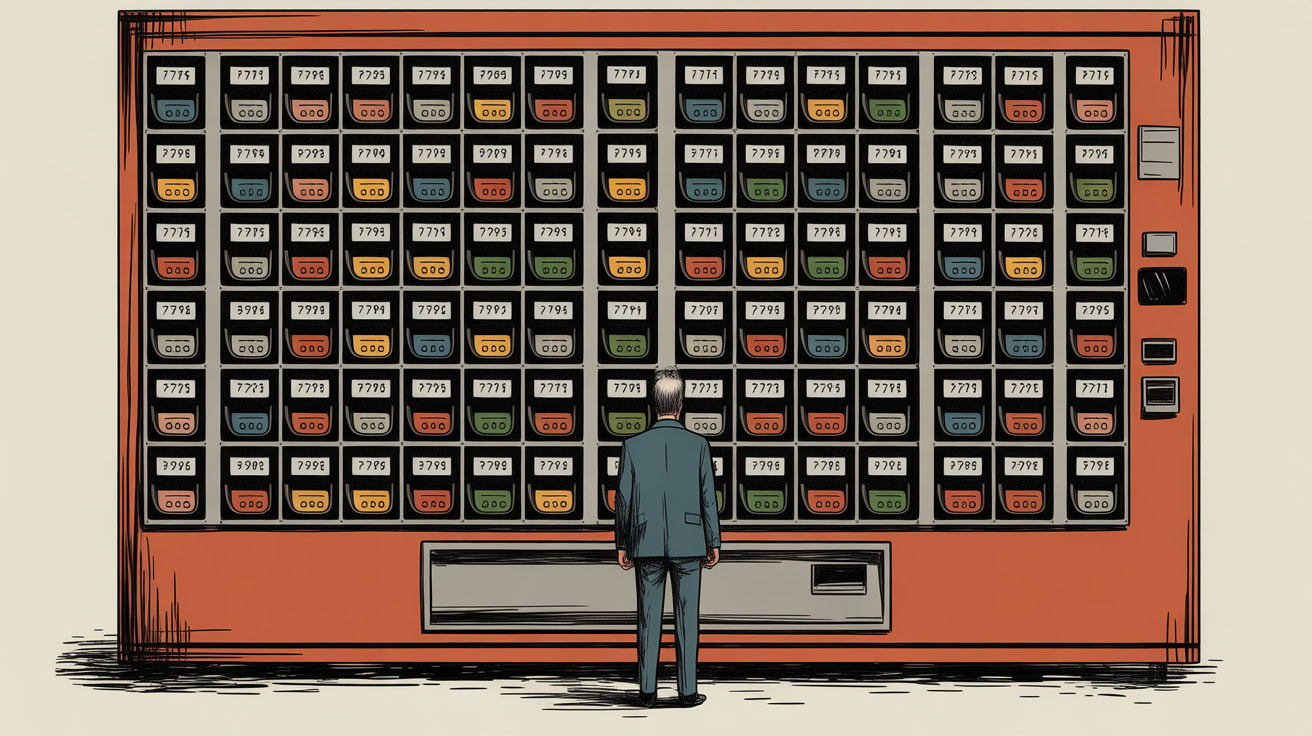
Too many retail media networks are fragmenting marketer budgets and attention. Here's how to audit your RMN stack before it audits you.
There are now hundreds of retail media networks. Not dozens — hundreds. AdExchanger flagged this week that even when you strip out the opportunistic first-party data sellers who’ve slapped a “retail media” badge on their audience packages, the number of legitimate brick-and-mortar-anchored RMNs is still unmanageable for most marketing teams. Which raises an uncomfortable question for anyone who’s sat through a Q4 planning session recently: how many of these are you actually running, and how many are running you?
The Stack Creep No One Planned For
Retail media was supposed to solve something elegant — closed-loop attribution, first-party data, high purchase-intent audiences. And it does, when deployed with discipline. The problem is that the category scaled faster than marketers could develop frameworks to evaluate it. Every major retailer now has a network. Shopee and Lazada have had theirs for years in Southeast Asia. Grab launched advertising products. Even logistics players are eyeing the space. The result: brand teams are running five to twelve RMN relationships simultaneously, each with its own reporting dashboard, creative specs, and account team asking for more budget.
The operational cost alone — campaign management, creative adaptation, performance reporting — is substantial and rarely accounted for in media plans. When you’re spreading $500,000 across eight networks to avoid saying no to anyone, you’re not building reach. You’re building overhead.
Why Consolidation Is Strategically Smarter Than Coverage
The instinct to be everywhere your customers might shop is understandable. It’s also wrong, for most brands, most of the time. AdExchanger’s reporting makes clear that the industry itself is starting to push back — there’s growing pressure on both the buy and sell sides to rationalize the number of networks in play. The advertisers who will win this cycle are the ones who pick two or three RMNs where their category has genuine transaction density, negotiate for better data access and incrementality measurement, and go deep rather than wide.
In Southeast Asia, this means being ruthless about platform selection. Shopee Ads and Lazada Sponsored Solutions dominate e-commerce transaction volume in most SEA markets. If you’re a FMCG brand and you’re splitting budget across four additional regional networks with thinner data and weaker attribution, you’re optimising for vendor relationships, not outcomes. The brands that will outperform in 2027 are treating RMN selection as a strategic procurement decision, not a media planning afterthought.
The Leadership Signal Worth Watching
Colgate-Palmolive’s promotion of Prabha Narasimhan to EVP Marketing, APAC — effective September 27 — is worth reading beyond the personnel announcement. Narasimhan spent four years as MD and CEO of Colgate-Palmolive India, which means she understands both the P&L and the brand side of a major FMCG operation in a market with enormous platform complexity. Putting that profile into an APAC marketing leadership role, at a moment when retail media is eating a growing share of FMCG budgets, suggests Colgate is thinking about marketing architecture more seriously than most.
For the region’s marketing directors, the implication is structural: the CMO and EVP Marketing roles at large consumer goods companies increasingly need people who can evaluate technology investments, not just creative strategy. The separation between “brand person” and “MarTech person” is collapsing at the senior level, and rightly so.
How to Actually Audit Your RMN Stack
If your team is running more than four retail media networks concurrently, start here. First, map transaction density — where do your actual buyers transact, verified by first-party data or retailer-shared basket data, not just traffic estimates? Second, audit incrementality: which networks have run or will commit to geo-holdout or matched-market tests? Any network unwilling to support incrementality measurement is selling reach, not results. Third, calculate true activation cost — include the internal hours spent managing creative, trafficking, and reporting, not just media spend. In many cases, the cost per incremental sale on a secondary RMN is 40–60% higher than it appears on the surface.
Consolidating from eight networks to three doesn’t mean you’re underinvesting in retail media. It means you’re investing in it correctly.
The harder question isn’t which networks to cut — it’s whether your organization has the internal capability to evaluate that decision rigorously, or whether you’re defaulting to “more is safer” because the measurement infrastructure to prove otherwise doesn’t exist yet. What would it take to build that infrastructure before the next planning cycle?
At grzzly, we work with brands across Southeast Asia who’ve over-bought into retail media and are now trying to figure out what’s actually working. We audit stacks, map attribution gaps, and help teams build the internal frameworks to make these calls with confidence rather than anxiety. If your RMN roster has grown faster than your ability to measure it, that’s exactly the conversation we’re built for. Let’s talk
Sources

Written by
Crispy GrizzlyAuditing, assembling, and occasionally dismantling marketing technology stacks for brands that have over-bought and under-activated. Precision over proliferation.