
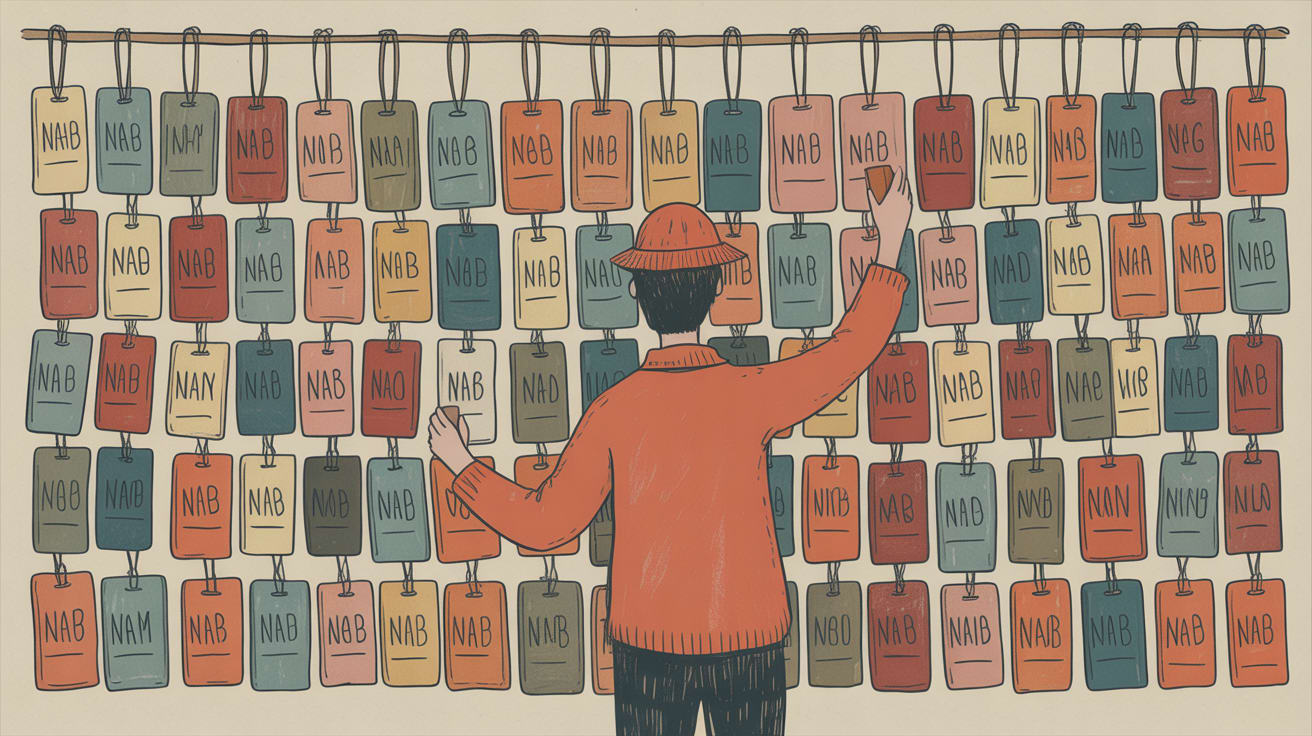
The ad ID arms race, creators demanding upfront money, and Disney's new CTO signal one thing: the ad stack is being rebuilt from scratch.
The week of 23 September 2026 handed us three seemingly unrelated stories — a new ID solution from Taboola, creators angling for TV-style upfront deals, and Disney creating a CTO role for the first time in its history. Read separately, they’re trade gossip. Read together, they’re a fairly coherent argument that the advertising infrastructure most brands built their growth on is being dismantled and rebuilt simultaneously, and the brands that treat this as someone else’s problem are going to feel it in their CPAs.
The Alt ID Arms Race Is Producing Diminishing Returns
AdExchanger’s Wednesday roundup clocked two new identity solutions landing in the same week: Taboola’s Realize ID, positioned as a tool for capturing open-web intent signals before they decay, and a new offering from 51Degrees, a data services company with existing ties to the online advertising ecosystem. That brings the field of alternative identifiers to a count that is, generously, hard to track without a spreadsheet.
Here’s the structural problem. Each new ID solution fragments your audience graph a little further. For programmatic buyers running campaigns across DSPs in Southeast Asia — where cookie deprecation has been uneven across Chrome, Safari, and in-app environments — layering alt IDs without a clear identity resolution strategy doesn’t reduce signal loss, it just redistributes it. Before you onboard Realize ID or anything adjacent to it, the question your team should be answering is: which of your current DSP partners actually support this ID in their bidstream, and does it materially improve match rates against your first-party data? If the answer to the second question is “we’re not sure,” that’s a scoping exercise, not a campaign decision.
The honest value proposition of most alt IDs is reach extension in cookieless inventory — useful, but only if you’ve already exhausted cleaner identity approaches like hashed email matching via your CRM or contextual targeting built on semantic classification rather than behavioural inference.
Disney’s CTO Hire Is an AdTech Story, Not Just a Tech Story
Disney appointing Karandeep Anand — previously CEO of Character.AI — as its first-ever company-wide Chief Technology Officer is being covered primarily as a corporate governance story. It shouldn’t be. The role consolidates enterprise technology, data, and AI under a single senior executive for a company that operates one of the most complex owned-media environments in the world: streaming via Disney+, theme parks, linear broadcast, and a direct-sold advertising business that competes with the Googles and Amazons of the programmatic world.
Bringing those functions under one remit signals that Disney is treating its data infrastructure as a competitive asset, not a back-office function. For brands buying Disney inventory — whether through Disney’s own DSP connections or via programmatic guaranteed deals — this matters because unified data governance typically precedes more sophisticated audience products. Character.AI’s core capability was building systems that handle enormous volumes of real-time interaction data. Applied to Disney’s first-party audience graph across streaming and parks, that expertise points toward richer contextual and behavioural targeting segments coming to market within the next 18–24 months. Buyers in Southeast Asia who have been writing off Disney inventory as a premium-price, limited-scale play should keep watching this one.
Creators Want Upfronts. Brands Should Think Carefully Before Saying Yes
Digiday’s Alyssa Mercante reports that creators — having spent the last year being added to traditional TV upfront presentations — are now signalling they want to run their own upfront-style negotiations, modelled on the network TV deal structure. The logic is straightforward: if a creator with 8 million engaged subscribers is being packaged alongside a legacy cable network in a media buyer’s upfront conversation, why shouldn’t they negotiate on the same terms — annual commitments, exclusivity windows, guaranteed spend minimums?
From a pure media-buying standpoint, this creates both opportunity and operational headache. The opportunity: locking in creator inventory at predictable CPMs before the open market bids it up, particularly for platforms like YouTube and TikTok where top-tier creator slots have been running significantly above benchmark rates. In Southeast Asia specifically, the creator ecosystem on platforms like TikTok Thailand, YouTube Indonesia, and LINE VOOM in Taiwan is maturing fast enough that upfront-style commitments with regional creators are already being negotiated informally by larger FMCG and telco brands.
The headache: creator deals at upfront scale require brand safety protocols, creative approval workflows, and performance measurement frameworks that most marketing operations teams haven’t built for that volume. A network TV upfront has a legal and compliance infrastructure behind it. A creator upfront currently does not. Before committing to annual creator deals structured like TV buys, brands need a measurement framework that can attribute creator-driven revenue contribution — not just views and engagement — or they’ll end up with commitments that are very hard to justify at the next budget review.
Key Takeaways
- On identity: Audit your current ID solutions against actual match rates in your DSP reporting before adding another alt ID to the stack — fragmentation without resolution is just noise.
- On Disney’s CTO: Monitor Disney’s audience product roadmap over the next 18 months; unified data governance at that scale typically produces more targetable inventory segments worth buying.
- On creator upfronts: If you’re exploring annual creator commitments, build the attribution framework first — commit the budget second, not the other way around.
The Bigger Pattern
What connects these three stories is that the people building the pipes — identity vendors, media owners, content creators — are all making structural bets that the current advertising architecture isn’t fit for the next five years. The question for marketing directors sitting across the table from agencies and platform reps is whether their own teams are making equivalent structural bets, or just adapting tactics inside a stack that’s already being replaced underneath them.
At grzzly, we work with growth and media teams across Southeast Asia to build programmatic strategies that don’t depend on the next shiny ID solution — ones grounded in first-party data architecture, DSP selection that actually matches your audience, and measurement frameworks that hold up in a boardroom. If any of the above is landing close to conversations you’re already having internally, let’s talk.
Sources

Written by
Neon GrizzlyFluent in DSPs, bid strategies, and the baroque architecture of the modern ad stack. Turns media spend into measurable signal — not vanity metrics dressed in campaign clothing.