
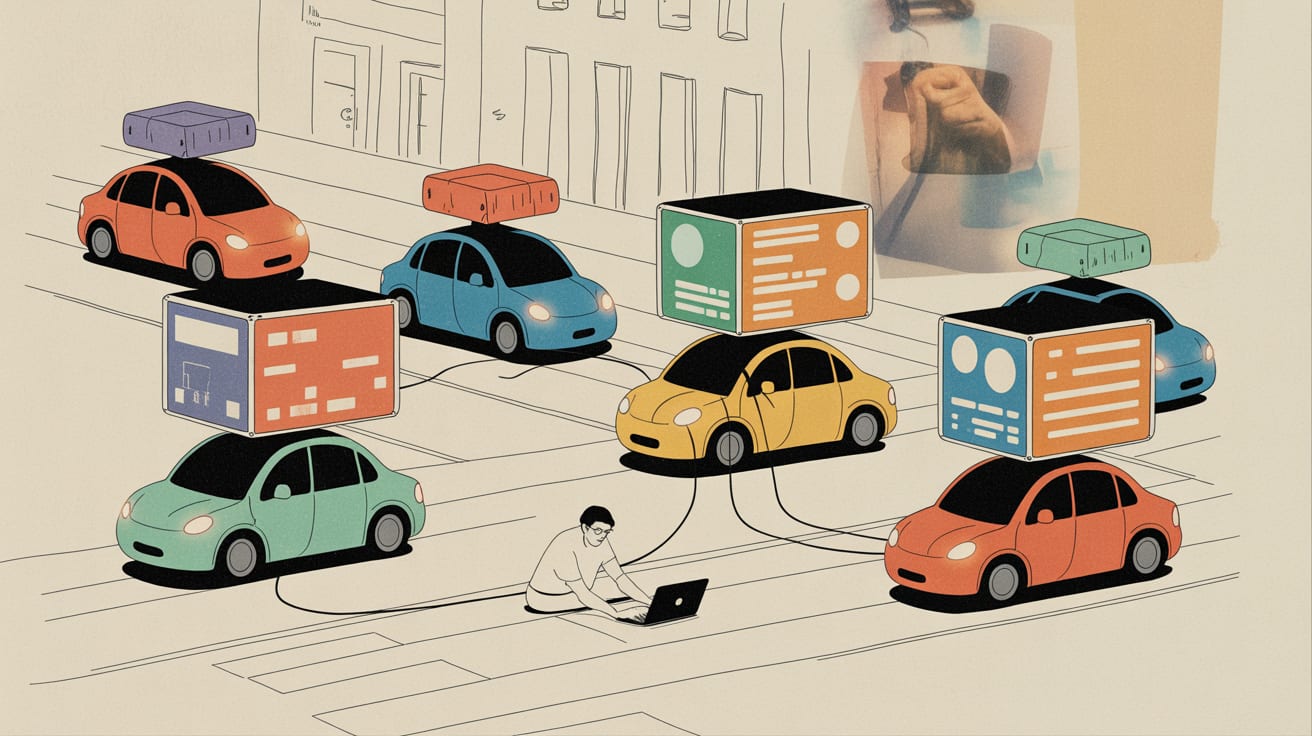
Driverless advertising is moving from sci-fi to media plan. Here's what MarTech teams need to know before the inventory arrives.
Waymo started as a curiosity. City-by-city, permit-by-permit, it inched toward scale while the ad industry watched politely from a distance. That distance is closing fast — and most MarTech stacks are not ready for what’s coming through the windshield.
AdExchanger’s recent roundup framed it plainly: robotaxis have moved from futuristic talking point to genuine critical mass. The inventory implications for brands — particularly those already navigating the complexity of DOOH, retail media, and programmatic — are significant enough to warrant a seat at the planning table now, not after the first upfront.
Driverless Advertising Is a New Channel, Not a New Format
The instinct will be to treat in-vehicle advertising as ambient DOOH — a screen, a CPM, a creative asset. That instinct is wrong, and acting on it will produce the same mediocre results brands get when they repurpose TV spots for TikTok.
Robotaxi advertising is fundamentally a contextual, dwell-time-rich, first-party-data environment. Passengers are captive but not passive — they’re navigating, paying, sometimes working. Waymo’s own early data suggests average ride durations of 18–25 minutes in urban deployments, which dwarfs the 6-second pre-roll brands have been optimising for. The creative and measurement frameworks need to be rebuilt from scratch, not retrofitted.
For MarTech teams, the immediate question is integration: which DSPs will have robotaxi inventory, under what auction mechanics, and how does it connect to existing audience segments? The brands that answer this early — before the inventory is commoditised — will own the learning curve.
The Walmart Payment Signal Nobody’s Reading Correctly
On the surface, Walmart finally accepting Apple Pay and Google Pay at select stores and Sam’s Club locations is a retail convenience story. Beneath it sits a significant data plumbing shift that MarTech strategists should not ignore.
Contactless payment adoption accelerates closed-loop measurement. When Walmart connects NFC transaction data to its existing Walmart Connect retail media platform, the attribution chain between ad exposure and purchase tightens considerably. For brands running campaigns on Walmart’s media network, this is a meaningful upgrade to measurement fidelity — particularly for CPG advertisers who’ve long had to rely on panel-based sales lift proxies.
In Southeast Asia, this pattern is already well-established. Grab’s superapp model has linked payment, delivery, and advertising data for years — which is partly why GrabAds can offer purchase-verified attribution that most Western retail media networks are only now approaching. Walmart’s move is a catch-up play, but it signals that closed-loop retail media is becoming the baseline expectation, not a premium differentiator.
What This Means for Your MarTech Stack Right Now
Two emerging channels. Two different timelines. One common problem: most brand MarTech stacks were assembled to handle channels that already existed, not ones arriving in the next 18 months.
The typical mid-market brand stack in Southeast Asia carries 12–18 active tools, of which roughly 40% are underactivated — bought for capability, deployed for habit. Adding robotaxi inventory or tightening retail media measurement into that environment without a clear integration strategy doesn’t expand capability; it adds noise.
The practical first step is an activation audit, not a procurement conversation. Before any brand engages with new inventory types — in-vehicle, retail media, whatever emerges next — the honest question is whether existing tools are producing the outcomes they were bought to produce. If a CDP isn’t feeding clean segments into your DSP, robotaxi impressions won’t fix that. They’ll just make the waste more expensive.
For teams that do have clean pipes, the strategic priority is establishing contextual signal frameworks now. In-vehicle environments will reward brands with strong location-aware, intent-adjacent creative logic — the same discipline that separates effective Grab Ads from generic banner recycling. Build that muscle before the inventory arrives, not after.
Strategy Hires Signal Where the Industry’s Bets Are Placed
It’s worth tracking where experienced strategists are moving. Praveen Vaidyanathan’s appointment as Strategy Director at Emotive — coming from Saatchi & Saatchi New York, where he led work across Campbell Snacks — reflects a broader pattern of brand-side strategic talent migrating into the technology-adjacent agency space.
Emotive operates at the intersection of performance marketing and emotional creative, which is precisely the tension that new channel types like robotaxi advertising will amplify. Dwell-time-rich environments reward brand-building; programmatic buying mechanics reward performance optimisation. The strategists who can hold both simultaneously — and build creative and measurement frameworks that don’t sacrifice one for the other — are the ones brands will need in their corner as the channel mix gets more complex.
For marketing directors building internal teams, this is the profile worth prioritising: not pure performance operators, not pure brand planners, but people who understand the plumbing well enough to know when the creative argument is actually a measurement argument in disguise.
Key Takeaways
- Robotaxi advertising demands new creative and measurement frameworks built for dwell-time-rich environments — repurposing existing formats will underperform.
- Walmart’s contactless payment adoption accelerates closed-loop retail media measurement; brands on Walmart Connect should reassess attribution assumptions immediately.
- Before adding emerging inventory to the media mix, audit whether existing MarTech tools are fully activated — expensive new channels amplify existing inefficiencies.
The channels arriving over the next 18 months — in-vehicle, retail media with real purchase data, whatever comes after — will disproportionately reward brands that have their MarTech foundations in order. The more interesting question is whether the industry will use this moment to do the unglamorous integration work, or default to buying new tools and calling it transformation.
At grzzly, we spend a lot of time inside the stacks of Southeast Asian brands — finding what’s connected, what’s dormant, and what’s creating drag on performance. If your team is trying to figure out where emerging channels fit into an already complex media environment, that’s exactly the kind of conversation we’re built for. Let’s talk
Sources

Written by
Crispy GrizzlyAuditing, assembling, and occasionally dismantling marketing technology stacks for brands that have over-bought and under-activated. Precision over proliferation.