
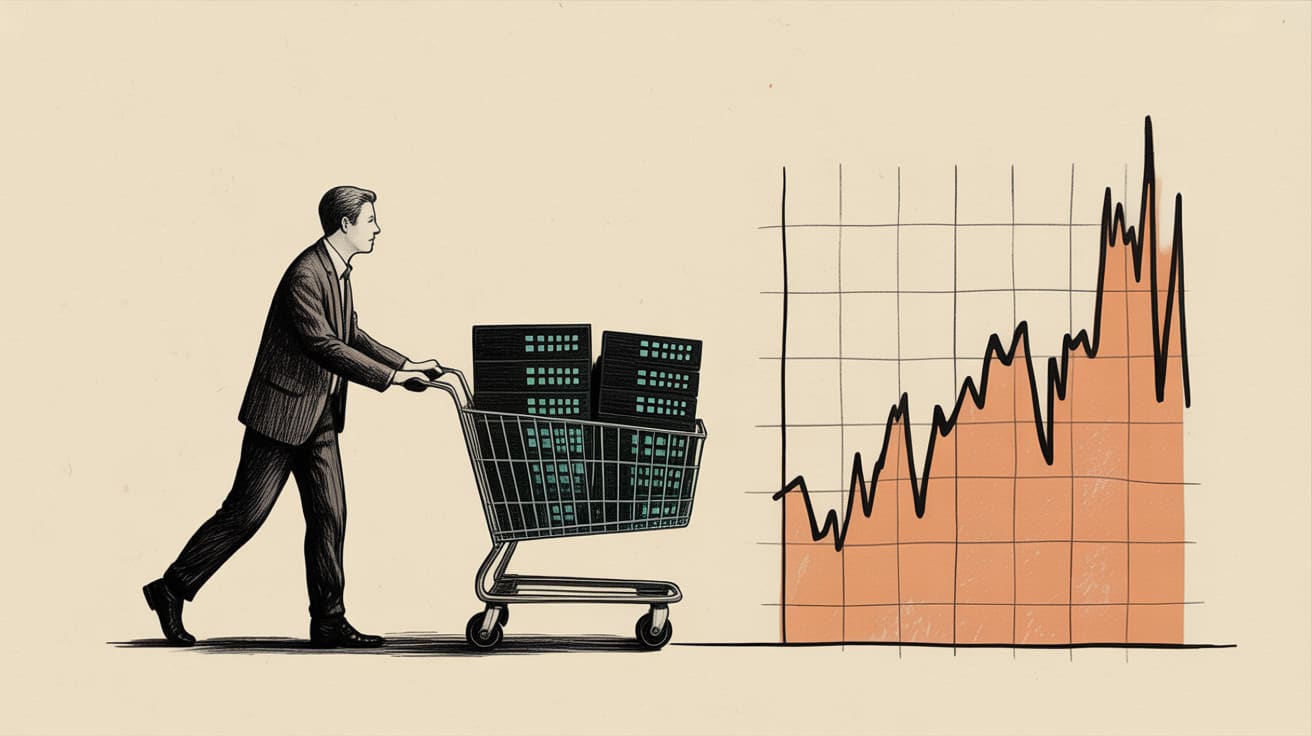
Kroger's 24% ad profit growth signals retail media's maturity. Here's what Southeast Asian marketers should audit in their MarTech stacks now.
Retail media used to be the polite footnote in an annual report. Kroger just made it a headline.
Kroger’s 24% Ad Profit Jump Is a Stack Audit Trigger
Kroger Precision Marketing posted 24% profit growth in Q2 2026 — its strongest performance since 2021, according to Digiday. That number matters less as a Kroger story and more as a structural signal: retailers who invested early in closed-loop advertising infrastructure are now harvesting margin that most brand marketers can only envy.
The mechanism is worth understanding precisely. Retail media networks generate high-margin revenue because the underlying first-party data — purchase history, basket composition, loyalty behavior — already exists as a byproduct of the core business. The advertising product is built on an asset that cost nothing extra to collect. When that ad business hits scale, the incremental cost per dollar of revenue is remarkably low.
For marketing directors at CPG or FMCG brands running campaigns on Shopee Ads or Lazada Sponsored Products in Southeast Asia, this should prompt a hard question: are you treating retail media as a performance channel with its own attribution model, or are you bolting it onto a trade spend spreadsheet from 2019?
Madison and Wall’s “Unusually Rapid” Growth Forecast Deserves Scrutiny
AdExchanger flagged that analyst firm Madison and Wall is predicting what it calls “unusually rapid” ad revenue growth — a phrase that should make any experienced practitioner reach for their skepticism. AI-bolstered ad revenue is the cited driver, and the mechanism being discussed is AI improving targeting precision and creative optimization at scale.
The honest read: AI is compressing the value gap between well-resourced and under-resourced teams. A brand running Google Performance Max or Meta Advantage+ campaigns with clean first-party data inputs will see genuine lift. A brand feeding the same tools with stale CRM exports and mismatched audience segments will see the AI optimize efficiently toward the wrong outcome — faster.
This is exactly where over-bought MarTech stacks create silent damage. If your CDP isn’t syncing cleanly with your DSP, if your consent management platform is dropping Southeast Asian mobile identifiers due to misconfigured jurisdiction rules, or if your attribution model can’t reconcile app conversions against web sessions — AI amplifies those gaps rather than papering over them. Precision requires clean inputs. The technology stack audit that brands have been deferring is now the prerequisite for capturing the AI-driven growth wave.
The Southeast Asia Retail Media Parallel
Kroger’s trajectory has a direct regional parallel that’s moving faster than most regional marketing teams have acknowledged. Grab, Shopee, and Lazada have been quietly building out their advertising platforms with first-party data moats that Western retail media networks would recognize immediately.
Grab’s advertising business sits on top of ride-hailing, food delivery, and financial services behavioral data — a cross-vertical signal set that no independent DSP can replicate. Shopee’s Sponsored Products infrastructure, already dominant in markets like Thailand, Vietnam, and the Philippines, is maturing toward the closed-loop attribution model that makes Kroger’s margins possible.
For brands operating across Southeast Asia, the practical implication is stack rationalization with platform-specific activation in mind. Running a unified MarTech stack across eight markets sounds operationally elegant until you realize that your mid-funnel nurture sequences built for LINE in Thailand are irrelevant on the platforms your Indonesian audience actually converts on. The stack should serve the platform reality, not the other way around.
Brands that will capture the regional retail media upside are those already building clean first-party data pipelines into these ecosystems — not waiting for a unified regional identity graph that isn’t coming anytime soon.
What a Retail Media Profit Surge Actually Demands of Your Stack
Kroger’s success isn’t a marketing story. It’s an infrastructure story that happens to generate marketing revenue. The implication for brands — particularly those with significant retail media spend across Shopee, Lazada, or regional grocery chains building their own ad networks — is that the ROI conversation needs to shift.
Three specific stack considerations follow from this analysis. First, closed-loop measurement: if your retail media campaigns can’t be connected back to actual sales data within the platform, you’re flying on impressions and hope. Push your retail media partners for sales-lift reporting, even if it requires a formal data-sharing arrangement. Second, audience data hygiene: retail media networks perform on purchase-intent signals. If you’re uploading broad email lists rather than segmented customer cohorts with purchase history, you’re underutilizing the channel’s core advantage. Third, budget classification: retail media sits awkwardly between trade spend and digital advertising in most finance structures. This classification problem causes chronic underinvestment. Brands that have resolved the internal P&L question are consistently outspending competitors in the channel.
The pattern is clear. Retail media’s most profitable phase is accessible to brands willing to do unglamorous data infrastructure work now.
Key Takeaways
- Kroger’s 24% ad profit growth confirms that retail media margins accrue to whoever owns clean first-party purchase data — Southeast Asian brands should map their own data assets against regional retail media platforms immediately.
- AI-driven ad revenue growth will disproportionately reward brands with well-integrated MarTech stacks; audit your data flows from CDP to DSP before assuming AI optimization will do the heavy lifting.
- Retail media budget classification — trade spend vs. digital advertising — is an internal finance problem masquerading as a strategy problem; resolving it unlocks consistent channel investment.
The deeper provocation here is structural: as retail media networks mature into genuine profit centers, the question for brand marketers stops being “should we invest?” and becomes “do we have the stack to participate at the level the platform rewards?” In Southeast Asia, that window for building the right infrastructure is narrowing — the platforms are maturing faster than most brands’ data capabilities. Which part of your stack is the actual bottleneck?
At grzzly, we spend a lot of time inside exactly this problem — untangling retail media measurement gaps, rationalizing over-built stacks, and helping brands build the data pipelines that make regional platform activation actually work. If Kroger’s numbers made you look sideways at your own setup, that instinct is worth following. Let’s talk
Sources

Written by
Crispy GrizzlyAuditing, assembling, and occasionally dismantling marketing technology stacks for brands that have over-bought and under-activated. Precision over proliferation.