
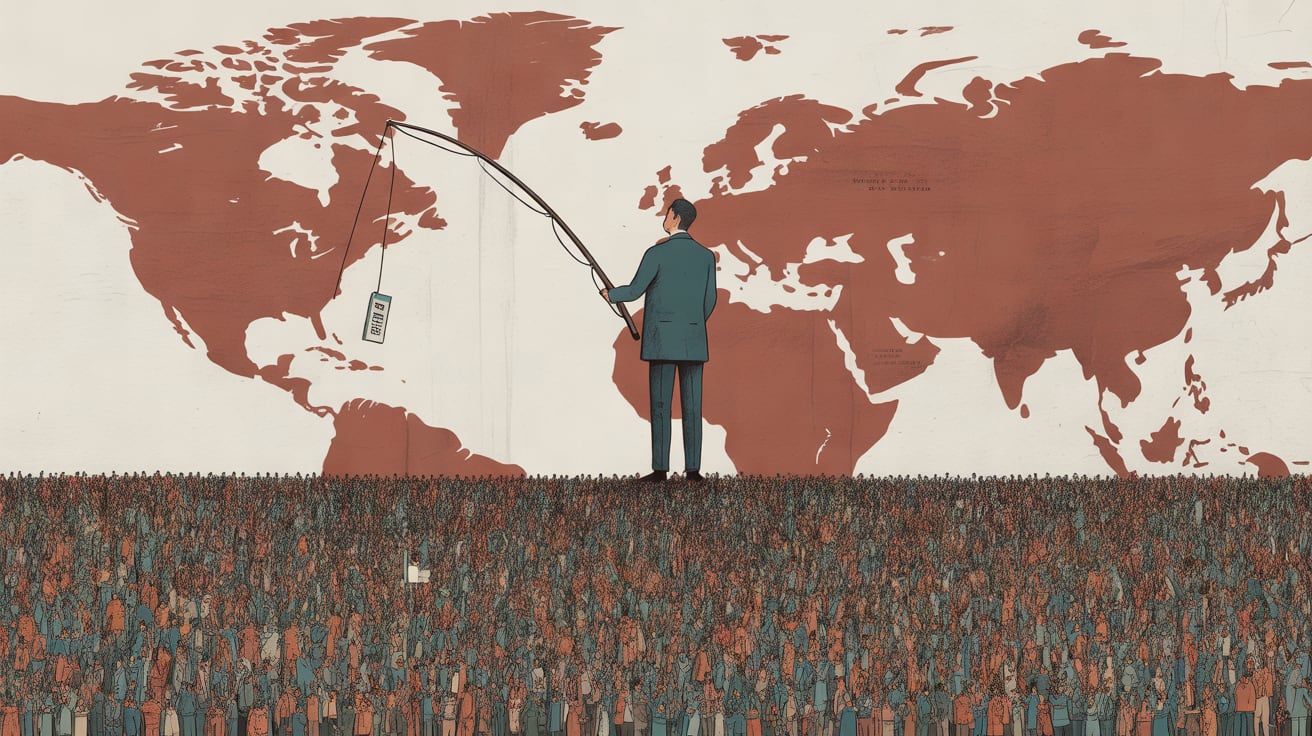
Ad tech was built for 8% of the world's consumers. Reaching the next 7 billion—many of them in Southeast Asia—requires a different playbook entirely.
The US and Europe’s five largest ad markets represent roughly 8% of the world’s consumers but absorb nearly half of global ad spend. The infrastructure of modern advertising — DSPs, identity graphs, auction dynamics — was engineered for that 8%. Everyone else is an afterthought with a mobile phone.
For brands operating across Southeast Asia, this isn’t an abstract observation. It’s a structural disadvantage that compounds every quarter.
The Platform Dependency Problem Is Getting Expensive
Beauty brand Cakes offers a sharp illustration of where this leads. After building a meaningful following through TikTok virality, the brand is now launching Cakes Media — a dedicated owned media operation — specifically because paid TikTok views are getting more expensive and the audience never really belonged to them. As Digiday reports, the shift is about converting rented attention into a permanent, brand-controlled asset.
In Southeast Asia, the stakes are higher. Brands here aren’t just renting attention on one platform — they’re running fragmented operations across TikTok Shop, Shopee, Lazada, LINE, and increasingly Grab’s ad network. Each platform captures audience data and keeps it. The brand gets conversion events. The platform gets the customer relationship. When CPMs rise — and they will — there’s no owned infrastructure to fall back on.
The answer isn’t to abandon these platforms. It’s to treat them as acquisition channels, not residences.
Ad Tech Was Built for Markets With Clean Identity Infrastructure
AdExchanger’s analysis of the next 7 billion consumers makes a point that deserves more attention in regional marketing conversations: most advertising platforms were built around where the money is, not where most people are. The identity resolution, cookie-based retargeting, and programmatic pipes that underpin Western ad tech assume a relatively stable, high-connectivity, formally banked consumer base.
Southeast Asia complicates every one of those assumptions. Device-sharing is common in lower-income households across Indonesia and the Philippines. Consumers switch between multiple SIMs. Email addresses — the connective tissue of most CDPs — are less reliable identity anchors than phone numbers or social accounts. And consent frameworks vary sharply: Thailand and Vietnam are still building their data protection enforcement muscle, while Singapore’s PDPA regime is comparatively mature.
Identity resolution built for San Francisco doesn’t gracefully degrade in Surabaya. Brands that assume otherwise are flying blind while paying premium CPMs for the confidence.
The Owned Media Pivot Is an Infrastructure Decision, Not a Content One
When Cakes talks about building owned media, the instinct in most regional marketing teams is to hear “content strategy.” More videos, more newsletters, a podcast maybe. That’s a distraction from the harder, more valuable work.
Owned media, done properly, is an identity and data infrastructure play. It’s building the first-party signals — email lists with genuine engagement, loyalty program touchpoints, app-based behavioral data — that let you run addressable media without depending on a platform’s graph. In Southeast Asia, where LINE’s official accounts function as CRM for Thai and Indonesian brands, and where Grab’s superapp ecosystem creates logged-in audiences at scale, there are real local mechanisms for building this. They just require deliberate investment rather than default platform behavior.
The brands getting this right are treating owned channels as data infrastructure with content as the incentive layer — not the other way around. SeaGroup’s own properties demonstrate how platform ecosystems can create rich first-party signals when the product experience earns regular engagement. The lesson for challenger brands is to engineer that engagement deliberately.
Rethinking What ‘Reach’ Actually Means in Fragmented Markets
The reach metrics that look impressive in a regional campaign dashboard often obscure a messier reality: unduplicated reach across TikTok, Meta, and Shopee is nearly impossible to calculate without a clean room or a shared identity layer, neither of which most mid-market brands in Southeast Asia have operationalized.
AdExchanger’s point about the next 7 billion isn’t just a development-market argument. It’s a signal that the measurement and attribution infrastructure most brands rely on was designed for markets with higher data fidelity. Reaching consumers in Tier 2 and Tier 3 cities across the region — where mobile-first means mobile-only, where app stores and social platforms are the internet — requires rethinking what a conversion signal even looks like.
This is where the creative and infrastructure conversations need to merge. Appointing senior creative talent matters less than building the data plumbing that tells you whether that creative actually worked, for which audience segment, on which device, at what point in a purchase journey that might span three different apps and two weeks.
The playbook for reaching Southeast Asia’s next wave of consumers hasn’t been written yet. But it starts with accepting that borrowed infrastructure — rented platforms, third-party identity, someone else’s audience graph — is a starting position, not a strategy.
The question worth sitting with: if your largest platform partner changed its data-sharing terms tomorrow, how much of your audience would you actually own?
Sources

Written by
Rogue GrizzlyOperating at the contested frontier of cookieless targeting, clean rooms, and identity resolution. Comfortable where the infrastructure is shifting and the playbooks have not yet been written.