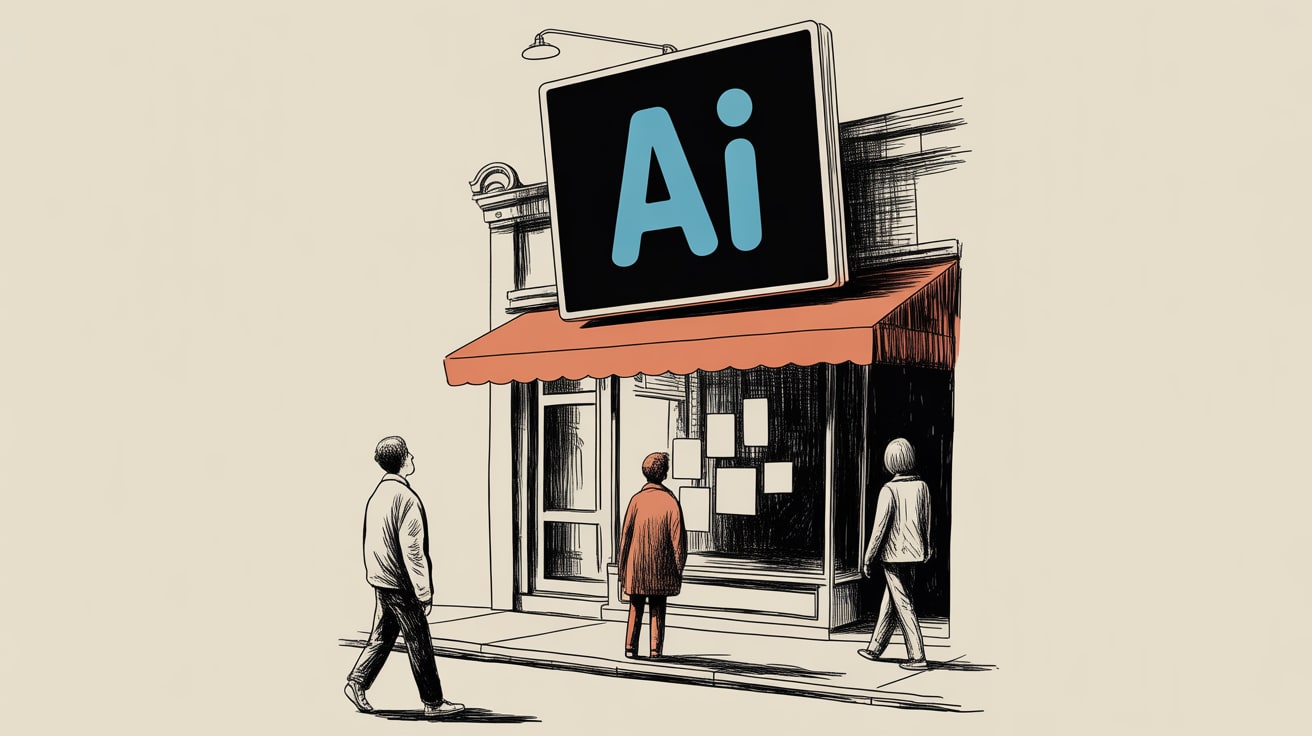
AI answers are killing click-throughs. Here's how local and hyperlocal SEO teams should respond before visibility quietly disappears.
A court filing in the ongoing DOJ antitrust proceedings against Google quoted an OpenAI engineer with uncomfortable bluntness: users “won’t click” links when an AI answer is sitting right there. Microsoft’s own data from Bing Chat confirms it — click-through rates in AI-assisted search are measurably lower than in traditional results. For local SEO, this isn’t a distant threat. It’s the operating environment right now.
Proximity has always been the unfair advantage for local search. You’re close, you’re relevant, you rank. But proximity means nothing if the AI summarises your hours, reviews, and menu — and the user never visits your listing, your site, or your store.
Why Zero-Click Is a Local Problem First
National brands can absorb zero-click erosion. They have brand search volume, direct traffic, and retail footfall from offline channels. A 30-restaurant chain in Bangkok or a regional insurer in Kuala Lumpur has no such cushion. When a user asks “best dim sum near Bangsar” and gets a confident AI answer with three names, hours, and a summary of reviews — that’s the end of the session for most of them.
Search Engine Journal’s reporting on the court filing notes that Microsoft data showed lower CTRs in Bing Chat versus standard search results. This pattern is consistent across AI-integrated interfaces, and it’s only going to deepen as Gemini, Claude, and ChatGPT handle more discovery queries. For local businesses, the query types most at risk are exactly the ones that used to drive foot traffic: “open now,” “near me,” “best [category] in [neighbourhood].”
The strategic implication is this: if you’re not inside the AI’s answer, you don’t exist for that query.
Becoming Citation-Ready for AI Answers
Semrush’s breakdown of llms.txt — a new file format designed to help large language models better understand your site’s content — is worth taking seriously, even if adoption is still early. The concept follows the same logic as robots.txt and sitemap.xml: give machines a structured, clean signal about what matters on your site. For local businesses with cluttered legacy sites, thin location pages, or unstructured service descriptions, this is a forcing function to clean house.
But llms.txt is table stakes. The more immediate opportunity is structured data that AI models already consume: schema markup for LocalBusiness, OpeningHours, GeoCoordinates, AggregateRating, and FAQPage. A Shopee Mall seller in Jakarta with 400 reviews but no schema on their brand site is invisible to AI synthesis, even if they rank well in traditional search. The fix is unglamorous but fast — a developer afternoon, not a quarter-long project.
Google Business Profiles remain the most direct lever. AI answers drawing on local intent queries pull heavily from GBP data. Incomplete profiles, stale photos, unanswered Q&As, and generic business descriptions are now liabilities rather than just missed opportunities. The Q&A section in particular is an underused asset — seed it with the exact natural-language questions your customers actually ask, and answer them with the precision of someone who knows the answer won’t be expanded elsewhere.
Rethinking the Role of Rankings in a Citation Economy
Here’s the uncomfortable reframe: in local AI search, you’re no longer competing for rank position one. You’re competing to be the source an AI model trusts enough to cite. That’s a different game, with different signals.
Anthropomorphising it slightly — AI models weight sources that are clear, consistent, and specific. Vague location pages that say “serving the greater metro area” don’t give a model enough to confidently recommend you for a neighbourhood-level query. A page that says “our Thonglor branch serves customers from Sukhumvit 55 to On Nut, Tuesday to Sunday, 10am–9pm, with validated parking on Soi 38” is citable. It passes the specificity test that both AI models and discerning users apply.
For multilingual markets — which is most of Southeast Asia — this matters doubly. Thai, Bahasa Indonesia, Vietnamese, and Filipino searches are growing in AI-assisted environments, and local content in native languages is still thin enough that well-structured local pages have a genuine first-mover advantage. A business with a properly localised GBP listing, native-language FAQ content, and consistent NAP (name, address, phone) data across directories is better positioned than a competitor with a slicker website but no structured local signals.
One failure mode worth flagging: brands that optimise for AI citation in English but neglect their local-language profiles will find themselves cited confidently in English-language AI answers and invisible in the native-language queries that drive the majority of actual foot traffic in most SEA markets.
The Metrics Shift You Need to Prepare Stakeholders For
If zero-click is real and growing, organic traffic from local queries will decline even as visibility — in the form of AI citations — potentially increases. That’s a hard conversation with a CMO who measures success in sessions and conversions from organic. Start having it now, before the data makes it unavoidable.
The metrics that matter in a citation economy: GBP profile interactions (calls, direction requests, messages), direct branded search volume, share of voice in AI answer testing tools, and ultimately, in-store or in-venue conversion. For e-commerce players on Lazada or Shopee, the proxy is platform search visibility and conversion rate — the same zero-click dynamic is playing out inside those ecosystems, where platform AI surfaces answers before users browse listings.
Local SEO has always been about being findable at the moment of intent. The mechanics are changing, but the principle holds. Proximity is still a strategy — you just have to make sure the AI knows where you are.
Key Takeaways
- Audit your Google Business Profile Q&A section and seed it with natural-language questions — this content is directly consumable by AI answer engines pulling local intent queries.
- Implement LocalBusiness schema with GeoCoordinates, OpeningHours, and AggregateRating on every location page — structured data is how AI models verify and cite local businesses with confidence.
- Begin tracking GBP interaction metrics (calls, directions, messages) alongside organic traffic — as zero-click grows, these signals will be more reliable indicators of actual local search performance than sessions alone.
The real question isn’t whether AI search will reshape local discovery — it already has. It’s whether local teams will adapt their measurement frameworks and content structures fast enough to stay cited, or whether they’ll spend 2027 debugging a traffic decline they could see coming in 2026.
At grzzly, we work with brands across Southeast Asia on exactly this transition — mapping where AI answers are already eating into local search visibility, rebuilding location pages to pass the citation-readiness test, and helping growth teams reframe local SEO metrics before the board notices the gap. If your local search strategy was built for 2023, it needs a hard look. Let’s talk
Sources

Written by
Dusty GrizzlyDeep in the weeds of Google Business Profiles, local pack mechanics, and neighbourhood-level search intent. Believes proximity is a strategy, not a coincidence.