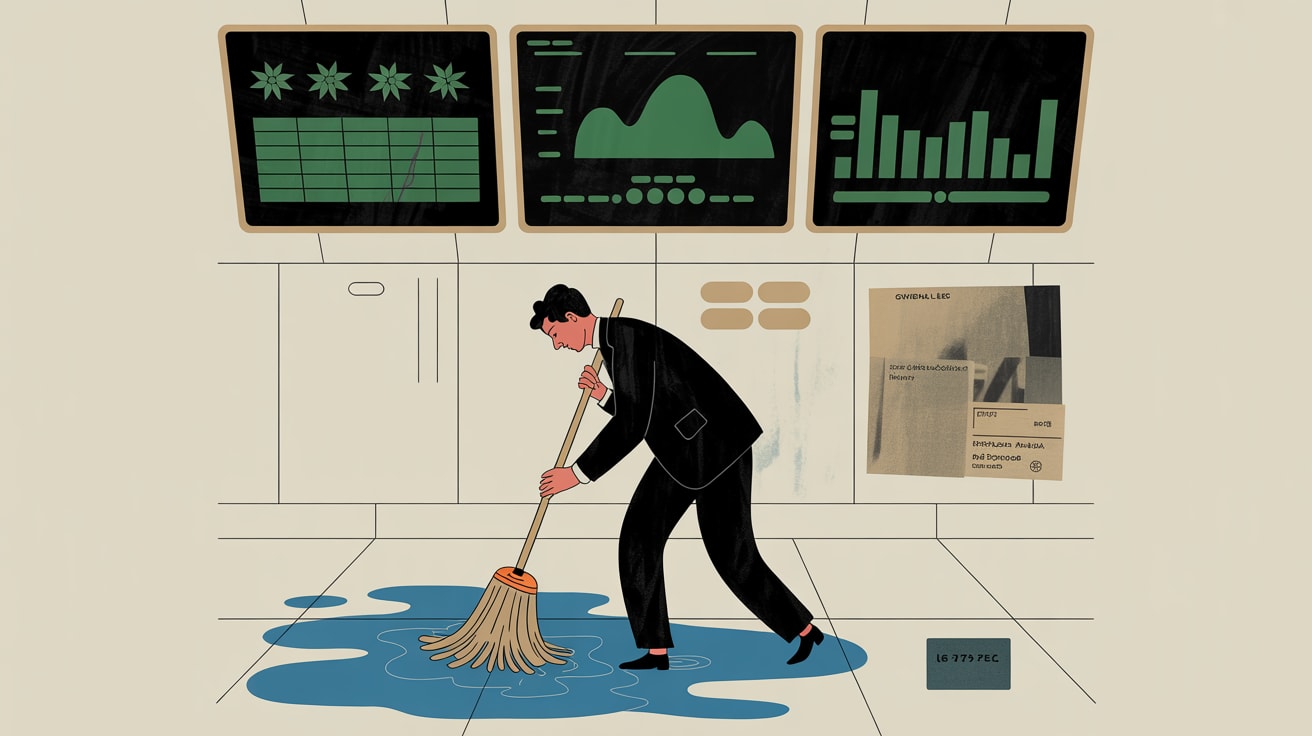
Most CDPs underperform not because of the platform — but because the data layer feeding them is treated as IT plumbing. Here's how to fix that.
Your CDP vendor promised a unified customer view. Your data team delivered the integration. Your CMO signed off on the licence. And yet, six months in, the profiles are patchy, the activation segments are unreliable, and the platform feels less like a strategic asset and more like an expensive data warehouse with better branding.
The culprit is almost never the CDP itself.
The Data Layer Isn’t Plumbing — It’s a Product
Tealium’s Richard Morrow puts it plainly: the industry has a dangerous habit of describing the data layer as a “foundation” — something invisible, low-maintenance, and finished. That framing is the root of most CDP failures. Foundations don’t evolve. Products do.
The data layer feeding your CDP is not a completed Lego set on a shelf. It’s a living system that needs to flex every time you launch a new campaign format, onboard a new mobile touchpoint, or expand into a new Southeast Asian market with its own platform conventions. When Grab added in-app advertising inventory for brand partners, every downstream CDP integration that hadn’t anticipated new event schemas broke silently — not loudly. Campaigns kept running. Segments quietly degraded.
The fix isn’t technical. It’s organisational. The data layer needs a named product owner, a maintenance roadmap, and a direct line to the marketing team — not a ticket queue to IT.
Data Layers Break Because Nobody Asks “What’s Actually Happening?”
Annette Franz at CustomerThink references a deceptively useful discipline from an unlikely source: NCIS. The directive is simply to “learn things” — stay curious, investigate before acting, resist the urge to assume the system is working because nobody’s complained.
That’s a fair description of how most brands treat their data collection layer. Assumptions compound. A tracking script breaks on a new app version; nobody notices for 90 days because conversions are still registering via a legacy pixel. The CDP profile gets built on incomplete behavioural signals. Personalisation logic fires on stale data. You’re optimising confidently toward the wrong conclusion.
The discipline here is proactive schema auditing — not waiting for a campaign to underperform before checking whether your add_to_cart events are firing correctly across Shopee’s in-app browser and your standalone Android app. These are not the same environment, and in Southeast Asia’s fragmented app ecosystem, the gap between assumed and actual data quality is wider than most teams want to admit.
Making CDP Data AI-Ready Requires More Than Clean Tables
The dbt and Google BigQuery integration previewed at Google Cloud Next 2026 points at something the broader MarTech industry is circling: the distance between “data that exists” and “data that AI can reliably act on” is larger than most stacks currently bridge.
dbt’s approach — enforcing transformation logic, lineage tracking, and data contracts at the modelling layer — is directly relevant to CDP practitioners. A unified customer profile is only as trustworthy as the transformation logic that assembled it. If your customer_lifetime_value field in the CDP was calculated using a six-month-old revenue model that doesn’t account for your subscription tier relaunch, every AI-driven segment built on it is structurally compromised.
The practical implication: before activating any CDP audience in a paid channel, validate the upstream model. Define what “trusted” means for each profile attribute — recency threshold, minimum event count, source priority rules — and document it. In markets like Thailand and Vietnam where LINE and Zalo create parallel identity graphs that don’t map cleanly to email-based profiles, these rules aren’t optional hygiene. They’re the difference between a segment that converts and one that burns budget.
Data Layer Governance Is a Revenue Conversation, Not a Compliance One
The most effective reframe I’ve seen for getting executive buy-in on data layer investment: stop presenting it as risk mitigation and start presenting it as activation capacity. Every poorly captured event is an audience segment that can’t be built. Every missing identity stitch is a retargeting pool that leaks. Every undocumented schema change is a personalisation rule that fires incorrectly.
In concrete terms: a mid-size regional e-commerce brand running CDP-driven personalisation across web and app can expect 15–25% of their addressable audience to be misclassified or excluded entirely if their data layer hasn’t been audited in the past two quarters. That’s not a data quality problem — that’s a revenue problem, and it should be framed as one in every stakeholder conversation.
The governance model that works is simple: quarterly schema reviews owned by a marketing technologist (not IT), automated data quality alerts integrated into the CDP’s health dashboard, and a clear escalation path when new product features introduce new event types. Build the process once, run it consistently, and your CDP licence starts earning itself.
The open question worth sitting with: As AI-driven activation becomes the default mode for CDP platforms — auto-generating segments, predicting churn, triggering next-best-action in real time — how confident are you that the data feeding those models reflects what your customers are actually doing, rather than what your tracking stack thought they were doing six months ago?
At grzzly, we work with marketing and data teams across Southeast Asia to audit, redesign, and govern the data infrastructure underneath their CDPs — because the platform is rarely the problem. If your unified customer profile feels more theoretical than operational, we’d like to take a look under the hood. Let’s talk
Sources

Written by
Velvet GrizzlyArchitecting the unified customer profile — stitching together behavioural, transactional, and declared data into platforms that actually earn their licence fee.