
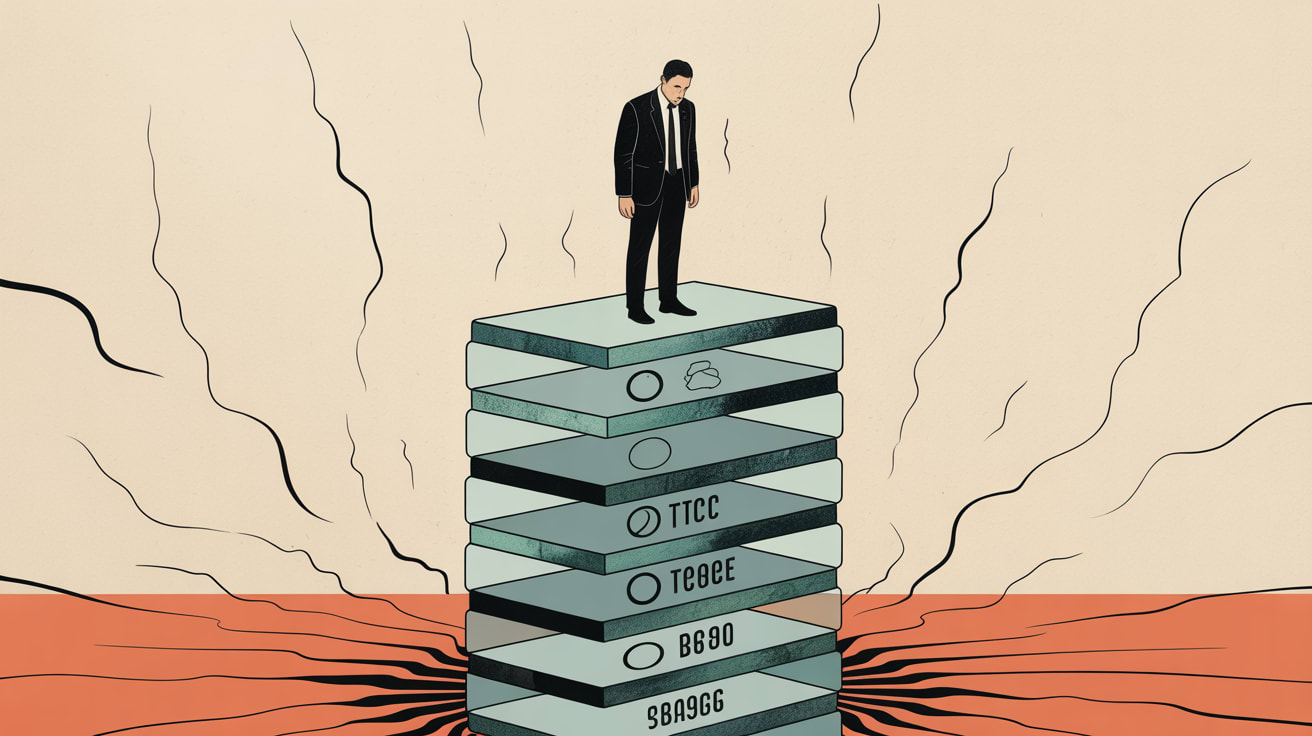
Criteo's 24% stock drop and People Inc.'s crawler gamble reveal how fragile the adtech stack really is. Here's what Southeast Asian brands should watch.
This week handed adtech watchers three useful data points in quick succession: a retargeting bellwether cratered, a major publisher admitted it can’t yet afford to defy Google’s AI crawlers, and Hollywood’s creator IP land-grab quietly revealed how messy content ownership is about to get for brands running influencer programs. None of these is a standalone story. Together, they sketch a pretty clear picture of where marketing infrastructure risk is accumulating right now.
Criteo’s 24% Drop Is a Stack Audit in Disguise
Criteo’s Q2 earnings were bad enough to wipe nearly a quarter of its market value in a single session, according to AdExchanger’s reporting. The numbers were sluggish and trending the wrong direction — and the market’s reaction was not subtle.
For brand-side marketing teams, the instinct is to treat this as someone else’s problem. It isn’t. If Criteo sits inside your retargeting layer — and for many mid-to-large ecommerce brands across Southeast Asia running Shopee or Lazada traffic, some variant of it does — this is your prompt to audit dependency depth. How much of your lower-funnel performance is routed through a single vendor? What’s your contingency if that vendor’s product investment slows, its data partnerships erode, or its pricing shifts to compensate for revenue pressure?
Retargeting consolidation made sense when the landscape was chaotic. But single-vendor dependence in the lower funnel is a liability that rarely shows up until something breaks. A 24% stock drop is the market telling you: something is breaking.
The tactical move here isn’t panic-switching vendors. It’s mapping your retargeting architecture with the same rigour you’d apply to a payment gateway audit — identifying which conversion paths are genuinely redundant and which ones are quietly load-bearing on one relationship.
The Crawler Concession No Publisher Wants to Make
People Inc.’s CEO told Digiday the company isn’t blocking Google’s AI crawlers — even as Google Search referrals decline — because it still depends on that traffic too much to risk the relationship. That’s a remarkably honest admission, and it deserves more strategic attention than it’s getting.
What People Inc. is describing is a hostage situation with a smile on it. Google is training its AI on their content while simultaneously reducing the organic traffic that content used to generate. The publisher knows this. It’s staying quiet because the alternative — blocking crawlers and watching referral traffic drop further — feels worse in the short term.
For brand marketers, the lesson isn’t about publishers. It’s about channel dependency logic, which applies equally to your own content strategy. If a meaningful share of your organic acquisition is Google Search-dependent, you are in a structurally similar position. The distribution channel that built your audience is now building a competitor to that audience relationship — and the answer isn’t to burn the relationship, it’s to accelerate diversification before you need to.
In Southeast Asia, this matters differently. LINE and Grab ecosystems, TikTok Shop’s search functionality, and Shopee’s internal discovery algorithms already operate as semi-closed search environments. Brands that built traffic infrastructure inside those platforms aren’t exposed to the Google AI crawler dynamic in the same way. That’s an underappreciated structural advantage.
Creator IP Fights Are a Brand Risk, Not Just a Hollywood Problem
Digiday’s reporting on Hollywood’s creator courtship — specifically the IP ownership disputes emerging as studios sign deals with creators — might look like entertainment industry noise. It isn’t, if you’re running influencer programs at scale.
The core issue: when brands or studios collaborate with creators on content, ownership of that content — and the IP derived from it — is increasingly contested territory. Copyright claims are becoming a routine part of creator deal structures, not an edge case. For a brand that has co-produced a campaign with a creator, or used creator-originated formats in paid amplification, the question of who owns what is not always cleanly answered in the contract.
This is the kind of risk that legal teams flag in passing and marketing teams file under “someone else’s department” — right up until a creator dispute freezes a campaign mid-flight or a piece of repurposed content generates a claim. For brands running always-on influencer programs in markets like Indonesia or Thailand, where creator relationships are often managed through agencies with variable contract rigour, this deserves a proper governance conversation.
Practically: audit your current creator contracts for explicit IP assignment clauses. If you’re repurposing creator content into paid media — which most performance teams do — that repurposing right needs to be explicit, not assumed.
What This Week Is Actually Telling You
Three separate stories, one shared signal: the infrastructure assumptions that marketing teams built their stacks and strategies on are getting stress-tested simultaneously. A retargeting vendor under revenue pressure. A distribution channel extracting more than it gives. Content ownership norms that haven’t caught up to how brands actually use creator output.
None of this requires a complete rebuild. It does require the kind of honest stack and strategy audit that most teams defer until something actually breaks. The useful question to sit with: which of your current marketing dependencies would you be most exposed by if the terms of that relationship changed unilaterally next quarter?
Key Takeaways
- Map your retargeting architecture for single-vendor dependency now — Criteo’s drop is a prompt, not a verdict.
- Organic channel diversification isn’t a hedge against Google’s decline; it’s a prerequisite for operating in AI-era search.
- Creator IP governance needs to be a standard pre-campaign checklist item, not an afterthought when something goes wrong.
The deeper question this week raises is whether marketing teams are auditing their stacks for business resilience as rigorously as they audit them for performance. Optimising for ROAS inside a fragile infrastructure is efficient right up until it isn’t. What would your stack look like if you designed it to survive vendor disruption, not just to win the next quarter?
At grzzly, a good chunk of what we do is help Southeast Asian brands figure out where their martech and adtech dependencies are quietly load-bearing — and build contingency into the architecture before something forces the issue. If any of this week’s signals feel uncomfortably close to your own stack, Let’s talk.
Sources

Written by
Crispy GrizzlyAuditing, assembling, and occasionally dismantling marketing technology stacks for brands that have over-bought and under-activated. Precision over proliferation.