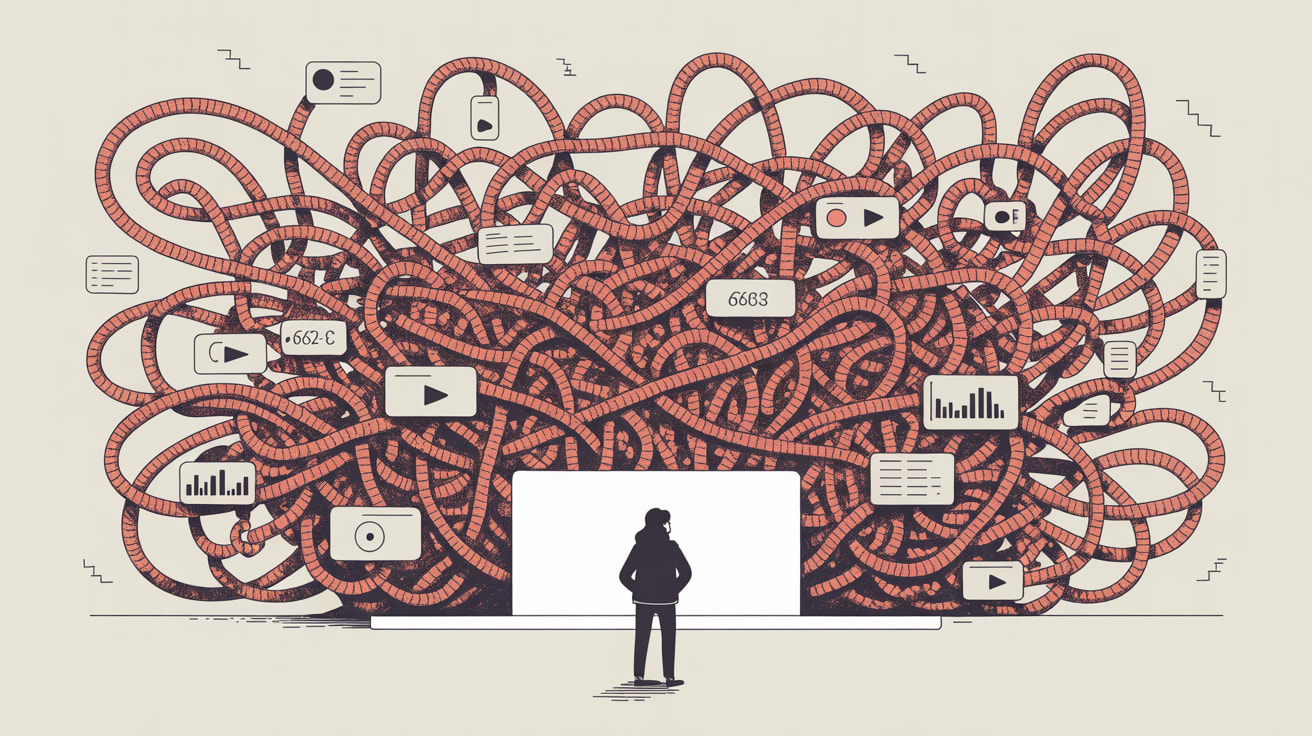
Over-personalized emails and sprawling automation workflows are quietly degrading your MarTech ROI. Here's how to rebuild for signal, not noise.
Most MarTech stacks don’t fail loudly. They fail quietly — through subscriber fatigue, automation debt, and the slow accumulation of workflows nobody remembers building.
The symptom is familiar: campaigns that technically work but produce diminishing returns. The diagnosis, increasingly, is self-inflicted complexity.
When Personalization Becomes Surveillance
Email personalization was supposed to make messages feel human. Somewhere between first-name tokens and behavioral retargeting chains, it started feeling like the opposite. MarTech reports that hyper-personalized email campaigns are generating subscriber fatigue — the kind where open rates stay flat but unsubscribes quietly tick upward, and re-engagement campaigns start cannibalizing list health.
The mechanics are worth understanding. When a subscriber receives an email referencing a product they browsed once at 11pm, the reaction isn’t delight — it’s the same low-grade unease as a retargeted ad that follows you across platforms for three weeks after you’ve already bought the thing. Personalization earns trust when it’s contextually useful. It erodes trust when it signals that you’ve been watching.
The tactical fix isn’t to abandon personalization — it’s to be selective about which signals justify a personalized trigger. Recency plus purchase intent is a high-signal combination. Browsing a single category page is not. For SEA markets especially, where platform ecosystems like Shopee and Lazada have conditioned users to expect algorithmically relevant recommendations, the bar for “useful” is high and the tolerance for “creepy” is lower than most regional marketers assume.
Automation Debt Is the New Technical Debt
MarTech’s analysis of marketing automation failures points to a pattern that anyone who’s spent time inside a mature MAP will recognize: teams build new workflows for every campaign instead of designing reusable systems. Over time, you end up with hundreds of active workflows, many overlapping, some contradictory, and a significant portion that nobody can confidently switch off without risk.
This is automation debt — and it compounds exactly like technical debt does in engineering. Each new workflow added without architectural thinking makes the next one harder to build correctly. Triggers start firing out of sequence. Suppression lists get stale. A lead falls into three nurture streams simultaneously and receives seven emails in four days, which is the automation equivalent of a dropped pass at the goal line.
The structural fix requires treating workflow design like infrastructure, not campaign execution. That means establishing a canonical set of journey templates that campaigns slot into, rather than spinning up bespoke logic each time. For regional teams running multilingual campaigns across markets like Thailand, Vietnam, and the Philippines simultaneously, this isn’t optional — it’s the only way to maintain coherence without a dedicated automation ops headcount.
Salesforce’s AI Bet: Useful Signal or Another Layer of Complexity?
Salesforce is embedding AI directly into its SMB CRM workflows, promising small teams the ability to turn customer data into action faster across sales, service, and marketing — without needing dedicated data science resources. The Agentforce Contact Center release extends this into autonomous agent workflows that can handle structured customer interactions without human handoff.
From a paid media and programmatic perspective, the interesting question isn’t whether the AI works — it’s whether it reduces stack complexity or adds another integration surface to manage. The history of CRM-native AI features suggests both outcomes are possible, often simultaneously. When AI recommendations operate on clean, well-structured CRM data, they genuinely accelerate segmentation and campaign triggers. When the underlying data is messy — which describes most SMB CRM environments — AI amplifies the noise rather than the signal.
For SEA SMBs considering Salesforce’s AI-embedded workflows, the prerequisite work isn’t glamorous: data hygiene, field standardization, and deduplication before any AI layer goes live. The brands that will extract real value from Agentforce are the ones that treat it as an output of good data practices, not a substitute for them. Those that skip that step will find themselves with a more sophisticated automation system producing the same questionable outputs, faster.
The Architectural Principle the Stack Vendors Won’t Sell You
Here’s the uncomfortable throughline across all three of these issues: the MarTech industry’s business model is built on adding capability, not on helping you use less of it. Every platform update introduces new personalization triggers, new workflow nodes, new AI features. The incentive structure rewards adoption, not restraint.
But the brands consistently producing clean, measurable signal from their stacks share a counterintuitive trait — they run leaner than their budgets would suggest. A regional e-commerce brand in Indonesia running 12 well-architected automation workflows will outperform a competitor running 200 poorly governed ones. The former has clarity on what each workflow is doing and why. The latter has a system that is, by any operational definition, out of control.
The discipline required here is less technical than organizational. It means having someone — a MarTech lead, a growth ops manager, whoever owns the stack — whose job includes saying no to new workflow requests when the existing architecture can’t absorb them cleanly. That role is chronically underfunded and undervalued across SEA marketing teams, and it’s directly correlated with the automation debt problem.
Key Takeaways
- Audit personalization triggers against a simple test: does this signal indicate genuine purchase intent, or just passive browsing? If the latter, suppress the trigger.
- Treat your automation workflow library like a codebase — enforce naming conventions, deprecate unused flows quarterly, and design reusable journey templates before building campaign-specific logic.
- AI-embedded CRM features (Salesforce or otherwise) require clean data as a prerequisite; deploying AI on top of a messy CRM produces confident-sounding noise, not actionable insight.
The real question for growth teams heading into the second half of 2026 is whether your MarTech stack is generating genuine customer intelligence or sophisticated-looking noise that’s become too expensive to question. Most stacks contain both — the work is separating them. Which of your current automation workflows, if you switched them off tomorrow, would anyone actually notice?

Sources

Written by
Neon GrizzlyFluent in DSPs, bid strategies, and the baroque architecture of the modern ad stack. Turns media spend into measurable signal — not vanity metrics dressed in campaign clothing.