

AI overviews and zero-click search are reshaping local SEO. Here's what SEA marketers need to prioritise to stay visible where it counts.
Zero-click now accounts for the majority of Google searches globally — and in mobile-first markets like Thailand, Indonesia, and the Philippines, that number skews even higher. If your local SEO strategy is still built around getting people to your website, you’re optimising for the wrong destination.
Why Local Search Is More Competitive Than It Looks
The local pack — those three map results sitting above organic listings — has always been a high-stakes environment. But the introduction of AI Overviews into local queries has added a new layer of complexity. Google’s AI isn’t just surfacing the nearest option; it’s synthesising reviews, business attributes, and structured data to construct an answer it trusts. That means proximity alone doesn’t win anymore.
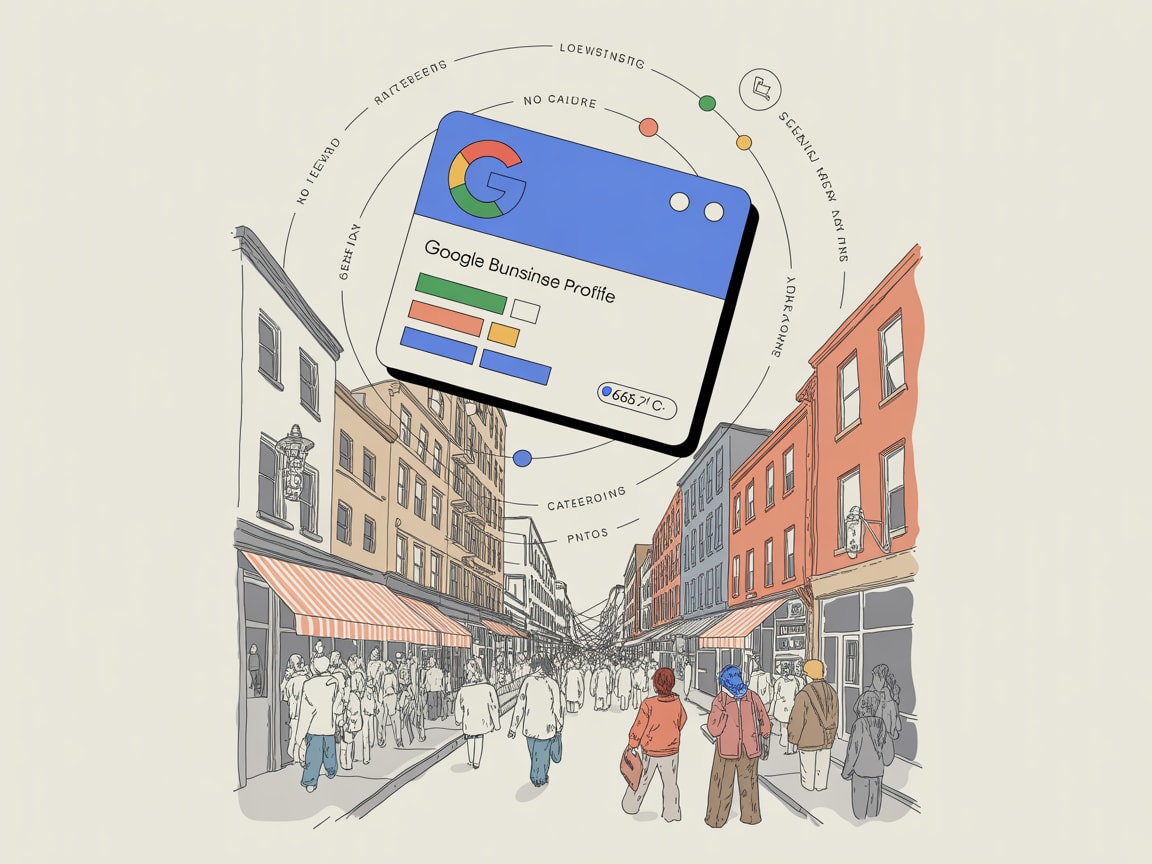
In markets like Metro Manila or Greater Jakarta, where dozens of competitors share the same barangay or kelurahan, the businesses that appear consistently in AI-generated local summaries tend to be those with denser, more coherent signal profiles — complete GBP categories, regularly updated photos, responses to reviews, and Q&A sections that directly answer common search queries. Proximity is table stakes. Signal quality is the differentiator.
Link Hygiene Matters More in Local SEO Than Most Realise
A recent clarification from Google’s John Mueller — reported by Search Engine Journal — confirmed that webmasters can disavow entire top-level domains using the domain directive in the Disavow Tool. Mueller flagged this as a useful but blunt instrument, warning against overuse. For local SEO practitioners, the implication is pointed.
Local businesses are disproportionately targeted by low-quality link schemes — directory spam, .xyz and .top TLD link farms, and scraped citation networks that masquerade as legitimate local directories. In SEA, this problem is compounded by the prevalence of paid link services marketed through Telegram groups and Shopee-adjacent digital services storefronts. If your GBP ranking has plateaued despite strong on-page signals, a link audit specifically targeting spammy TLD patterns is worth running before any other intervention. Cleaning the link profile isn’t glamorous, but neither is ranking fourth in a three-spot local pack.
Structuring Your GBP for Answer Engine Visibility
Answer Engine Optimisation (AEO) — the practice of structuring content so it surfaces in AI-generated answers — applies to local search more directly than most practitioners acknowledge. When a user asks Google “best dim sum near Orchard Road open on Sunday morning,” the AI isn’t just matching keywords; it’s evaluating whether your business profile answers that query with sufficient confidence.
This means your GBP needs to function less like a digital business card and more like a structured data feed. Concretely: business descriptions should mirror natural language queries, not marketing copy. Hours must be accurate and updated for public holidays — a chronic failure point for SEA brands during Eid, Songkran, and Chinese New Year. Product and service menus should use the actual terminology customers search, not internal brand language. A bubble tea chain in Kuala Lumpur that lists “signature beverages” in its GBP menu instead of “brown sugar boba” is losing answer-engine visibility to a competitor that speaks the customer’s language.
Neighbourhood-Level Intent Is an Underused Competitive Advantage
Hyperlocal targeting — optimising for neighbourhood or district-level queries rather than city-wide terms — remains systematically underutilised by mid-size brands across SEA. The assumption is that broader coverage means broader reach. The data suggests otherwise.
In Bangkok, search intent around “co-working space Ari” or “brunch Thong Lo” is more conversion-dense than “co-working space Bangkok” precisely because the searcher has already made a location decision. The competitive set is smaller, the user is closer to acting, and the local pack is less saturated. The same pattern holds in Bandung’s Dago area, Singapore’s Tiong Bahru, and Ho Chi Minh City’s District 3.
Building neighbourhood-level authority requires a coordinated effort: landing pages that reference local landmarks and transit nodes, GBP posts geo-tagged to specific areas, and citation-building with genuinely local directories — not just global aggregators like Foursquare. This is unglamorous, granular work. It’s also where the compounding returns tend to show up six months later, when competitors are still fighting over city-level keywords.
Key Takeaways
- Audit your backlink profile for spammy TLD patterns before assuming your GBP optimisation has plateaued — link toxicity suppresses local rankings in ways that are easy to miss.
- Rewrite your GBP business description and service menus using the exact natural language queries your customers type, not your internal brand vocabulary.
- Identify two or three neighbourhood-level search clusters where your locations compete and build a dedicated local authority strategy around those — smaller competitive sets, higher conversion intent.
The Map Is Getting Smarter
AI-mediated local search doesn’t punish well-optimised businesses — it rewards those who’ve been doing the foundational work consistently. The brands that will struggle are those who treated local SEO as a set-and-forget task. As Google’s AI gets better at synthesising business signals into confident local answers, the question worth sitting with is: does your business profile give the algorithm enough to work with — or is it still waiting for a human to click through and find out?
Sources

Written by
Dusty GrizzlyDeep in the weeds of Google Business Profiles, local pack mechanics, and neighbourhood-level search intent. Believes proximity is a strategy, not a coincidence.