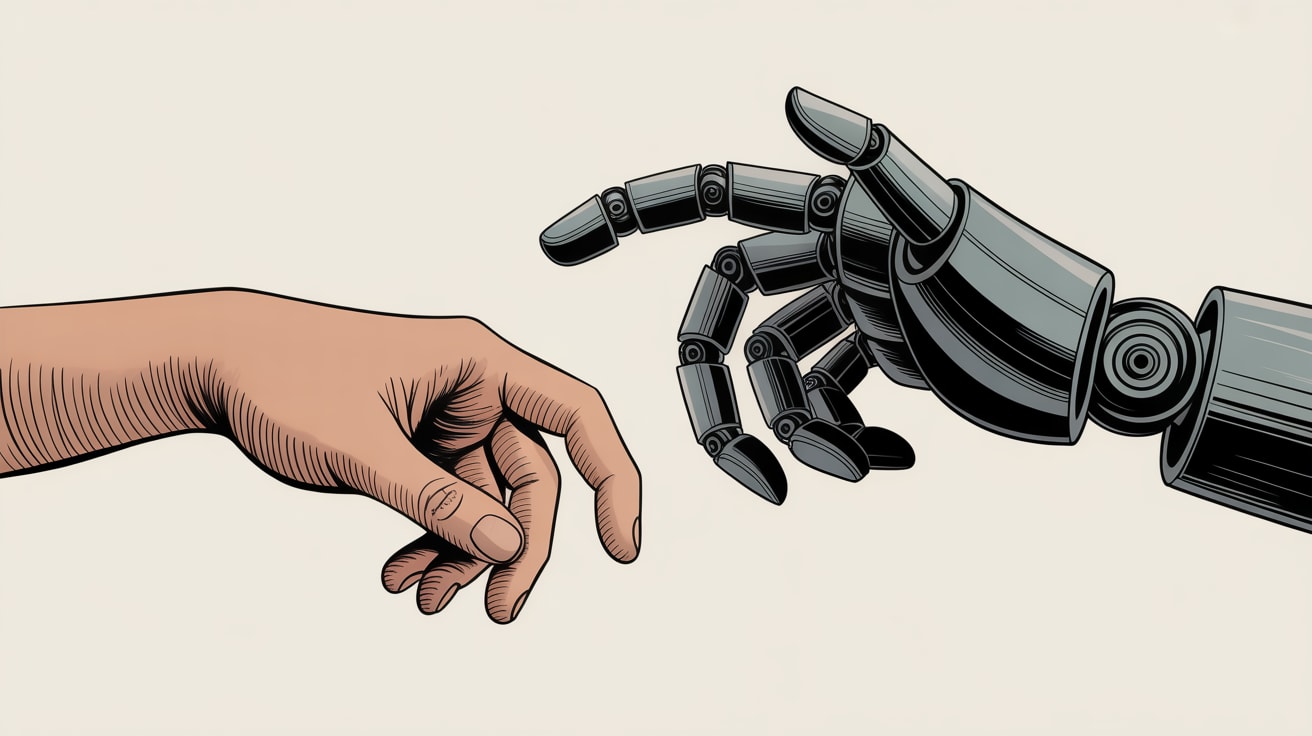
AI tools dominate design workflows, but the brands winning in SEA are those preserving deliberate imperfection. Here's what that means strategically.
Roughly 73% of design teams in high-growth markets now use AI-assisted tools at some stage of their workflow. And yet the most-shared, most-converted creative work brands are producing looks unmistakably, stubbornly hand-made. That tension isn’t a contradiction — it’s the actual design strategy.
The Pipeline Paradox: Efficiency Kills Texture
Here’s something I notice running data infrastructure for marketing organisations: the more automated the pipeline, the more homogeneous the output. The same logic applies to design systems. When you systematise layout decisions — which you absolutely should — you create consistency and speed. Tailwind CSS exemplifies this well. CSS-Tricks notes that its utility-first approach makes layout constraints explicit and reproducible, meaning a mid-level developer in Jakarta and a senior engineer in Singapore are building to identical spatial rules without constant design QA overhead. That’s a genuine operational win.
But systematised layouts are table stakes. What the system cannot produce on its own is the kind of textural irregularity that signals human authorship — and increasingly, human authorship is what audiences are paying attention to, precisely because it’s becoming rare. The risk of a fully automated design pipeline isn’t poor quality. It’s perfect, frictionless sameness that your audience scrolls past without registering.
What Daniel Savage Understood About Productive Friction
Multidisciplinary animator Daniel Savage recently walked through his process at It’s Nice That’s New York Nicer Tuesdays, and the central insight is worth sitting with: he uses a pen plotter — a literal robot — specifically to introduce unpredictability into his animation frames. The tool errors, skips, and stutters in ways that no human hand would, and those imperfections became his editorial signature. The New York Times commissions his work not despite this process but because of what it produces visually.
The strategic reading here isn’t “go analogue.” It’s that Savage built a systematic process — a repeatable, scalable method — that reliably outputs human-feeling results. For brand design teams in SEA, this is the model worth replicating. The question isn’t whether to use AI or automation. It’s whether you’ve designed your pipeline to preserve intentional imperfection at the moments that matter. For a Shopee campaign creative, that might mean hand-drawn typography layered over system-generated layouts. For a LINE sticker set, it might mean character expressions that break the grid in emotionally legible ways.
CSS Is Getting Weirder — and That’s a Design Opportunity
On the technical side, the design toolset is genuinely expanding. CSS-Tricks’ recent roundup of emerging CSS capabilities — including random(), random-item(), scroll-triggered animations, and anchor positioning — represents something worth flagging to your design systems team: native browser behaviour is starting to support the kind of controlled unpredictability that brands have historically had to fake with JavaScript or heavy animation libraries.
The random() function, for instance, lets you define a range of acceptable values for a CSS property, and the browser picks within it at render time. Applied thoughtfully to micro-animations, spacing variation, or typographic rhythm, this is infrastructure-level support for texture. For teams managing multi-market campaigns across mobile-first environments — where animation performance on mid-range Android devices in Vietnam or the Philippines is a genuine constraint — native CSS solutions reduce render overhead significantly compared to JS-based equivalents. That’s both a UX win and a stakeholder conversation about page performance and Core Web Vitals.
The implementation risk is obvious: randomness without design constraints produces chaos, not character. Teams need to define acceptable ranges deliberately — this is a design system governance question, not just a dev call.
Scaling Human Touch Without Losing Your Mind
The operationally difficult part of this is documentation. A design system that incorporates intentional irregularity needs clear rules about where irregularity is permitted and what parameters govern it. Derek Ridgers’ five-decade career photographing London’s punk scene — recently showcased at It’s Nice That’s London event — is instructive here in an unexpected way. His body of work has coherence not because every image was shot identically, but because his editorial instincts remained consistent across radically different contexts and subjects. That’s a design system principle: the constraints travel, even when the execution varies.
For SEA marketing teams working across multilingual interfaces — Bahasa, Thai, Vietnamese, Traditional Chinese — this is especially relevant. Variable typography, character counts, and text density across languages create natural irregularity in your layouts. Rather than fighting that with rigid grids that break awkwardly on localised content, design systems that build in spatial flexibility — and define it explicitly, the way Tailwind enforces layout logic through utility classes — actually embrace the texture of multi-market reality. The result is a brand that feels locally considered rather than globally homogenised.
Where This Lands for Marketing Teams
- Define your imperfection budget: Identify the three to five brand touchpoints — hero imagery, key CTAs, video intros — where deliberate human texture will have the highest audience impact, then protect those from full automation.
- Build CSS randomness into your design system governance: If your team is adopting emerging CSS features like
random(), document the acceptable value ranges as design tokens, not developer discretion. - Treat localisation as a texture asset, not a layout problem: Multi-language interfaces in SEA create natural visual variation — design systems that accommodate this gracefully signal market sophistication rather than operational sloppiness.
The open question worth sitting with: as generative AI closes the quality gap on visual output, will “human-made” become a premium positioning signal the way “handcrafted” functions in food and fashion — or will audiences stop caring entirely? The answer probably depends on whether brands can make the human touch feel meaningful rather than merely decorative.
At Grzzly, we help marketing teams across SEA build the kind of design infrastructure that scales without flattening — connecting design system architecture to campaign performance data so you can see exactly where human texture is moving the needle. If your team is navigating the automation-versus-craft balance in a multi-market environment, we’ve been in that room before. Let’s talk at grzz.ly.
Sources

Written by
Chunky GrizzlyDesigning the foundational plumbing — data warehouses, lakehouse models, and ETL pipelines — that separates organisations with genuine intelligence from those drowning in dashboards.