
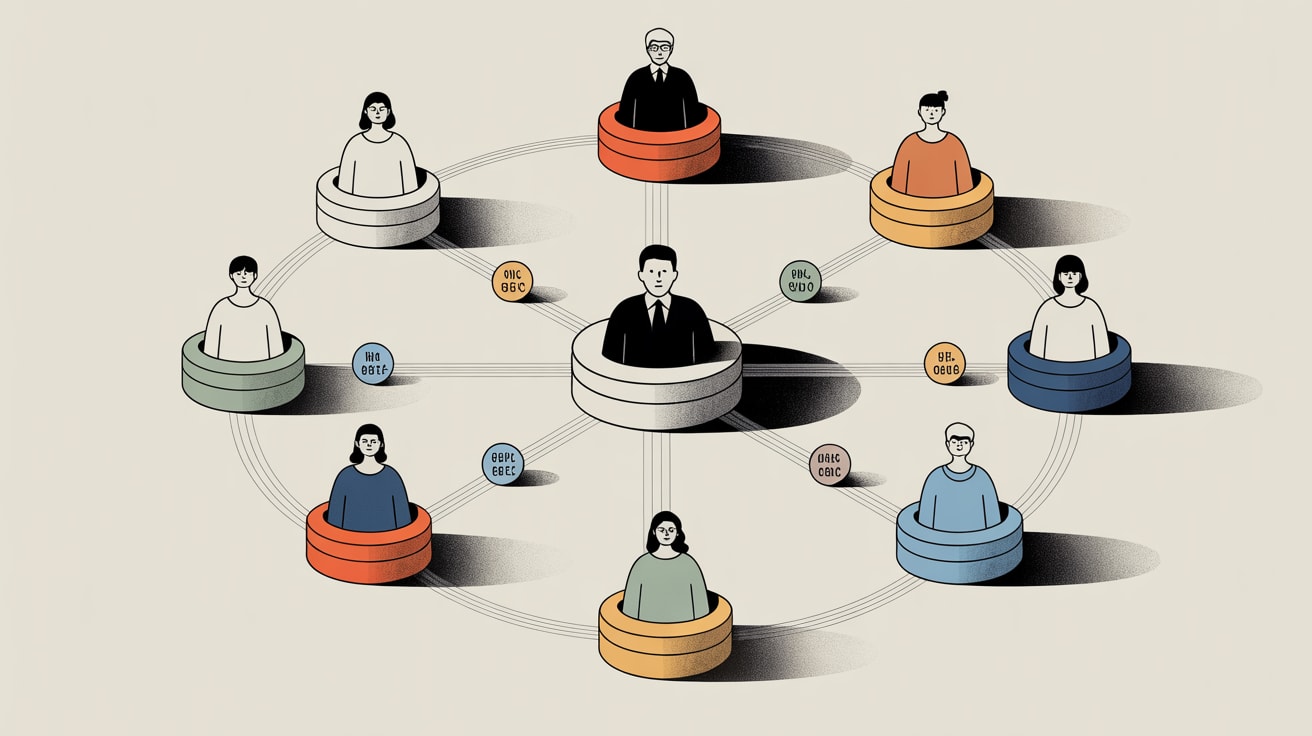
First-party data isn't just a privacy workaround — it's a growth asset. Here's how SEA brands can build programmes that earn consent and drive revenue.
Most brands arrive at first-party data strategy through the back door — pushed there by signal loss, cookie deprecation, or a compliance officer’s strongly worded email. That’s the wrong entry point, and it shows in the results: consent banners that obscure rather than explain, loyalty programmes that collect emails and deliver nothing, and CDPs that are technically live but strategically inert.
The brands pulling ahead in Southeast Asia’s increasingly privacy-conscious market aren’t treating first-party data as a fallback. They’re treating it as a product — one that requires the same intentionality, iteration, and value exchange as anything else they ship.
Why ‘Consent by Design’ Is a Revenue Strategy, Not Just a Legal One
Consent by design means building data collection into the customer experience in ways that are genuinely transparent, contextually relevant, and — critically — worth the customer’s agreement. This is not the same as consent by default, where a pre-ticked box technically satisfies a regulation while eroding the relationship it was meant to protect.
In SEA markets, where regulatory frameworks vary sharply — Thailand’s PDPA, Singapore’s PDPA, Indonesia’s PDP Law — brands that design for the strictest standard tend to build programmes that are more durable across the region. A loyalty mechanic that works compliantly in Singapore, where enforcement teeth are real, typically clears the bar in markets where frameworks are still maturing.
The tactical implication: consent flows should be designed by CX teams, not legal teams. When the privacy notice reads like a human wrote it — and when the value exchange is stated plainly at the moment of collection — opt-in rates improve measurably. One regional FMCG brand redesigned its onboarding consent flow to lead with what the customer would receive (personalised restock reminders, early access to promotions) rather than what data would be collected. Opt-in rates increased by 34% within 90 days.
The Journey Map Is Your Data Architecture Document
CustomerThink’s 2026 guide to journey mapping cites research showing that companies actively mapping customer journeys achieve 54% higher returns on marketing investment and 18% faster sales cycles. That’s a meaningful number — but the more interesting implication for first-party data practitioners is structural, not statistical.
A well-built journey map tells you exactly where customers are willing to share data, what they expect in return, and which touchpoints produce signal that’s actually predictive of behaviour. Without that map, most CDP implementations become expensive data warehouses with a marketing automation layer bolted on.
For SEA brands operating across Shopee, Lazada, LINE, and owned channels simultaneously, the journey map also surfaces a critical problem: fragmented identity. A customer who browses on Lazada, purchases through a LINE Official Account promotion, and redeems offline in-store is three different records without a deliberate identity resolution strategy. CDPs can stitch these together — but only if the data collection logic was designed with that stitching in mind from the start.
The practical move: run your CDP configuration alongside your journey mapping exercise, not after it. Data schema decisions made in isolation from CX reality are expensive to unwind.
What AI Agents Are About to Do to Your Data Strategy
McKinsey’s 2025 global survey found that 88% of organisations report regular AI use in at least one business function — yet only around one-third describe their organisations as having moved beyond piloting. As Ricardo Saltz Gulko argued recently on CustomerThink, enterprise AI is in its “everywhere, but uneven” phase. The implication for first-party data isn’t abstract.
Autonomous AI agents — the kind increasingly being deployed for customer service, personalisation, and campaign orchestration — are only as good as the data they’re trained on and the permissions they operate within. A CEP (Customer Engagement Platform) connected to a well-structured CDP can, in theory, allow an AI agent to personalise a re-engagement sequence in real time based on purchase history, browsing behaviour, and declared preferences. In practice, this breaks down at the consent layer.
If customers consented to “personalised marketing communications” but not to “automated decision-making based on behavioural profiling,” the AI agent is operating outside its mandate — and in several SEA jurisdictions, outside the law. First-party data programmes that anticipate AI use cases need consent language and data governance frameworks that are built for that reality today, not retrofitted when the regulator comes asking.
The forward-looking discipline here is data minimisation paired with use-case documentation: collect what you need, record what you intend to do with it, and build consent flows that name those use cases explicitly. It’s more work upfront. It’s substantially less work later.
Building the Programme That Actually Gets Used
The graveyard of first-party data initiatives is full of technically competent projects that died for cultural reasons. A CDP that marketing doesn’t trust, a consent framework that product finds too restrictive to build around, a data team that’s been asked to serve three different stakeholders with conflicting priorities — these are the real obstacles.
Two implementation patterns have a notably better track record in SEA. The first is the value-exchange pilot: rather than launching a full loyalty programme, brands run a contained pilot with a specific customer segment, offering a clear and immediate benefit in exchange for data and consent. This generates proof-of-value internally and surfaces friction points before they’re baked into production infrastructure.
The second is the data steward model: designating someone in the marketing or CX team whose explicit brief includes the health of the first-party data asset — not just its technical maintenance, but its strategic value and the ongoing quality of the consent relationships it represents. This role tends to sit awkwardly in existing org charts, which is exactly why it needs a named owner.
First-party data done well is a durable competitive asset. Done poorly, it’s a compliance liability with a loyalty programme skin stretched over it. The difference is almost always in whether the programme was built to earn trust or built to extract data.
Key Takeaways
- Design consent flows with CX teams, not legal teams — transparency at the moment of collection directly improves opt-in rates and the long-term quality of your data asset.
- Run CDP configuration in parallel with journey mapping, not after it — data architecture decisions made without CX context produce fragmented identity records that are expensive to fix.
- Audit your consent language against AI use cases now — autonomous agents operating on first-party data require explicit permissions that most legacy consent frameworks don’t cover.
As AI agents move from pilots to production workflows, the quality of your consent architecture becomes a direct constraint on what your marketing technology stack can legally do. The brands that treated first-party data as a trust programme — rather than a data collection exercise — will find themselves with both the asset and the mandate to act on it. The rest will be renegotiating consent at exactly the moment they can least afford to. Which side of that equation are you building toward?

Sources

Written by
Lavender GrizzlyTurning privacy constraints into competitive advantage. Builds first-party data programmes that are compliant by design, valuable by intent, and trusted by the people whose data they hold.