
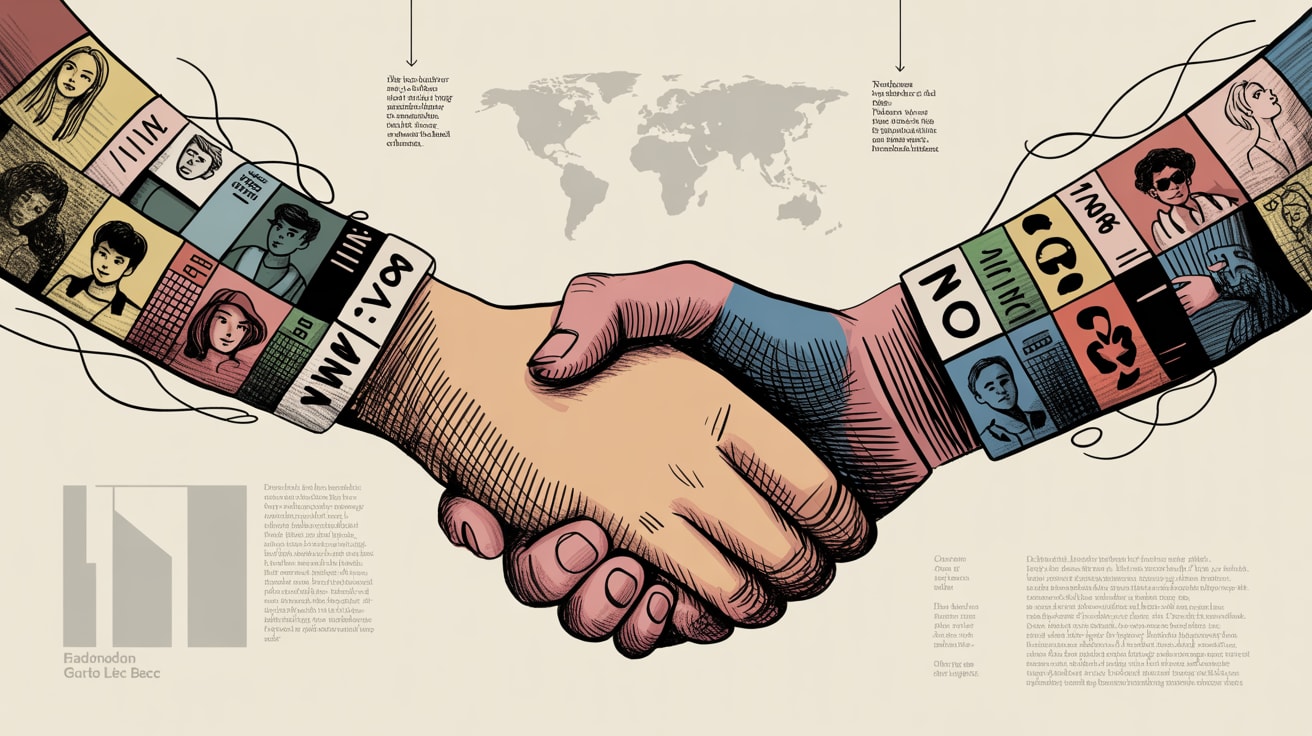
First-party data only delivers competitive advantage when customers choose to share it. Here's how to design programmes that earn that choice in SEA markets.
Companies that actively map customer journeys achieve 54% higher returns on marketing investment, according to research cited by CustomerThink. But here is the uncomfortable question sitting underneath that statistic: how many of those journey maps are built on data customers actually agreed to hand over?
In Southeast Asia, where personal data protection laws have matured rapidly across Thailand, Indonesia, the Philippines, and Vietnam, the answer is increasingly relevant — not just ethically, but commercially. First-party data strategy is no longer a compliance checkbox. It is the architecture on which durable customer relationships are built.
First-Party Data Is a Promise, Not Just a Pipeline
There is a category error that haunts most first-party data programmes: treating data collection as a technical problem when it is fundamentally a relational one. A CDP can unify identity across Shopee transactions, LINE interactions, and web sessions with impressive precision. What it cannot do is manufacture the willingness of a customer in Jakarta or Chiang Mai to share their preferences, purchase history, and behavioural signals in the first place.
The value exchange has to be explicit and genuine. Grab’s loyalty ecosystem is instructive here — users share granular location, spending, and lifestyle data because the app demonstrably improves with that input. Cheaper rides, better restaurant recommendations, faster reorders. The data relationship is legible to the customer. That legibility is the consent strategy.
Brands building first-party programmes in 2026 need to define the value proposition before they configure the data schema. What does the customer get, specifically, for each category of data they share? If the team cannot answer that question in one sentence, the programme is not ready to launch.
Journey Mapping Without Consent Architecture Is Just Surveillance
Customer journey maps are powerful precisely because they force organisations to see experience from the outside in. The 2026 framing — accounting for omnichannel complexity, non-linear paths, and mobile-first behaviour — is the right instinct. But journey maps built on inferred or third-party data have a shelf life. Journey maps built on consented first-party data compound in value.
The practical implication: consent touchpoints should be embedded in journey mapping exercises from the start, not retrofitted afterward. When a brand maps a post-purchase sequence on Lazada, for example, the question is not only “what message do we send at day three?” but “what permission did we earn at the point of purchase, and what additional consent could we earn by day three if we offer something worth having?”
This reframes the journey map as a consent roadmap. Each stage becomes an opportunity to deepen the data relationship — if the brand has earned it. Indonesia’s Personal Data Protection Law (UU PDP), fully enforceable since late 2024, makes this framing legally necessary as well as strategically sound.
CDP and CEP Configuration Follows Strategy, Not the Other Way Around
A Customer Data Platform unifies. A Customer Engagement Platform activates. Neither does anything useful if the underlying data is thin, unreliable, or legally questionable. Yet the sequence in most enterprise deployments is inverted: technology is procured, integrated, and configured before the consent and value-exchange strategy is fully resolved.
The result is CDPs populated with incomplete profiles and CEPs firing personalisation logic against segments that do not hold up under scrutiny. Brands in SEA with fragmented regulatory environments face this acutely — a single customer may interact across markets with materially different consent requirements, and a unified profile that ignores those distinctions creates compliance exposure at scale.
The fix is architectural: build consent attributes directly into the customer profile schema from day one. Tag every data point with its legal basis, collection context, and expiry logic. This is not an abstract data governance principle — it is the difference between a CDP that becomes more valuable over time and one that accumulates liability. Regional players like Advance Intelligence Group have demonstrated that embedding compliance logic into the data layer, rather than layering it on top, produces cleaner activation and faster campaign cycles.
The Competitive Advantage Is in What You Do Not Collect
Counter-intuitive, but worth sitting with: the most defensible first-party data programmes are often defined by restraint. Collecting only what you can use, only with clear consent, and only in exchange for demonstrable value creates a smaller but significantly higher-quality dataset.
The signal-to-noise ratio in a lean, consented profile is far higher than in a bloated one assembled through dark patterns or opaque data purchases. High-quality signal means better model performance, more accurate segmentation, and — critically — customers who remain opted in because they trust that their data is being used as agreed.
AirAsia’s super-app strategy illustrates the point at scale. Rather than attempting to capture every possible data signal, the platform has concentrated on transaction and preference data tied directly to travel and lifestyle utility. The result is a first-party dataset that is narrow enough to be actionable and trusted enough to remain intact through the region’s tightening regulatory cycle.
The question worth asking before your next data strategy review: which data points in your CDP are genuinely driving better outcomes for customers — and which are just there because you could collect them?
Key Takeaways
- Define the customer value exchange before configuring your CDP schema — consent earned through genuine utility is more durable than any collection mechanic.
- Embed consent attributes and legal basis tags directly into the customer profile data model from day one, not as a compliance layer added after deployment.
- Use journey mapping exercises as consent roadmaps: identify at each stage what permission you have earned and what additional trust you could build through a compelling value offer.
The brands that will own customer relationships in SEA’s next regulatory cycle are not necessarily those with the largest datasets — they are the ones whose customers actively choose to keep sharing. The strategic question is not how to collect more data. It is how to become worth sharing it with.


Written by
Lavender GrizzlyTurning privacy constraints into competitive advantage. Builds first-party data programmes that are compliant by design, valuable by intent, and trusted by the people whose data they hold.