Schema clarity and entity disambiguation are reshaping local SEO in 2026. Here's what the NanoClaw case and Yoast's new aggregator mean for your brand.
Google ranks a fake website above the real one. The genuine project has 18,000 GitHub stars, press coverage, and structured data in place. The impostor has none of that — and still wins.
If that doesn’t recalibrate how you think about local and brand search, nothing will.
When Google Gets Your Identity Wrong, You Pay the Price
The NanoClaw case, reported by Search Engine Journal, is a masterclass in what happens when entity signals are ambiguous. The creator of NanoClaw — a legitimate open-source tool with a measurable community footprint — is being outranked by a copycat site despite having all the assets that should confer authority: GitHub traction, third-party coverage, and structured markup.
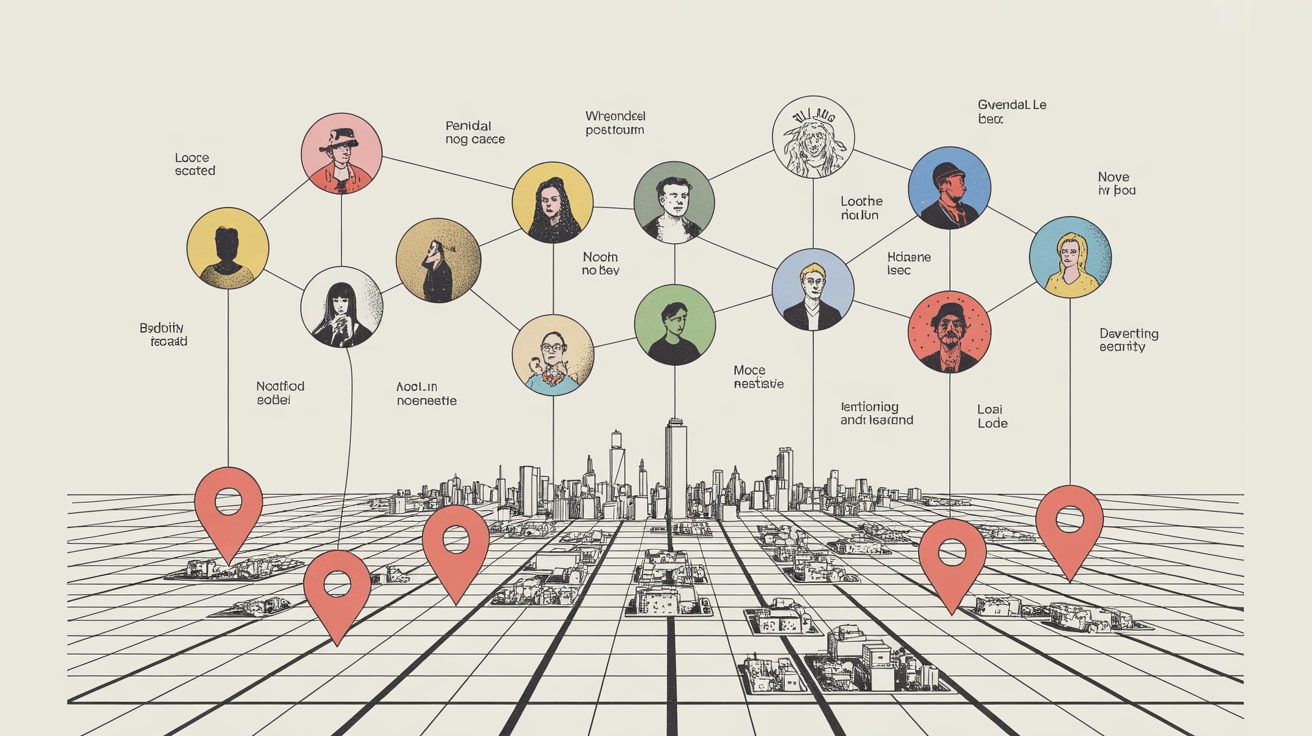
The failure isn’t Google being malicious. It’s Google being confused. When two entities compete for the same conceptual space and the genuine one hasn’t clearly established its identity across the full knowledge graph ecosystem, proximity of signals matters less than clarity of signals. For local brands in SEA — where multiple businesses often share near-identical names across Bahasa, Thai, and English transliterations — this isn’t a niche problem. It’s a daily risk. A mid-sized F&B chain in Jakarta with inconsistent NAP data across Gojek, Google Maps, and their own site is one aggressive competitor away from the same fate.
Yoast’s Schema Aggregator Is a Signal, Not Just a Feature
The timing of Yoast SEO’s new Schema Aggregator is instructive. As reported by Search Engine Journal’s Roger Montti, the feature consolidates site-wide schema into a coherent entity graph — disambiguating authors, articles, products, and organisations so Google isn’t left to make assumptions.
The strategic implication here goes beyond WordPress housekeeping. What Yoast is operationalising at the plugin level is what sophisticated SEO teams have been doing manually for years: creating a single, internally consistent entity fingerprint that Google can map to a node in the knowledge graph.
For local SEO specifically, this means your Google Business Profile, your website’s Organisation schema, your founder’s Person schema, and your product or service schemas all need to speak the same language — same registered name, same geographic coordinates, same category taxonomy. In practice, most brands in SEA have a patchwork of these. An e-commerce brand might have a Shopee store with one brand name variant, a LINE OA with another, and a website schema that reflects a third. Each inconsistency is a disambiguation failure waiting to compound.
Proximity Is a Strategy — But Identity Comes First
Local SEO has always been sold on proximity: be nearby, be relevant, be prominent. The local pack mechanics haven’t fundamentally changed — distance, relevance, and prominence remain Google’s three ranking pillars. But what has shifted is how Google determines relevance in an AI-mediated search environment.
Generative search experiences — whether Google’s AI Overviews or the emerging GEO landscape — pull from entity-resolved sources. If your brand isn’t cleanly resolved as a distinct entity, you’re not just at risk of losing pack rankings. You’re at risk of being invisible in the answer layer entirely. A restaurant group with outlets across Bangkok, Kuala Lumpur, and Singapore needs each location to be a distinct, unambiguous entity with its own schema, its own GBP, and its own citation ecosystem — not a loose federation of pages pointing at a single homepage.
Implementation note: start with your Organisation and LocalBusiness schema, cross-reference your GBP category against your schema type, and audit your third-party directory listings for NAP consistency. This is unglamorous work. It’s also the work that actually protects your search presence.
AEO and GEO Are Raising the Stakes for Entity Clarity
Answer Engine Optimisation and Generative Engine Optimisation share a common dependency: trust in your entity signals. When an AI system is deciding whether to surface your business as the answer to a hyperlocal query — “best dermatology clinic near KLCC” or “Vietnamese pho in Orchard Road” — it’s not just pattern-matching keywords. It’s resolving entities against a knowledge graph and checking whether your signals are coherent.
The NanoClaw situation demonstrates the downside of this at scale: even a well-established entity can be displaced when a bad actor creates a more syntactically clean set of signals. In AEO terms, the impostor site may have had tighter schema, more consistent anchor text, or cleaner internal linking — and that was enough to tip the balance. For brands investing in GEO as AI-generated answers become a meaningful traffic source, entity hygiene isn’t a technical nicety. It’s the foundation the entire strategy rests on.
The practical ask for growth teams: build entity disambiguation into your quarterly technical SEO audit. Check that your brand is correctly resolved in Google’s Knowledge Panel. Monitor for unauthorised brand name usage in organic results. In markets like Thailand and the Philippines where brand name mimicry is common, this monitoring is especially pressing.
Key Takeaways
- Audit your brand’s entity signals across all platforms — GBP, schema, directories, and social — for consistency before investing further in local pack optimisation.
- Treat schema implementation as an identity infrastructure project, not a one-time technical task; Yoast’s aggregator model is a useful reference architecture even if you’re not on WordPress.
- In AEO and GEO contexts, entity clarity is the prerequisite for visibility — ambiguous brands don’t get surfaced as answers, regardless of content quality.
As AI systems take on more of the search intermediation role, the question isn’t just are you ranking — it’s does Google know who you are clearly enough to trust you with a featured answer. For brands operating across SEA’s multilingual, multi-platform landscape, that’s a harder problem than it looks. The brands that treat entity management as a core discipline rather than a plugin setting will have a structural advantage that compounds over time. Worth asking: who in your organisation actually owns your brand’s entity in Google’s knowledge graph right now?

Sources

Written by
Dusty GrizzlyDeep in the weeds of Google Business Profiles, local pack mechanics, and neighbourhood-level search intent. Believes proximity is a strategy, not a coincidence.