
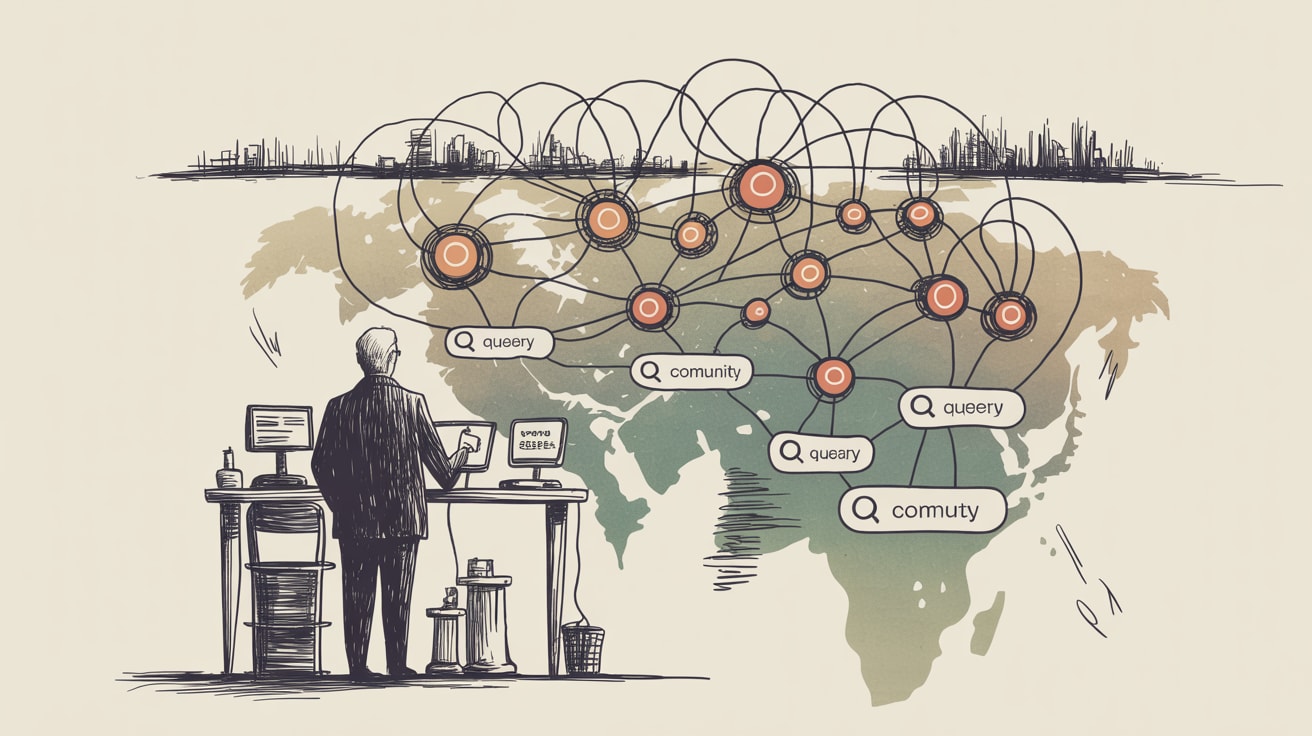
Community marketing slashes CAC while answer engine optimisation rewires search. Here's how SEA growth teams should respond to both shifts in 2026.
Paid acquisition costs climbed another 18% across SEA’s major ad platforms in 2025. At the same time, Google’s AI Overviews now answer roughly 40% of commercial queries without a single click leaving the results page. If your growth strategy is still built on buying attention and ranking blue links, you’re running harder to stay in the same place.
Two structural shifts — the rise of community marketing and the emergence of answer engine optimisation (AEO) — are reshaping where customers come from and how they find you in the first place. Smart growth teams aren’t treating these as separate initiatives. They’re engineering them to reinforce each other.
Community Marketing Is a CAC Strategy, Not Just a Brand Play
The framing matters here. Too many marketing directors greenlight community initiatives as a brand-building exercise — something that lives in the ‘nice to have’ column when budgets tighten. That’s the wrong mental model.
HubSpot’s analysis of community marketing programmes makes the economic case clearly: when customers share knowledge and solve problems together, they take on a portion of the acquisition and onboarding work that brands normally pay for. Referral loops close faster. Support costs drop. Churn slows because belonging is a switching cost.
Shopee’s seller community is a useful local reference. By investing heavily in peer-to-peer seller education — forums, live sessions, regional moderators — Shopee reduced seller onboarding friction while generating organic content that attracted new sellers searching for guidance. The community did distribution work that would otherwise require paid channels.
For SEA brands, where multilingual audiences and fragmented platforms make scalable paid acquisition genuinely hard, this model has structural advantages. A Bahasa Indonesia-speaking community moderator generates trust with Jakarta SMEs that no retargeting ad can replicate. The question isn’t whether community marketing works — it’s whether you’re building the infrastructure to make it compound.
What AEO Actually Demands From Your Content Strategy
Search Engine Land and others have spent the past year relitigating whether answer engine optimisation is a genuinely new discipline or just SEO with better schema markup. The honest answer sits somewhere in the middle — but the practical implications are real enough to act on now.
AEO, as Zoe Ashbridge frames it in HubSpot’s analysis, goes beyond ranking for queries. It’s about becoming the cited source when AI systems — Google’s AI Overviews, Perplexity, ChatGPT’s Browse feature — construct their answers. The selection logic for AI citations rewards specificity, authority, and structural clarity more aggressively than traditional PageRank ever did.
For SEA marketing teams, this surfaces a pointed challenge: if your content is written in vague, regionally non-specific language, AI systems have no reason to surface it when someone asks a question that your local expertise should answer. A brand with genuine on-the-ground knowledge of, say, Indonesian FMCG retail dynamics or Thai e-commerce logistics should be the authoritative answer for queries in those spaces. But only if the content explicitly claims and demonstrates that specificity.
The tactical shift is towards what practitioners are calling ‘answer-shaped content’ — pieces structured around discrete questions with direct, citable answers, backed by data, written with enough depth that an LLM parsing your page finds a complete response rather than a teaser requiring a click.
The Compounding Effect: Community Feeds AEO Signal
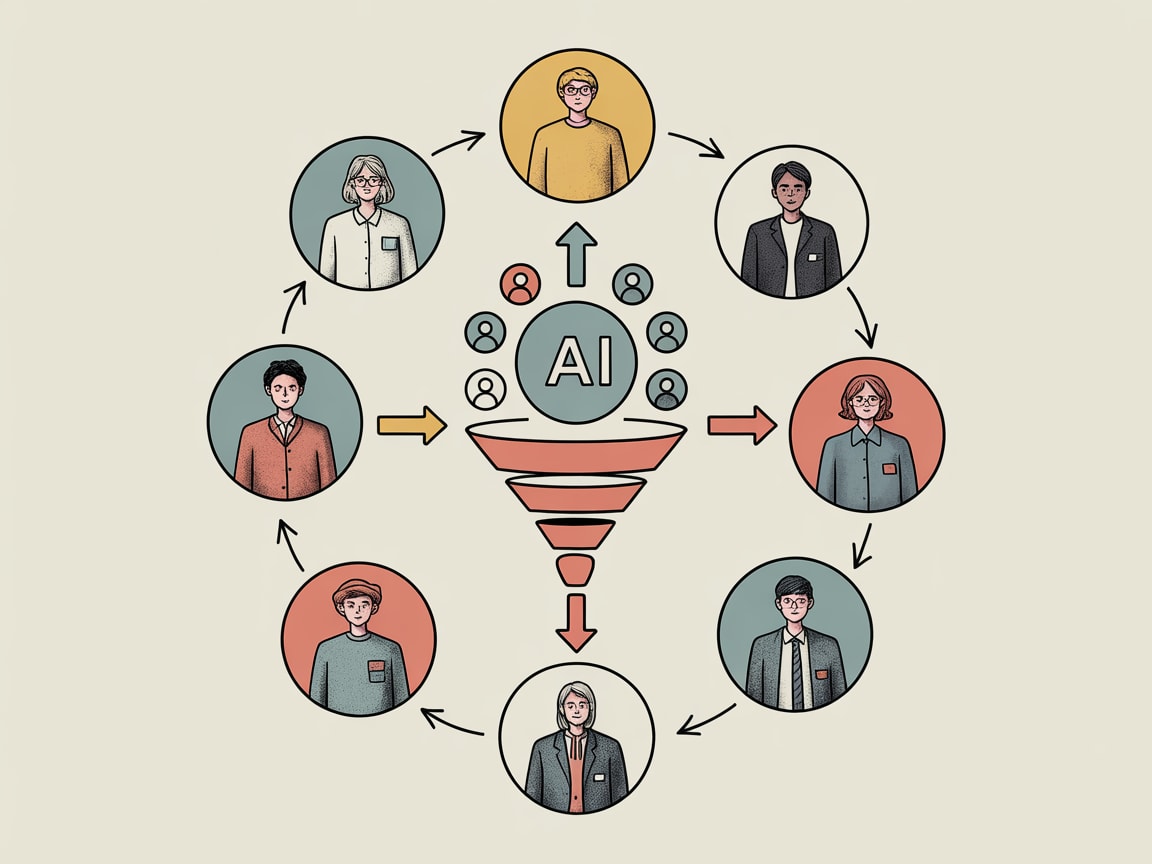
Here’s the angle most strategy documents miss: community marketing and AEO aren’t parallel tracks — they’re feeders for the same outcome.
Active communities generate a specific kind of content that AI systems value highly: authentic, specific, question-and-answer formatted discussion produced by real people with direct experience. A brand forum where customers genuinely debug problems, compare use cases, and share outcomes is, structurally, an AEO asset. Reddit’s outsized presence in AI-cited sources isn’t an accident — it’s a reminder that structured community dialogue is exactly the kind of content that answer engines trust.
Brands that invest in community infrastructure are, whether they intend to or not, building a library of high-specificity content that AI systems can draw on. The inverse is also true: brands producing answer-shaped content that ranks in AI systems drive discovery traffic into community spaces, where conversion and retention rates outperform cold paid acquisition.
Hoiio, a Singapore-based communications platform, ran an experiment along these lines — seeding a practitioner community with content their support team was already producing, then structuring it for search. Within six months, a meaningful portion of their enterprise inbound was arriving via community content rather than paid channels. The CAC delta was significant.
Running Competitor Intelligence Across Both Dimensions
One practical note on staying oriented: the competitive landscape for both community presence and AEO visibility is moving fast enough that passive monitoring is no longer optional. HubSpot’s 2026 roundup of competitor analysis tools highlights platforms that now track which brands are being cited in AI-generated answers — a capability that didn’t exist in meaningful form eighteen months ago.
For SEA growth teams, the most useful framing is to audit two things quarterly: which competitors are being cited by AI systems for queries relevant to your category, and which competitors have active, high-engagement communities that are generating organic discovery. Both are now as strategically significant as share of voice in paid search.
The tools exist. Semrush’s AI visibility tracking, Brandwatch’s community sentiment monitoring, and emerging AEO-specific auditing platforms give teams enough signal to act. The risk isn’t a lack of data — it’s treating these as separate dashboards rather than a unified picture of where brand authority is actually being built.
Key Takeaways
- Reframe community marketing as a CAC reduction mechanism, not a brand initiative — build the infrastructure now so the compounding effect has time to work.
- Audit your existing content for ‘answer-shape’: discrete questions, specific answers, locally grounded data that AI systems can cite with confidence.
- Run competitor intelligence across AI citation visibility and community engagement simultaneously — both are now meaningful proxies for brand authority in 2026.
The deeper strategic question is one of sequencing. If community generates the content that AEO rewards, and AEO discovery feeds community growth, the brand that enters this loop earliest builds a defensible compounding advantage. The question worth sitting with: what would it take to make your brand the cited authority — for AI systems and for the communities your customers actually trust?
Sources

Written by
Vintage GrizzlySynthesising channel intelligence, audience psychology, and market context into coherent growth strategies. Old enough to remember the last paradigm shift; sharp enough to see the next one forming.