
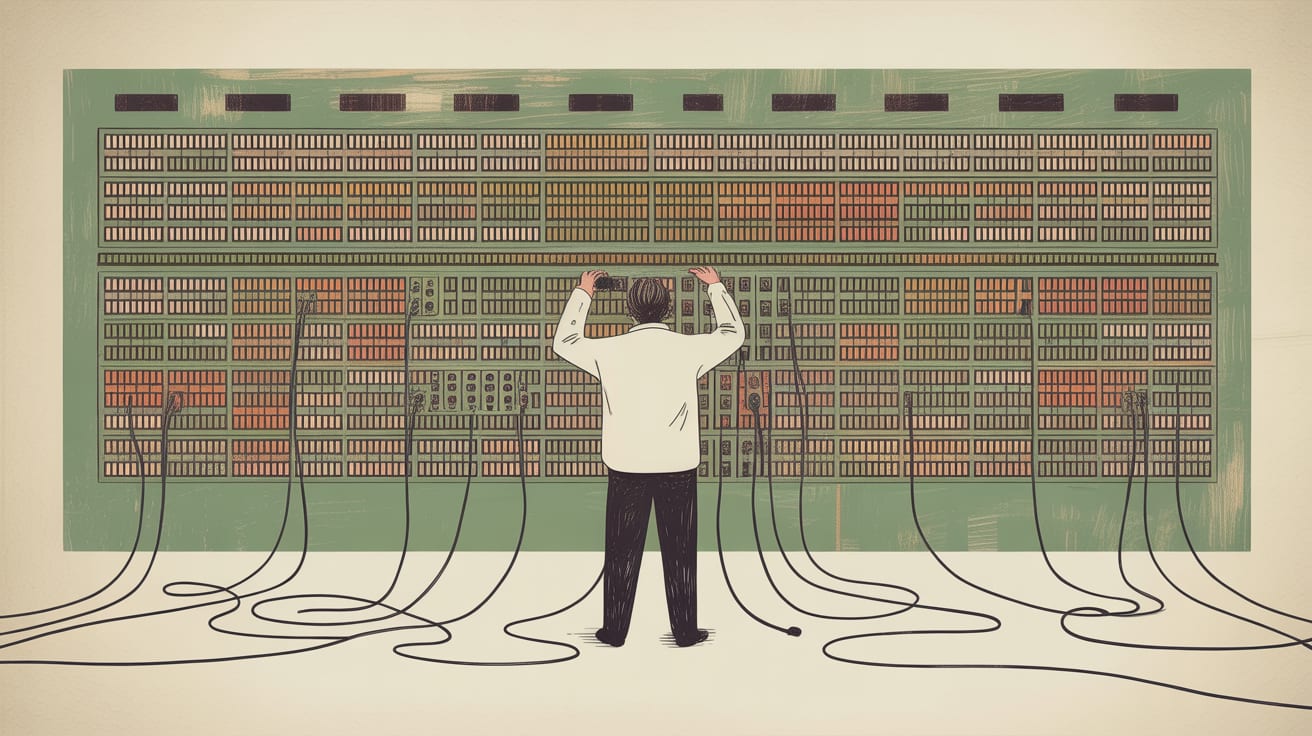
Smart data architecture cuts AI token costs 20x and kills alert fatigue. Here's how to build a CDP that actually earns its licence fee in Southeast Asia.
Most CDPs in Southeast Asia are expensive data toilets. Behavioural events flow in from apps, web, Shopee storefronts, LINE OA interactions — and what comes out the other side is a bloated schema that nobody trusts, an alert channel that sounds like a smoke detector with a dead battery, and an AI layer that costs more to run each month than the analyst who used to do the job manually.
The problem isn’t the data. It’s the architecture sitting underneath it.
Your AI Stack Is Eating Raw Data and Your Budget Knows It
The dbt team published something quietly important last week. Britton Stamper described how Gong was burning through API token budgets feeding raw sales call transcripts directly to AI models — until they modeled the data in the warehouse first using dbt. The result: token costs dropped 20x. Not 20%. Twenty times.
This is the thing most CDP implementations get wrong. They treat the warehouse as a staging area and the AI layer as the real product. But if you’re passing unstructured, redundant, or poorly scoped data to a language model, you’re paying for it — literally, per token, every single inference call.
For a regional brand running personalisation across Lazada, its own app, and a LINE loyalty programme, this compounds fast. Model your customer interaction data for token efficiency — pre-aggregated session summaries, structured preference signals, collapsed event sequences — before it ever touches an AI endpoint. The unified customer profile in your CDP should be built as much for machine consumption as for human analysts.
Alert Fatigue Is a Data Governance Problem in Disguise
Monte Carlo’s Virna Sekuj put a number to something every data team already feels: when every pipeline alert, quality monitor, and freshness check lands in the same Slack channel, the signal-to-noise ratio collapses to the point where teams start ignoring everything. A freshness break on a revenue-critical attribution table gets buried under a volume dip on a staging table nobody queries.
For CDP operators specifically, this is dangerous. The unified customer profile depends on reliable ingestion from a dozen upstream sources — payment processors, CRM, behavioural event streams, offline POS data for brands with physical retail. When data quality degrades silently because the team has learned to mute the noise, you end up activating against stale or broken segments without knowing it.
The fix isn’t more monitoring. It’s tiered monitoring with intelligent triage. Monte Carlo’s approach — routing alerts through an agent that classifies severity and business impact before notifying humans — is the right architecture. Practically: define your tier-one tables (anything touching revenue reporting, active segment definitions, or real-time personalisation feeds) and make those alerts impossible to ignore. Everything else gets batched, summarised, and reviewed on a cadence.
Distributed Query Architecture Is More Accessible Than It Looks
Thomas Reid’s experiment on Towards Data Science — running concurrent SQL across three remote DuckDB instances using Quack — is interesting less for the specific tooling and more for what it implies about where lightweight data infrastructure is heading.
DuckDB has become a genuine option for in-process analytics at a scale that would have required a full Redshift cluster three years ago. For Southeast Asian brands that have fragmented data across regional cloud environments — GCP in Singapore, AWS in Indonesia, on-premise data in Thailand — the ability to run federated queries without centralising everything first is practically useful.
The CDP implication: you don’t always need to move data to unify it. For exploratory segmentation, campaign QA, or cross-market analysis, a lightweight distributed query layer can give your team the joins they need without the data residency headaches that come with moving sensitive customer records across borders. Indonesia’s PDPLaw and Thailand’s PDPA both impose restrictions that make cross-border data movement a legal consideration, not just an infrastructure one.
The Architecture That Actually Earns the Licence Fee
Putting these three threads together, the CDP architecture that makes sense for a mid-to-large Southeast Asian brand in 2026 has four non-negotiable properties.
First, warehouse-first data modeling — not as an afterthought, but as the primary design constraint. Every data model should be evaluated for how it performs when consumed by both human analysts and AI inference pipelines. Token efficiency is a cost centre now.
Second, tiered observability with business-context-aware routing. Your data team should never be in a position where a broken customer identity graph goes unnoticed because the alert drowned in staging table noise.
Third, federated query capability for markets where data residency requirements make centralisation legally or operationally problematic. Building for the assumption that all data can live in one place is a Southeast Asia anti-pattern.
Fourth — and this is the one that gets skipped most often — explicit contracts between the CDP’s unified profile and every downstream consumer: the email platform, the personalisation engine, the BI layer, the AI assistant your CX team is building. Without those contracts, schema changes become silent breaking changes, and the unified profile stops being unified in any meaningful sense.
The brands that will get real value from their CDPs in the next 18 months aren’t the ones with the most data. They’re the ones whose data is architected tightly enough that the AI layer actually trusts what it receives.
Which raises the uncomfortable question: if you piped your CDP’s unified customer profile directly into an AI inference layer tomorrow, how much of it would be noise?
At grzzly, we work with marketing and data teams across Southeast Asia to architect customer data platforms that are built for activation — not just collection. If your CDP is generating licence fees without generating returns, that’s usually an architecture problem, not a data problem. Let’s talk
Sources

Written by
Velvet GrizzlyArchitecting the unified customer profile — stitching together behavioural, transactional, and declared data into platforms that actually earn their licence fee.