
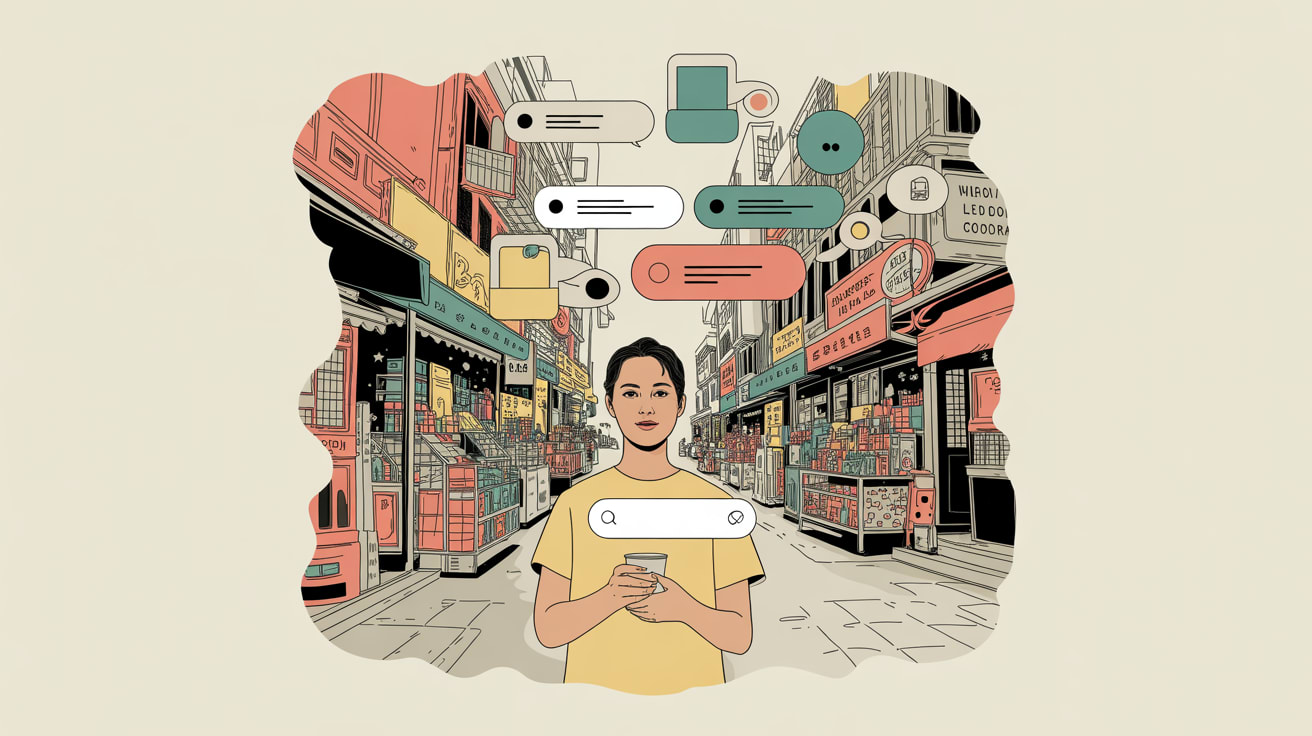
ChatGPT's Shopping feature is changing how buyers find brands. Here's what SEA marketers need to do now to stay visible in AI-driven discovery.
Three years ago, the question was whether AI would change how people search. That question has been answered. The more urgent one now: is your brand showing up when ChatGPT recommends products in your category — or are you handing that real estate to a competitor who figured it out first?
The Purchase Funnel Has a New First Stop
ChatGPT’s Shopping Research feature — which surfaces product recommendations directly within a conversation — has quietly become a credible alternative to Google Shopping and platform-native search for considered purchases. HubSpot’s analysis of the feature confirms that ChatGPT draws on a combination of structured product data, publisher reviews, and brand mentions indexed across the web to generate its recommendations.
For SEA marketers, the implications are specific. Shoppers researching electronics in Jakarta or skincare in Manila are increasingly starting that journey in a chat interface rather than a search bar. The discovery moment has moved upstream — and the brands benefiting are those with strong review footprints on authoritative third-party sites, clear and crawlable product schema, and consistent brand signals across social and editorial channels. Lazada and Shopee PDPs alone won’t cut it; AI models weight editorial coverage and independent review sites heavily, which most SEA brands have historically under-invested in.
Influencer Content Is Now Training Data — Treat It That Way
Sprout Social’s Q1 2026 roundup of standout influencer campaigns highlights a pattern worth examining: the campaigns generating the most durable ROI aren’t the ones with the highest reach at launch — they’re the ones producing structured, searchable content that continues to work months later.
One clear signal from the analysis: influencer campaigns that include detailed product walkthroughs, specific use-case comparisons, and named feature callouts generate content that AI systems can actually interpret and cite. A 90-second TikTok of someone looking delighted with a product teaches an algorithm nothing about why to recommend it. A YouTube deep-dive that covers specifications, alternatives considered, and real-world performance? That’s content an AI can work with.
For SEA markets specifically, this argues for briefing creators — micro or macro — to produce long-form or hybrid content formats: an Instagram Reel paired with a structured caption, a TikTok with a companion blog post, a LINE-distributed review with specific product attributes called out. The creative brief needs a discovery strategy baked in from day one, not bolted on after the fact.
What AI Visibility Actually Requires Operationally
Getting recommended by ChatGPT isn’t a black box, but it does require operational discipline most SEA brand teams haven’t built yet. HubSpot’s breakdown identifies several concrete levers: product pages need structured data markup (schema.org Product and Review schemas), brands need active review profiles on sites that AI models treat as authoritative (think Wirecutter, CNET, or regional equivalents like Lifestyle Asia and Tech in Asia), and the brand’s own editorial content needs to be specific enough to be citable.
The operational failure mode most teams fall into is treating this as an SEO task rather than a brand strategy task. It isn’t. AI recommendation visibility is a function of your reputation architecture — the full ecosystem of what’s written about you, where, and how specifically. Brands that have invested in PR, in-depth creator partnerships, and structured content over the last two years are seeing that compound now. Brands that haven’t are looking at a 12–18 month catch-up timeline minimum.
For teams operating across multilingual SEA markets, this creates an additional layer of complexity: AI models index language-specific content separately, which means a brand with excellent English-language coverage but thin Bahasa Indonesia or Thai editorial presence will underperform in those markets regardless of their actual product quality.
The Campaigns Getting It Right in 2026
The influencer campaigns Sprout Social flags as most effective this year share a structural logic: they treat each piece of creator content as a node in a larger discovery network rather than a standalone impression. One consumer goods brand coordinated a creator campaign across Instagram, YouTube Shorts, and a dedicated review microsite simultaneously — ensuring that when AI systems indexed the product category, multiple credible, independent-seeming sources pointed to the same conclusion.
This isn’t manipulation; it’s how word-of-mouth has always worked at scale. The difference is that you now need to architect it with AI indexing in mind, not just human browsing behaviour. In SEA markets where LINE ecosystems, Grab’s super-app commerce integrations, and TikTok Shop are all part of the purchase journey, the coordination challenge is real — but so is the competitive advantage for brands willing to do it systematically.
The question SEA marketing directors should be sitting with: if a category buyer asked ChatGPT to recommend a brand like yours tomorrow, what would it say — and how do you actually know?
At grzzly, we work with SEA brand and growth teams on exactly this kind of visibility architecture — mapping where your brand sits in AI-driven discovery ecosystems and building the content, creator, and data strategies to strengthen that position. If you’re trying to get ahead of this before your competitors do, we’d enjoy the conversation. Let’s talk
Sources

Written by
Plot GrizzlyDocumenting the campaigns, systems, and decisions that actually moved the needle — with the intellectual honesty to include what failed and why. Narrative rigour as a professional standard.