
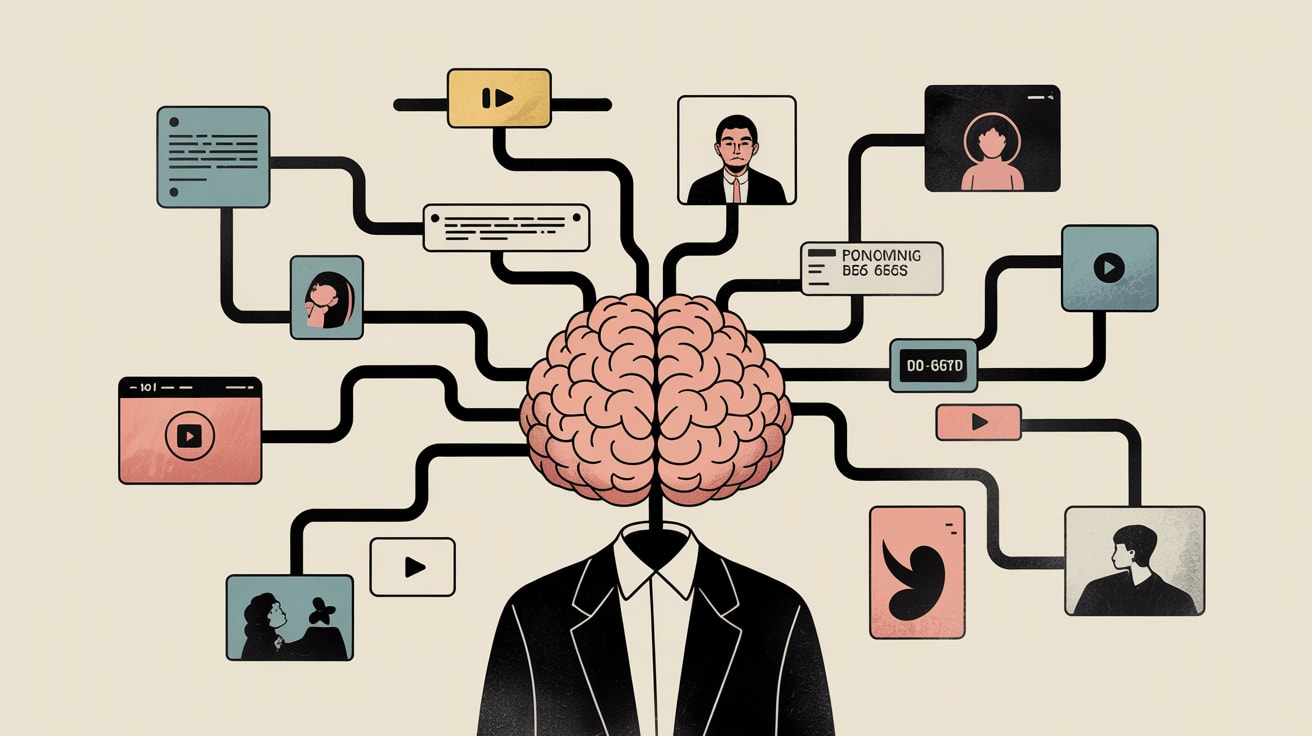
The smartest AI use cases in marketing aren't about content creation. Here's why intelligence-first AI strategy drives better outcomes for SEA brands.
Brands across SEA spent the better part of 2025 rushing to put AI-generated content into the world. The results were predictable: feeds flooded with polished-but-hollow posts, engagement rates that barely moved, and a growing audience suspicion that nobody was actually home.
The brands quietly pulling ahead aren’t the ones generating the most content. They’re the ones using AI to understand their audiences before they open their mouths.
The Generation-First Mistake Is Costing You Attention
Sprout Social’s Benedict Nicholson makes the case plainly: the most effective AI applications in marketing begin with intelligence, not creation. And yet the default behaviour — particularly among teams under pressure to produce — is to reach for the generative tools first. Brief in, content out, post, repeat.
The problem is structural. Generative AI optimises for plausibility, not relevance. It can produce a caption that sounds right without knowing whether your audience in Jakarta responds differently to scarcity messaging than your audience in Manila. It can’t tell you that a product category conversation is shifting from price-led to quality-led in real time. That requires listening infrastructure — and most brands still treat social listening as a quarterly audit rather than a live signal.
For SEA markets specifically, where platform behaviour fragments sharply across TikTok, Shopee Live, LINE, and YouTube, the cost of misreading audience context is higher than it is in homogeneous markets. A tone-deaf post doesn’t just underperform — it can read as culturally out of step in ways that compound over time.
YouTube Is an Intelligence Asset Most Brands Are Ignoring
YouTube is the second-largest search engine on the planet, and in SEA it functions as a primary research tool across categories from personal finance to beauty to automotive. Yet most brands treat it purely as a distribution channel — upload, hope, repeat.
Sprout Social’s Emily Jenkins argues that YouTube’s comment sections, search trends, and creator conversation patterns represent a largely untapped source of audience intelligence. Comments on mid-tier creator videos, in particular, surface unfiltered consumer language: the exact phrases people use to describe a problem, the comparisons they’re making between brands, the objections that never make it into a formal survey.
A practical implementation: set up keyword monitoring across YouTube comments for your category — not just your brand name, but the language around the problem your product solves. For a financial services brand in Thailand, that might mean tracking terms like “ดอกเบี้ยต่ำ” (low interest) or “กู้ง่าย” (easy loan approval) to understand which product attributes are driving actual consideration. Feed those signals into your creative briefs before AI generates a single word of copy.
The failure mode to avoid: pulling YouTube data in isolation. Comments trend toward the extreme — both highly positive and highly negative voices are overrepresented. Cross-reference with search volume trends and platform-specific engagement data before drawing strategic conclusions.
Social Interaction Data Has Matured — Are You Reading It Right?
Likes and shares are a trailing indicator. By the time something is trending, the opportunity to shape the conversation has usually passed. Sprout Social’s research on social media interaction in 2026 points toward a more nuanced engagement picture: saves, reply threads, reshares with commentary, and direct message volume are increasingly reliable signals of genuine audience resonance.
The strategic implication is that AI can be genuinely useful here — not for generating responses, but for pattern recognition at scale. Which comment types predict downstream purchase intent? Which reply threads indicate brand confusion versus brand advocacy? What does a spike in DM volume following a specific post type actually correlate with in terms of site traffic or conversion?
In a market like Indonesia — where WhatsApp and Instagram DMs function as a de facto customer service and sales channel for many mid-market brands — the ability to detect shifts in message sentiment and volume before they surface as public reputation issues is genuinely competitive. One regional FMCG brand reduced its response-to-resolution time by 40% by using AI to triage inbound messages by urgency and topic cluster, rather than processing them chronologically.
Building the Intelligence Layer Before You Scale Creation
The practical sequence for teams that want to reorient their AI strategy looks like this: listening infrastructure first, insight synthesis second, creation third.
Listening infrastructure means defining the signals that actually matter for your category — not vanity metrics — and ensuring you’re capturing them across the platforms where your audience lives. For most SEA brands, that means YouTube, TikTok, and at least one messaging platform alongside the obvious Meta properties.
Insight synthesis is where AI earns its keep. Tools like Sprout’s AI-assisted listening can surface themes, sentiment shifts, and emerging topics across tens of thousands of data points faster than any human team. The strategist’s job is to ask better questions of that data, not to trust the default summaries.
Creation, finally, becomes more defensible when it’s grounded in specific audience signals. A campaign brief that includes verbatim audience language, identified objections, and real-time sentiment context will produce better AI-generated outputs — and better human-written ones — than a brief built on assumptions.
The brands still treating AI as a content factory are producing more noise. The ones building intelligence layers are starting to produce signal.
Key Takeaways
- Use AI for social listening and audience signal detection before deploying it for any content creation — intelligence informs relevance.
- YouTube comment analysis is an underutilised source of unfiltered consumer language, particularly valuable for SEA’s research-heavy purchase journeys.
- Move beyond likes and shares — saves, reply threads, and DM volume are stronger indicators of audience intent and should anchor your engagement strategy in 2026.
The question worth sitting with: if your competitors are all using the same generative AI tools to create content, what actually differentiates your output? The answer, increasingly, is the quality of the intelligence that goes in at the front end. Which raises a harder question — how much of your current AI budget is allocated to listening versus generating?
At grzzly, we work with growth teams across SEA to build the intelligence infrastructure that makes AI-assisted marketing actually defensible — not just faster. If you’re rethinking how AI fits into your strategy for the rest of 2026, we’d like to be part of that conversation. Let’s talk

Sources

Written by
Vintage GrizzlySynthesising channel intelligence, audience psychology, and market context into coherent growth strategies. Old enough to remember the last paradigm shift; sharp enough to see the next one forming.