
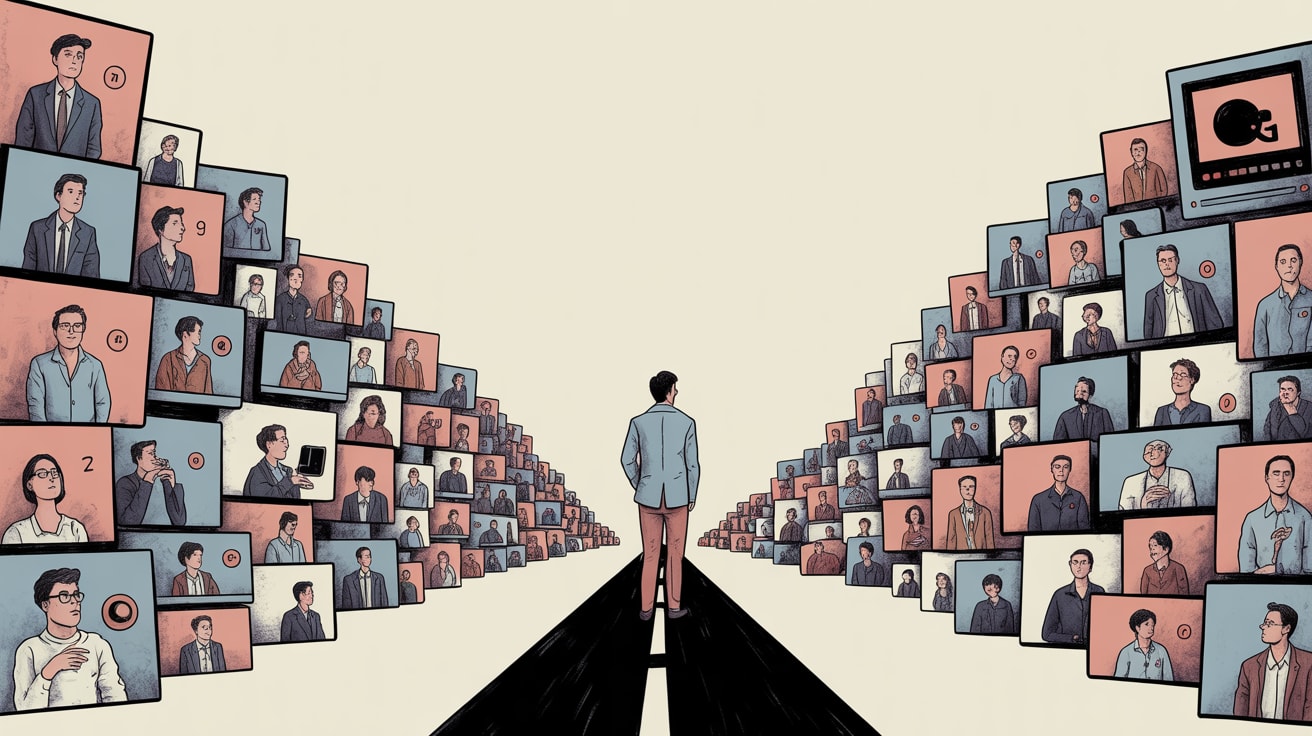
AI tools promise cheap ad volume, but shrinking organic reach means attention is the scarce resource. Here's how to balance both in your MarTech stack.
Brands are producing more ads than ever. Fewer people are seeing them organically. And the proposed solution — generate even more ads, faster, cheaper — might be solving the wrong problem entirely.
The Reach Collapse Is Real, But Attention Moved, Not Disappeared
Marketing leaders have absorbed the organic reach decline narrative for years. What’s shifted more consequentially is where attention now concentrates. Thomas Noh at Martech Zone puts numbers to it: over 200 billion Reels are viewed daily, users spend roughly 2.5 hours per day on social platforms, and TikTok’s active user base has crossed 3 billion. Attention hasn’t evaporated — it’s pooled into a handful of high-velocity, algorithm-curated environments.
The strategic implication is uncomfortable: if your media plan still treats Facebook feed and Instagram Stories as reach vehicles rather than paid-only channels, you’re not running a media strategy, you’re running on memory. In Southeast Asia, this concentration is sharper — platform ecosystems like TikTok Shop, Shopee Live, and LINE are capturing commerce-intent attention that would have lived on brand-owned properties five years ago. Organic is a retention tool now. Paid is how you grow.
The AI Volume Argument Is Legitimate — With a Catch
Performance marketers do have a genuine creative production problem. Algorithms reward variation. Testing 20–40 ad variants per month is now table stakes for competitive categories, but traditional UGC production — running $150–$500 per video with 2–3 week lead times — makes that cadence financially and operationally impossible for most teams.
Tools like ClipMake.ai are entering this gap with a blunt value proposition: AI-generated UGC-style video ads at roughly $2.50 per unit versus $300 for a human creator. For a team running 30 variants monthly, that’s the difference between a $9,000 creative line item and a $75 one. The math is hard to argue with when you’re in pure testing mode — finding hook winners, killing underperformers, iterating fast.
But here’s the catch that most tool vendors won’t put in their landing page copy: volume without a distribution thesis is just cheaper waste. If you’re producing 40 variants and your paid social CPMs are rising because you’re fishing in the same saturated inventory pool as everyone else with the same AI-generated aesthetic, you haven’t solved the problem — you’ve made it cheaper to ignore it.
Stack Architecture: Where AI Creative Tools Actually Fit
The brands getting genuine leverage from AI creative tools aren’t using them to replace strategy — they’re using them to compress the feedback loop between hypothesis and data. Here’s what that looks like in practice:
Hypothesis layer (human): A strategist identifies three distinct audience tension points based on first-party data or platform insight tools. Each tension becomes a creative brief — not a full production brief, a single-sentence hook premise.
Production layer (AI): Tools like ClipMake generate 8–12 variants per premise, testing different visual treatments, pacing, and CTA framing. Total cost: under $50. Timeline: hours, not weeks.
Signal layer (platform): Meta’s Advantage+ or TikTok’s Smart Performance Campaigns run variants against each other. Within 72 hours, you have statistically meaningful signal on which premises land — before committing budget to polished production.
Amplification layer (human + paid): Winners get investment. Losing variants get killed. Human creators or production budgets are reserved for the formats that earn it.
This architecture works because it treats AI as a signal-generation tool, not a content factory. The failure mode — and it’s a common one in teams that have over-indexed on tool acquisition — is skipping the hypothesis layer entirely and using AI to produce volume without a clear question the volume is meant to answer.
The Multilingual Production Problem Southeast Asian Teams Actually Face
For marketing teams operating across Southeast Asia, the AI creative volume argument has an additional wrinkle that rarely appears in tool demos: language and cultural variation multiplies your variant count by a factor most Western-built tools weren’t designed to handle gracefully.
A campaign running across Thailand, Vietnam, Indonesia, and the Philippines isn’t 30 variants — it’s potentially 120, once you account for language localisation, platform-specific formatting (TikTok vertical vs. Shopee banner vs. LINE rich message), and cultural considerations around colour, imagery, and offer framing. An AI tool that produces fluent English UGC at $2.50 per unit may produce stilted Bahasa or phonetically awkward Thai voice-over at the same price point, but with conversion rates that make the economics look very different.
Before any Southeast Asian team commits to an AI creative production tool, the audit questions should include: does it support native-language script generation with regional dialect awareness? Has it been validated against Southeast Asian platform ad specs? And critically — who on your team has the linguistic and cultural fluency to QA output before it goes live? The tool cost is $2.50. The brand cost of a localisation failure is considerably higher.
Key Takeaways
- AI creative tools solve a real production volume problem, but only if your team has a clear testing hypothesis — volume without a question is just cheaper noise.
- Organic reach is a retention channel now; growth in Southeast Asia’s platform ecosystems requires a paid-first distribution mindset, not a hope-and-post approach.
- Multilingual, multi-platform campaigns in Southeast Asia multiply creative variant requirements in ways most AI tools weren’t designed to handle — audit localisation capability before you commit.
The more interesting strategic question isn’t whether AI can produce ads cheaply — it clearly can. It’s whether marketing teams are structurally set up to act on the signals that volume generates. Most aren’t. They have more creative output than their analytics workflows can process, more variants than their media buyers can manage, and more tools than their teams have time to learn. The technology has outpaced the operating model. Fixing that gap is where the real competitive advantage lives in 2026 — and it starts with being honest about what your stack is actually activated to do.
At grzzly, we work with marketing and growth teams across Southeast Asia who are sitting on under-activated MarTech stacks — tools that were bought with good intentions and integrated with insufficient ones. If your creative production and paid media workflows feel like they’re running in parallel rather than in sequence, that’s usually a stack architecture problem, not a budget one. Let’s talk
Sources

Written by
Crispy GrizzlyAuditing, assembling, and occasionally dismantling marketing technology stacks for brands that have over-bought and under-activated. Precision over proliferation.