HelloFresh and Hightouch ran AI-generated ads at Times Square. Here's what it means for programmatic creative strategy in Southeast Asia.
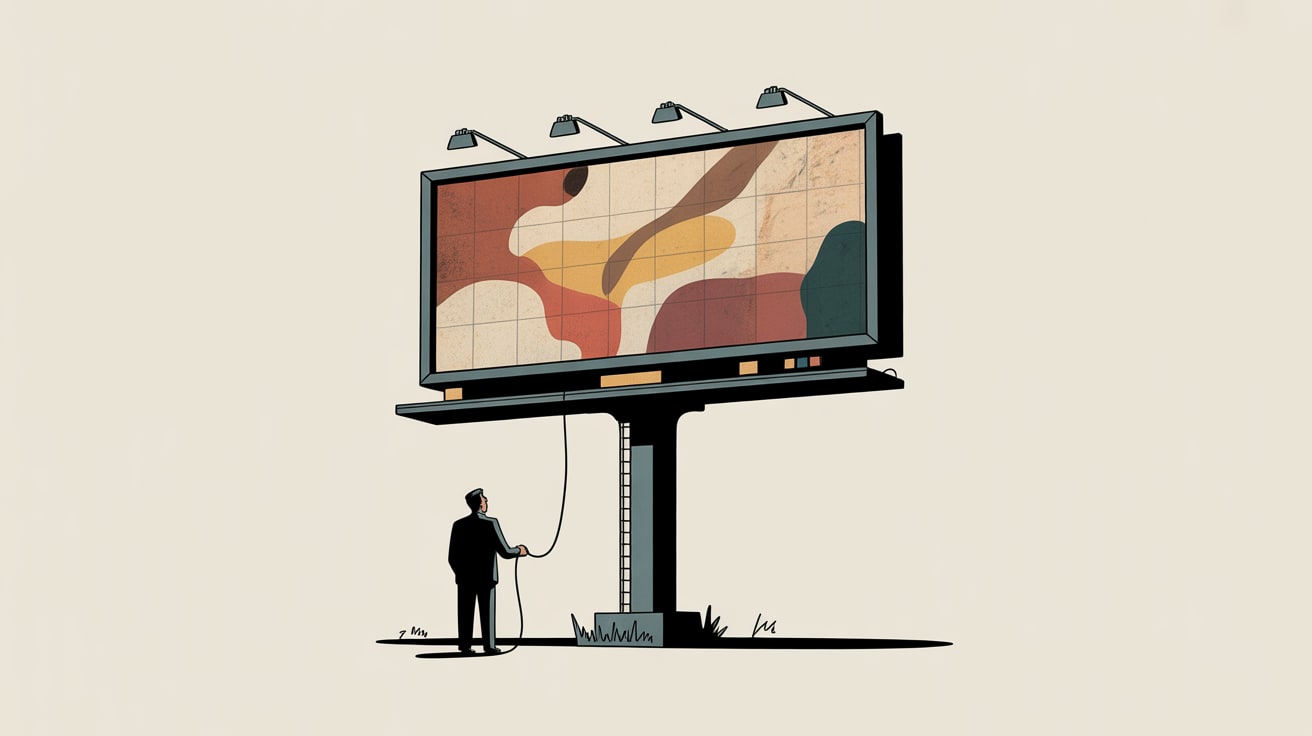
Times Square billboards have always been a flex. But when CDP platform Hightouch used a one-day June activation to run AI-generated creative for HelloFresh on those same screens, the flex shifted from budget to infrastructure.
This wasn’t a stunt about spectacle. It was a proof-of-concept about what happens when your customer data platform is close enough to your creative pipeline that the two can actually talk to each other.
The Real Story Isn’t the Billboard — It’s the Data Layer
AdExchanger’s coverage of the HelloFresh x Hightouch activation makes one thing clear: the interesting part was never the AI imagery itself. It was that Hightouch — primarily known as a reverse ETL and CDP tool — orchestrated AI creative output directly from customer data signals. The billboard was the output; the data pipeline was the product.
For programmatic teams, this is the architecture question that’s been sitting awkwardly in the room: how close is your creative production layer to your audience intelligence layer? In most ad stacks, the answer is “very far apart, with a lot of Slack messages in between.” Hightouch’s activation demonstrated what it looks like when that gap closes — dynamic creative that isn’t just personalised at the ad server level, but generated at the data layer.
The implication for brands running multi-market campaigns across Southeast Asia is significant. If you’re running across five countries with four languages and three platform ecosystems simultaneously, AI-assisted creative generation fed by first-party data isn’t a futuristic option — it’s the only sustainable production model.
Creator Marketing Is Getting Structurally Smarter — and More Embedded
While AI creative grabbed the flashier headline, Digiday’s research into creator marketing strategies points to a quieter structural shift: brands are no longer treating creators as a channel. They’re treating them as a creative and product function.
The research found brands embedding creators into seasonal campaign planning, product launches, and — critically — product development itself. That last one matters most to media strategists. When a creator is involved in product development, their content isn’t just authentic; it’s structurally differentiated from anything a post-launch brief could produce.
For Southeast Asian markets, this has a specific resonance. Creator ecosystems here operate differently from the West — micro and mid-tier creators on TikTok Thailand, Instagram Indonesia, or YouTube Philippines often carry higher trust signals with their audiences than macro influencers, and they work inside tight-knit community structures that brand-direct content simply can’t replicate. Brands like Wardah in Indonesia have understood this for years, building long-term creator relationships that function less like media buys and more like distributed content studios.
The strategic question isn’t whether to invest in creators. It’s whether your creator relationships are structured early enough in the campaign cycle to actually change the creative output — or whether you’re just handing them a brief and hoping.
Where AI Creative and Creator Strategy Converge
Here’s the tension that both these stories are circling without quite naming: AI creative and human creator content are on a collision course for the same brief.
Brands are being asked to produce more content, faster, for more surfaces. AI creative tools promise production velocity; creator partnerships promise cultural authenticity. The instinct is to separate them — use AI for performance creative, use creators for brand content. That’s a reasonable starting position, but it’s probably a temporary one.
The more interesting architecture is what happens when AI tools are trained on or informed by creator content — when a brand’s first-party data and its creator content library become inputs to the same generative system. HelloFresh and Hightouch didn’t go that far. But the infrastructure they demonstrated is pointing in that direction.
For programmatic teams in Southeast Asia, the immediate practical implication is about data hygiene and creative asset management. If you’re not tagging and structuring your creator content in a way that’s machine-readable — categorised by product, audience segment, platform format, and performance signal — you’re leaving value on the table when AI creative tooling matures to the point of being able to use it.
The Operational Reality Behind the Shiny Activation
One thing the HelloFresh case study quietly underscores: AI creative at scale requires clean data infrastructure before it requires a creative brief. Hightouch is a data platform. The fact that it’s the company running this activation — not a creative agency or an AI image tool — tells you something about where the actual work lives.
For marketing directors evaluating AI creative investment, the sequencing question matters more than the technology question. Do you have a CDP or equivalent that holds clean, structured first-party data? Is your creative production workflow documented clearly enough that an AI system could be trained against it? If the answer to either is no, the ROI on AI creative tooling will be marginal at best.
Creator marketing has the same sequencing issue. Digiday’s research points to brands expanding creator strategies — but the brands doing it effectively are those who built creator relationship infrastructure first: clear briefing processes, licensing frameworks, content usage rights that cover paid amplification, and measurement approaches that go beyond engagement rate.
In both cases, the technology is available. The bottleneck is operational readiness.
Key Takeaways
- AI creative is not a creative problem — it’s a data infrastructure problem. Solve your CDP architecture before you buy generative tooling.
- Creator strategies that embed talent at the product or campaign planning stage produce structurally differentiated content; post-launch briefs produce posts.
- In Southeast Asia’s multi-market, multi-language context, AI-assisted creative generation fed by first-party signals is rapidly becoming a production necessity, not an experiment.
The convergence of AI creative infrastructure and creator-led content strategies raises an uncomfortable question for CMOs: in two years, when the production velocity of AI is table stakes, what’s your actual differentiation — the data, the relationships, or the brief?
At grzzly, we work with growth teams across Southeast Asia to connect the dots between ad stack architecture, programmatic creative strategy, and creator programme design — because in most organisations, those conversations are happening in different rooms. If your media spend is generating data but not generating signal, that’s a conversation worth having. Let’s talk
Sources

Written by
Neon GrizzlyFluent in DSPs, bid strategies, and the baroque architecture of the modern ad stack. Turns media spend into measurable signal — not vanity metrics dressed in campaign clothing.