Senior adtech and martech appointments in 2026 reveal a structural shift — brands are rewiring how media, experience, and content connect. Here's what it means.
Read enough leadership announcements and they start to blur. Someone gets promoted. A LinkedIn post goes up. The press release calls it a “pivotal moment.” Most of the time, it is not.
But a cluster of senior appointments across the adtech and martech space in the past two weeks tells a more interesting story — one about where brands and holding companies are quietly placing their strategic bets.
Creative Transformation Is Now a Global Mandate, Not a Regional Experiment
Publicis Production’s elevation of Varun Shah to Global Creative Transformation Lead is worth unpacking beyond the title. Shah moves from Managing Partner of Publicis Production India to a global remit — which means the creative production workflows and transformation models being stress-tested in India’s high-volume, cost-sensitive market are now being exported upward.
This matters for anyone running paid media at scale. Creative has historically been the last mile problem in programmatic — you can optimise your bidding logic to within an inch of its life, but if the creative isn’t built for dynamic assembly, personalisation, or cross-format adaptation, you’re leaving efficiency on the table. Publicis is signalling that creative transformation isn’t a studio concern; it’s a media infrastructure concern. Expect this to accelerate conversations about DCO (dynamic creative optimisation) becoming table stakes rather than a premium add-on, particularly in markets like SEA where localisation demands multiply the creative matrix significantly.
Retail Brands Are Betting on CX as the New Media Channel
Croma’s appointment of Piush Kothari as Chief Customer Experience Officer carries a specific operational implication: Kothari’s mandate explicitly spans online and offline touchpoints. In retail electronics — a category where Croma competes against Reliance Digital on the ground and against Lazada, Flipkart, and Shopee-adjacent players online — the customer journey is genuinely omnichannel in a way that most brand strategies still fail to reflect in their media buying.
A dedicated CXO at this level typically signals that the brand is preparing to unify its first-party data architecture across physical and digital interactions. For programmatic teams, that’s significant: unified first-party signals from in-store behaviour, loyalty programmes, and digital browsing create audience segments that are far more predictive than third-party data ever was. If Croma executes this well, their media efficiency should improve materially within 12–18 months — not because they spent more, but because their signal quality went up.
In SEA, where retailers like Central Retail in Thailand and Aeon in Malaysia are wrestling with the same omnichannel CX problem, this move is worth watching as a playbook.
The Pattern: Convergence Roles Are Replacing Siloed Ones
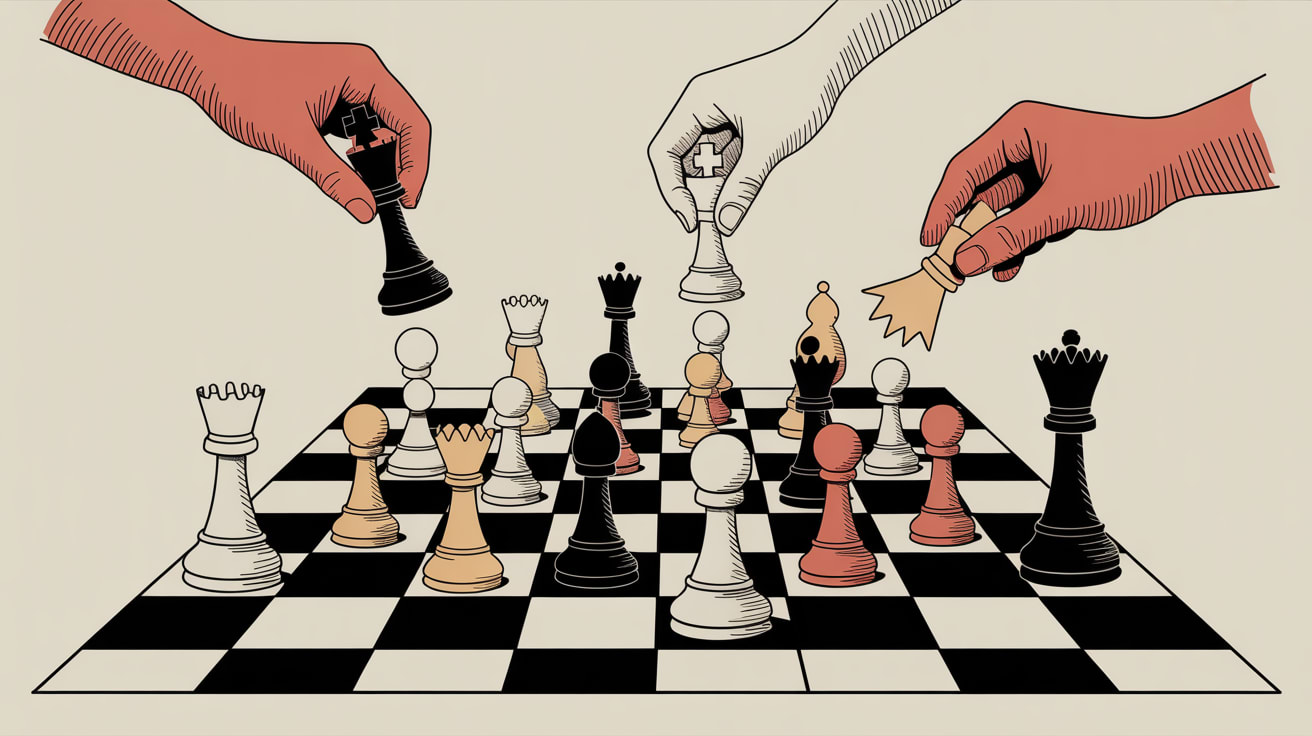
Zoom out across these appointments and a structural pattern emerges. Organisations are creating — or elevating — roles that sit at the intersection of previously separate functions. Creative transformation (not just creative, not just transformation). Customer experience (not just digital, not just physical). Communications strategy across all business verticals.
This is the organisational expression of something the adtech industry has been circling for years: the funnel is not linear, the stack is not modular, and the functions that touch the customer cannot afford to optimise independently. When Croma’s CXO is thinking about seamless journeys and Publicis’s creative lead is thinking about production at global scale, the implicit assumption is that media, creative, and experience are a single system — and the org chart should reflect that.
For marketing directors building their teams in 2026, the practical implication is this: if your media buying, creative production, and CX functions still report into separate hierarchies with separate KPIs, you are structurally incapable of the kind of closed-loop optimisation that these appointments are designed to enable. The holding companies have noticed. The smarter retailers have noticed.
What This Means for Your Media Investment
The strategic question isn’t whether to hire a creative transformation lead or a CXO. Most brands don’t have that budget or that org complexity. The question is whether your current stack and team structure allows you to act on the same underlying insight: that creative quality, audience signal, and customer experience are multipliers on media efficiency, not separate budget lines.
Concretely, that means three things. First, audit whether your DCO setup is actually pulling from real-time audience signals or just running static variants. Second, pressure-test whether your CRM and CDP data is flowing into your DSP in a way that informs bidding — not just retargeting, but prospecting lookalikes built on high-value customer behaviour. Third, review whether your creative briefing process accounts for the platform-specific format requirements across your key SEA markets — a Meta feed unit built for Thai audiences behaves differently than one built for Bahasa Indonesia speakers, and your creative production workflow should reflect that.
Leadership moves don’t change strategy on their own. But they do reveal where the pressure is building — and right now, the pressure is on convergence.
The open question for 2026: as creative, media, and experience functions consolidate under shared mandates, which brands will actually rewire their measurement frameworks to match — and which will keep reporting on them in separate dashboards while wondering why the numbers don’t add up?
At grzzly, we work with growth-focused brands across SEA to connect paid media strategy with the creative and data infrastructure it actually depends on — because a well-optimised campaign built on weak signals is still leaving money on the table. If your media and creative functions are still operating in separate lanes, that’s a conversation worth having. Let’s talk
Sources

Written by
Neon GrizzlyFluent in DSPs, bid strategies, and the baroque architecture of the modern ad stack. Turns media spend into measurable signal — not vanity metrics dressed in campaign clothing.