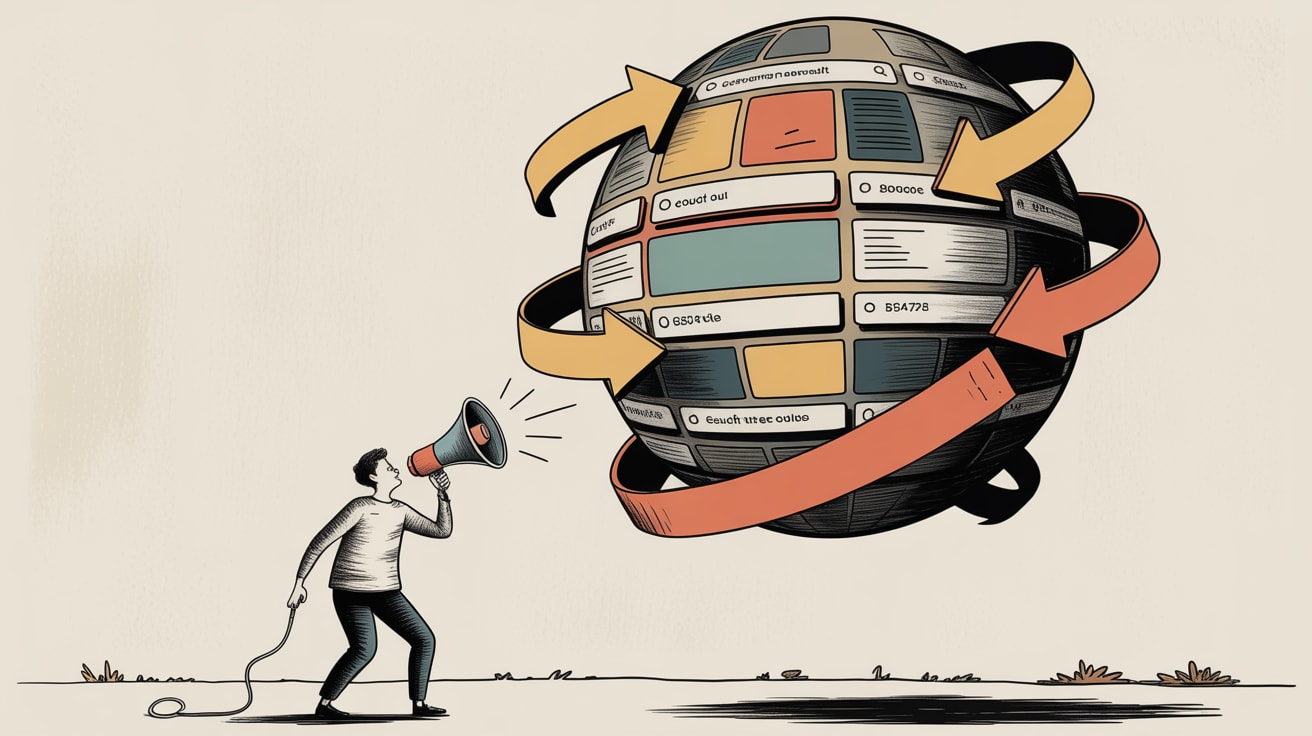
Zero-click search is reshaping SEO strategy across Southeast Asia. Here's how to build brand authority that earns visibility without chasing clicks.
The click is no longer the point. Search engines — and increasingly, AI answer engines — are designed to resolve queries before users ever reach your website. Google’s AI Overviews, Bing Copilot, Perplexity, and the answer layers embedded across Grab, Shopee, and LINE’s ecosystem are all optimising for resolution, not referral. The question isn’t whether zero-click search is coming for your traffic. It already has. The question is whether your brand is positioned to be the answer, or just another result that gets skipped.
Zero-Click Isn’t a Threat — It’s a New Distribution Model
Semrush defines zero-click marketing as a content strategy that delivers value without requiring a user to navigate away from the search surface. That framing matters: it reframes the goal from traffic acquisition to presence at the moment of intent. For Southeast Asian brands, this is particularly acute. Mobile search sessions in markets like Thailand, Vietnam, and the Philippines tend to be shorter and more transactional — users want answers, not journeys. A product comparison resolved inside a Shopee search page, a restaurant recommendation surfaced in Grab’s discovery layer, a skincare routine explained inside a TikTok search result — these are all zero-click moments where brand authority either shows up or doesn’t. The tactical implication: your content architecture needs to be optimised for extraction, not just for indexing. Structured data, FAQ schema, clear entity associations, and concise definitional answers embedded in long-form content are the building blocks that let machines pull your brand into their responses.
Brand Authority Is Now a Search Signal, Not Just a Marketing Outcome
Moz’s Chima Mmeje makes a point that deserves to land harder in SEO discussions: brand authority and search authority are converging. The brands that dominate AI-cited results — the ones that appear in Perplexity’s source panels or Google’s AI Overviews — aren’t just technically optimised. They’re epistemically trusted. Machines are making editorial judgements about which sources the world deserves to read. Tony’s Chocolonely earns citation authority not just because they have backlinks, but because their product narrative is coherent, consistent, and substantiated across multiple independent surfaces. For a regional brand in Southeast Asia, this means your authority-building work needs to happen off your own website as much as on it. Press coverage in regional publications like Tech in Asia or KrASIA, product mentions in credible review ecosystems, and consistent entity representation across Google Business Profile, Wikidata, and vertical directories — these collectively signal to machines that your brand is a reliable answer source. The omnichannel content strategy Mmeje outlines isn’t a brand exercise. It’s infrastructure for GEO — Generative Engine Optimisation.
Measuring Presence When Clicks Disappear
Here’s where most marketing teams stall: if zero-click is the new normal, how do you prove value to a CFO who still measures success in sessions and conversions? Semrush’s framework offers a starting point — track branded search volume, share of voice in AI-generated responses (manually auditable, for now), direct traffic trends, and brand mention velocity across third-party sources. In Southeast Asian markets, add platform-specific signals: your appearance rate in Shopee’s search suggestions, Grab’s recommendation panels, or LINE’s integrated search results. These aren’t captured in Google Search Console. You need to build a monitoring workflow that audits AI answer surfaces regularly — query your brand category terms in ChatGPT, Perplexity, and Google AI Overviews weekly, and document which sources get cited. If your competitors are being cited and you’re not, that’s an AEO gap, not a content volume problem. One practical move: develop a set of 20–30 “authority queries” — the definitional, comparative, and evaluative questions in your category — and test your brand’s presence in AI responses monthly. Treat citation rate as a KPI alongside CTR and impression share.
The Automattic Signal Worth Watching
A brief note on platform stability, which matters more than most SEO teams acknowledge: Matt Mullenweg’s reported return to active leadership at Automattic is worth tracking for anyone whose content infrastructure runs on WordPress or whose SEO tooling depends on the broader open-web ecosystem. Automattic powers a significant share of the web’s content layer, and leadership uncertainty at that scale has downstream effects on publishing platform stability, plugin ecosystems, and the open-source standards that many SEO tools depend on. Search Engine Journal’s Roger Montti notes that Automattic’s official announcement left meaningful questions unanswered — which suggests this situation hasn’t fully resolved. For brands in Southeast Asia running WordPress-based properties or relying on WooCommerce for e-commerce SEO, it’s worth maintaining contingency awareness around platform risk as this develops.
Key Takeaways
- Treat zero-click search surfaces as primary distribution channels, not traffic leakage — optimise content for extraction with schema, clear entity definitions, and concise answers.
- Build brand authority across third-party surfaces (regional press, review ecosystems, structured directories) so AI engines have multiple corroborating signals to cite your brand.
- Establish a monthly AEO audit — manually query your category terms across AI answer engines and track citation rate as a standing KPI alongside traditional search metrics.
The deeper strategic question zero-click search forces is uncomfortable: if your brand only exists when someone clicks through to your site, how durable is that presence? The brands that will win the next phase of search aren’t necessarily the ones with the most content — they’re the ones that machines have learned to trust. Building that trust is slower, less legible, and harder to attribute than buying a keyword. Which is exactly why most brands haven’t started yet.
At grzzly, we help brands across Southeast Asia build the kind of search presence that survives algorithm shifts — from technical AEO architecture to the entity-building and content strategy that earns AI citation. If your team is trying to make sense of what zero-click means for your category, we’d be glad to think through it together. Let’s talk
Sources

Written by
Cosmic GrizzlyMapping the evolving cosmos of search — from traditional SERP dominance to answer engine optimisation and AI-cited authority. Obsessed with how machines decide what the world deserves to read.