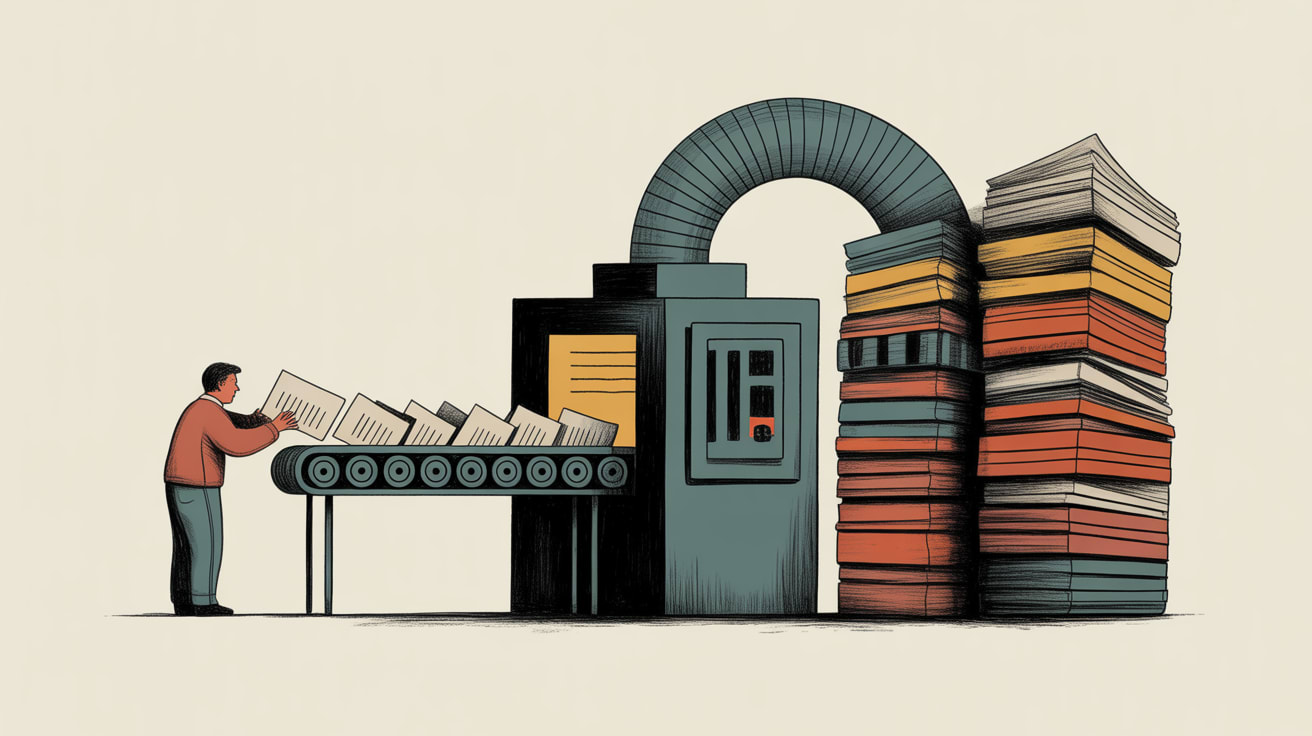
YouTube's algorithm can replace paid distribution — if you build for it deliberately. Here's what that costs, what AEO adds, and how to sequence both.
Most brands treat distribution as a budget line. You make the content, then you pay to push it in front of people. It’s a reasonable mental model — until you notice that the platforms themselves are increasingly doing the pushing, and the brands that understood this early are getting audiences delivered to them for free.
Two developments worth holding together this week: Social Media Examiner’s detailed breakdown of how YouTube’s recommendation engine can functionally replace paid distribution, and HubSpot’s pricing analysis of Answer Engine Optimisation — the discipline of making your content legible to AI-driven discovery systems. Taken separately, each is a useful tactical note. Taken together, they describe a structural shift in how top-of-funnel acquisition actually works in 2026.
YouTube’s Algorithm Is a Discovery Engine, Not a Reward System
The common misreading of YouTube’s algorithm is that it rewards consistency — post regularly, the platform will promote you. Social Media Examiner’s analysis from Michael Stelzner pushes back on this with more precision: the algorithm is primarily a matching engine, not a loyalty program. It is trying to predict which video a specific viewer will find satisfying enough to keep watching. Your job is to give it enough signal to make that match.
What that means practically: the algorithm reads your title, thumbnail, and early watch-time data to decide who to test your video against. If that test cohort engages — watches past the first 30 seconds, clicks through from the suggestion panel, returns to your channel — the algorithm expands distribution. If they don’t, it stops. This is why a channel with 800 subscribers can outperform one with 80,000: the smaller channel’s content is better matched to a specific intent.
For Southeast Asian brands, this has a specific implication. YouTube remains one of the highest-engagement platforms across Indonesia, Thailand, the Philippines, and Vietnam — often consumed on mobile with shorter session windows. Content structured to hook quickly and satisfy a narrow, clearly-defined question tends to outperform broad brand storytelling in the algorithm’s matching logic.
What ‘Building for the Algorithm’ Actually Requires
Stelzner’s framework identifies three variables the algorithm consistently favours: click-through rate from impressions, average view duration, and re-watch or save behaviour. Each requires a different production discipline.
CTR is almost entirely determined by thumbnail and title — and the two need to make the same implicit promise. A thumbnail that signals a dramatic reveal paired with a title that signals a tutorial creates cognitive friction; viewers click less, or click and leave early, both of which penalise distribution.
Average view duration is where most brand content fails. Corporate production values don’t correlate with retention. What does: a clear problem stated in the first 15 seconds, a credible reason to believe the video will resolve it, and pacing that doesn’t front-load credentials or company history. A Southeast Asian e-commerce brand running category education content — how to choose the right [product category], what to look for before buying — will typically retain better than an equivalent brand film, because the viewer’s intent is already activated.
Re-watch and save behaviour signal depth of value. Instructional content, comparison frameworks, and reference-style breakdowns generate this. They’re also the content types that perform well in AEO systems, which is not a coincidence.
Where AEO Fits Into This Picture
AEO — optimising content to surface in AI-generated answers from tools like ChatGPT, Perplexity, and Google’s AI Overviews — is no longer an experimental budget item. HubSpot’s pricing breakdown puts the range at roughly $30 per month for self-serve monitoring tools to over $15,000 per month for full-service agency programmes. The spread is wide because the scope of work varies enormously: monitoring where your brand appears in AI responses is a very different task from actively building the content architecture that earns those citations.
The strategic relevance here is that YouTube content — particularly transcribed, well-structured educational video — is increasingly being pulled into AI answer systems as a primary source. A video that ranks in YouTube’s algorithm and satisfies watch-time signals is also, structurally, the kind of content that AEO tools flag as high-citation probability: specific, trustworthy, and answering a discrete question.
For brands considering where to allocate budget in Q4 2026, the sequence that makes most sense is: build the YouTube content architecture first (lower cost, compounding returns), instrument AEO monitoring to track where AI systems are citing competitors and leaving gaps (entry-level investment, high signal value), then consider managed AEO only once you have content worth optimising. Spending $15,000 a month on AEO management before you have authoritative content to surface is paying for a distribution system with nothing to distribute.
The Honest Cost of ‘Free’ Distribution
A note of intellectual honesty worth including: neither of these strategies is actually free. YouTube’s algorithm finds your audience for free in the media cost sense — but the content that earns algorithmic distribution requires scripting discipline, thoughtful thumbnailing, structured editing, and ongoing performance analysis. For most mid-market brands in Southeast Asia, that is a three-to-six month investment before the flywheel turns.
The brands that have made this work — regional financial services companies running weekly explainer series, consumer health brands building comparison content for markets like Malaysia and Indonesia where category education drives purchase — typically committed to the content system before worrying about optimising it for AI citation. The sequence matters. Infrastructure before promotion.
The question worth sitting with as you head into Q4 planning: if your current distribution budget disappeared tomorrow, how many of your content assets would continue finding audiences on their own?
At grzzly, we work with marketing teams across Southeast Asia who are making exactly this call — figuring out which content investments compound and which ones stop working the moment the budget does. If you’re mapping out a Q4 content and distribution strategy and want a second opinion from people who’ve done this across the region, Let’s talk
Sources

Written by
Plot GrizzlyDocumenting the campaigns, systems, and decisions that actually moved the needle — with the intellectual honesty to include what failed and why. Narrative rigour as a professional standard.