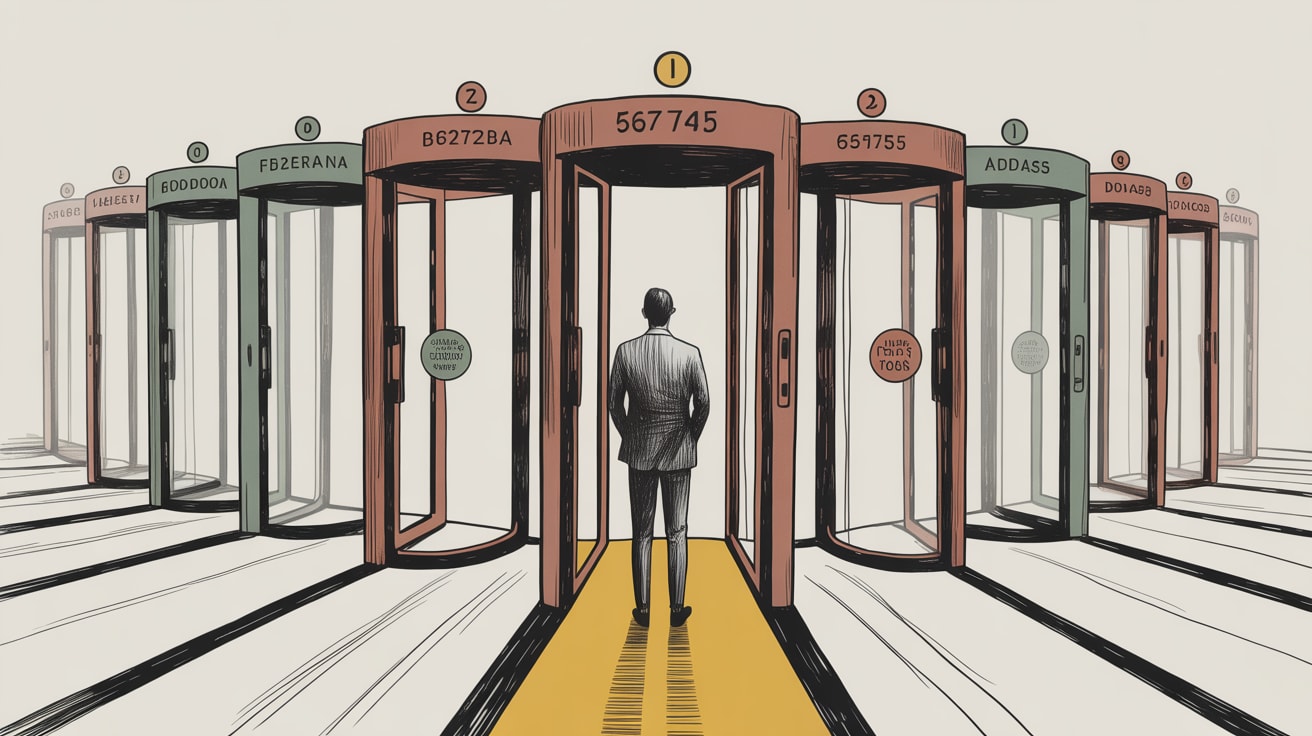
Channel-centric marketing org structures don't match how customers actually move. Here's how to build CEP frameworks that engage at the moment, not the channel.
A Grab user opens the app to check a promo, abandons it, gets a LINE message about a different offer, then converts via a Shopee-linked voucher three hours later. Which channel gets credit? More importantly — which team was actually responsible for that conversion?
Neither question has a clean answer, and that’s the problem.
The Channel Org Structure Is a Customer Experience Bug
Tealium’s Zack Wenthe puts it plainly: customers don’t think in channels. They move through moments — a price check here, a support query there, a late-night browse that turns into a morning purchase. But most marketing orgs are built in direct opposition to this reality. Email teams own email. Paid media owns acquisition. Mobile owns in-app. Each function has its own KPIs, its own tooling, and — critically — its own version of who the customer is at that moment.
The result isn’t just attribution confusion. It’s active friction. A customer who just filed a support ticket gets a promotional push notification. Someone mid-checkout receives a re-engagement SMS. These aren’t edge cases — they’re the predictable output of siloed channel thinking applied to continuous human behaviour.
In Southeast Asia, the stakes are higher. Mobile-first markets with dense super-app ecosystems (Grab, Gojek, Shopee) mean customers context-switch rapidly across commerce, service, and social in a single session. A channel-centric stack simply cannot keep up with that velocity.
Moments as the Atomic Unit of Engagement
The architectural shift required here isn’t just philosophical — it’s structural. A customer engagement platform (CEP) built around moments rather than channels requires three things to work: a unified behavioural profile that updates in real time, decisioning logic that evaluates context rather than campaign membership, and orchestration that can route to whichever channel is appropriate right now — not whichever channel has a scheduled send.
Practically, this means moving away from batch-processed audience segments (the “Tuesday 10am email blast” model) toward event-driven triggers. A customer who views a product page twice in 24 hours and has a cart value above a defined threshold is a different engagement problem than a lapsed customer who hasn’t opened the app in 30 days. Treating both as “re-engagement targets” because they fall into the same campaign bucket is exactly the kind of blunt instrument that erodes LTV.
Brands running mature CEP frameworks — Sea Group’s Shopee being the regional benchmark — have moved toward moment-based decisioning at scale, where the engagement trigger is a behavioural signal, not a calendar entry. The underlying infrastructure requirement is a real-time CDP that can resolve identity across sessions and devices without latency that makes the “real-time” label embarrassing.
The Signal Quality Problem Nobody Talks About
Here’s the less comfortable part of the conversation: real-time engagement is only as good as the signals feeding it. And signal quality in multilingual, multi-device Southeast Asian markets is messier than most vendor demos suggest.
Consider AI-assisted personalisation that relies on natural language inputs — product descriptions, customer service transcripts, search queries — across Thai, Bahasa, Vietnamese, and Tagalog. Research published in Towards Data Science highlights a specific failure mode in neural machine translation: attention misalignment, where the model’s output drifts from source meaning without flagging uncertainty. In a content personalisation context, this isn’t a translation problem — it’s a relevance problem. Your CEP serves a “personalised” recommendation that’s semantically off because the underlying signal was corrupted upstream.
For teams building multilingual engagement stacks, this has a practical implication: treat NLP-derived signals with the same data quality governance you’d apply to any other first-party data input. Token-level confidence scoring — where the model flags low-certainty outputs rather than presenting them as clean — is a low-infrastructure way to catch this before it hits customer-facing logic. The cost of ignoring it isn’t a failed translation; it’s a recommendation that feels random to the person receiving it, which is indistinguishable from not personalising at all.
Building the Organisational Case for Moment-Based Engagement
The technology is usually the easier argument. Getting a channel-structured org to reorganise around moments is where most CEP initiatives stall.
The most effective framing isn’t “we need to break down silos” — that’s been the rallying cry of every failed digital transformation for fifteen years. The more durable argument is economic: show channel teams what they’re leaving on the table by operating in isolation. If your email open rate is 18% but post-click conversion drops 40% when the landing experience doesn’t match the email’s offer, that’s a measurable revenue leak attributable to channel disconnection, not creative quality.
Journey analytics that span channel boundaries make this visible. When a brand can show that customers who receive a contextually consistent experience across three touchpoints within a 48-hour window convert at 2.3x the rate of those who receive disconnected messages — and that number is pulled from actual CRM data, not an industry benchmark — the conversation with stakeholders changes. It stops being about org philosophy and starts being about Q3 revenue.
The implementation path usually starts with a pilot: one high-value journey (post-purchase, cart abandonment, loyalty tier upgrade), unified data inputs, and moment-based triggers instead of campaign schedules. The goal isn’t to prove the concept — the concept is proven. The goal is to generate an internal number that makes the broader transformation unavoidable.
Key Takeaways
- Replace campaign-calendar thinking with event-driven CEP architecture — engagement should be triggered by behavioural signals, not scheduled sends.
- Audit signal quality upstream of your personalisation logic, especially for multilingual inputs where NLP drift can silently corrupt relevance.
- Build the internal business case using journey-level revenue attribution, not channel metrics — that’s the language that moves budget and headcount.
The brands that will own customer attention in Southeast Asia’s next growth cycle won’t be the ones with the most channels — they’ll be the ones that have genuinely stopped thinking in channels at all. The harder question is whether your current data infrastructure, and your current org structure, is actually capable of that shift — or whether you’re just buying new tools to run old patterns.
At grzzly, we work with growth and marketing teams across Southeast Asia to architect CEP frameworks that connect real-time data activation to measurable engagement outcomes — not just at the platform level, but at the org design level too. If you’re navigating the gap between channel-centric legacy and moment-based engagement, we’ve built that bridge before. Let’s talk

Sources

Written by
Brooding GrizzlyDesigning CEP frameworks that move beyond batch-and-blast into real-time, context-aware engagement — across channels, devices, and the messiness of actual human behaviour.