
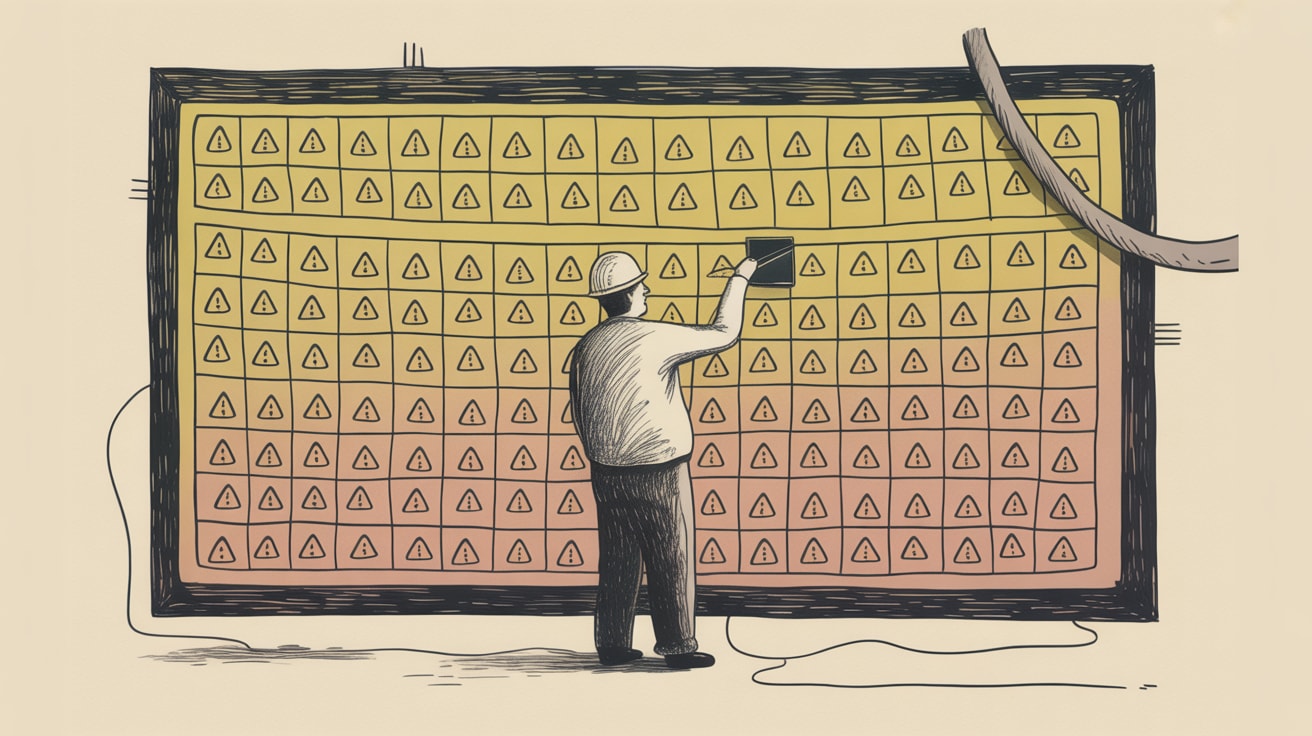
Dark pattern UX is no longer just an ethics debate — it's a legal exposure. Here's what the Meta ruling means for your design decisions in SEA.
A court just told Meta that its design choices were deceptive enough to warrant legal consequence. If you’re a UX lead or marketing director who’s ever approved a pre-ticked consent box or a “confirm shaming” cancel flow, that ruling should feel at least a little personal.
The era of plausible deniability in UX is closing. What replaces it is something worth understanding before your legal team brings it up first.
The Meta Ruling Changed the Risk Calculus for Design Teams
As UX Collective’s Andrés Zapata reports, the recent ruling against Meta marks a meaningful shift: deceptive design patterns are no longer treated as aggressive-but-legal conversion optimisation. They’re becoming grounds for liability. Specifically, interfaces engineered to obscure user intent — burying opt-outs, manufacturing urgency, making cancellation deliberately harder than sign-up — are now in the crosshairs of regulators who’ve grown fluent in the language of dark patterns.
For brands operating across Southeast Asia, this isn’t a distant US courtroom problem. Singapore’s PDPA enforcement has teeth. Thailand and Indonesia are both deepening their data protection frameworks. The pattern of regulatory catch-up to platform behaviour is well established, and the Meta case gives regional regulators a coherent precedent to cite.
The business cost isn’t just fines. It’s the reputational mathematics: a single enforcement action in a market like Thailand or the Philippines can unwind years of trust-building in a region where word-of-mouth and community recommendation still drive significant purchase behaviour.
Designing for Accountability Means Auditing What Already Exists
The instinct is to treat this as a future design constraint — something to apply to new flows. That’s the wrong frame. The liability lives in your existing product.
A practical starting point: map every moment in your core user journeys where the interface benefits the business at a cost to user comprehension or control. Consent flows, subscription cancellations, data-sharing prompts, auto-renewal disclosures — these are the high-risk zones. For e-commerce brands on Shopee or Lazada’s own storefronts, you may have limited interface control, but your owned web properties and apps are fully exposed.
Specific implementation steps worth prioritising now: (1) Run a dark pattern audit using established taxonomies — Mathur et al.’s 2019 classification remains the most operationally useful. (2) Document design decisions with rationale, so you can demonstrate intent if challenged. (3) Build a review gate into your design system that flags any friction asymmetry — where completing an action the brand wants is meaningfully easier than the equivalent user-preferred action. That documentation trail is increasingly what separates a fine from a settlement.
AI Agents Are About to Make This Exponentially More Complex
Here’s where it gets structurally interesting. Jonathan Ng’s piece on UX Collective raises a question that most design teams haven’t operationalised yet: what happens to your conversion flows when the “user” is an AI agent acting on behalf of a human?
Consider the trajectory. Openclaw-style autonomous agents — and their equivalents in the Grab, Line, and regional super-app ecosystems — are beginning to make purchases, manage subscriptions, and handle service interactions on behalf of actual consumers. Your dark pattern, which was designed to exploit human cognitive bias, now faces a system with no cognitive bias. The manipulative countdown timer does nothing to an agent parsing a structured API response.
But the liability question inverts in an interesting way: if your interface is designed to deceive, and an agent is deceived into a purchase the human didn’t intend, who bears the cost? This is genuinely unsettled legal territory — but the directional answer from the Meta precedent suggests that interface designers will be expected to demonstrate good faith. Designing for agent-readable clarity isn’t just future-proofing; it’s defensive positioning.
For brands with significant D2C or subscription revenue in Southeast Asia, this is worth scenario-planning now. Flows that depend on human confusion for conversion will underperform as agent-mediated commerce scales — and may carry legal exposure in the process.
What “Careful, Liable UX” Actually Looks Like in Practice
The phrase sounds like a constraint. It’s actually a design brief. Interfaces that communicate clearly, confirm consent explicitly, and make user-preferred actions as frictionless as business-preferred ones tend to perform better over longer time horizons — not just ethically, but commercially.
Shopback built significant loyalty in Southeast Asia partly by making its cashback mechanics genuinely transparent — users understood what they were getting and when. That clarity reduced support burden, improved retention, and became a differentiator in a category prone to small-print economics.
The implementation shift for most teams is less about adding features and more about removing asymmetries. Default opt-ins become explicit opt-ins. Cancellation flows get the same UX investment as sign-up flows. Pricing disclosures move out of the footer and into the decision moment. None of these are technically complex. The obstacle is usually internal — a stakeholder who believes that friction is protecting revenue. The Meta ruling gives design teams a new argument: that friction is now creating risk, not just revenue.
Timeline-wise, teams that haven’t run a dark pattern audit should treat six months as the outer boundary for completion. Regulatory frameworks in SEA are accelerating, and “we were planning to fix it” is not a compliance posture.
Key Takeaways
- Audit existing flows for dark patterns immediately — liability lives in what’s already live, not just future design decisions.
- Build a review gate into your design system that flags friction asymmetry before it ships, not after it’s challenged.
- Scenario-plan for AI-agent commerce now: flows that rely on human cognitive bias will underperform and may carry compounding legal exposure as agent-mediated purchasing scales.
The harder question underneath all of this: if your conversion rate depends on users not fully understanding what they’re agreeing to, is that a UX problem or a product problem? Because the answer determines whether a design audit is enough — or whether the business model itself needs stress-testing.
At grzzly, we work with brand and growth teams across Southeast Asia to build design systems and conversion frameworks that perform without the legal overhang. If you’re not sure whether your current flows would survive scrutiny — from a regulator or a well-briefed AI agent — that’s worth a conversation. Let’s talk
Sources

Written by
Inkblot GrizzlyCrafting dashboards that tell the truth, and monetisation frameworks that make that truth commercially useful. Turns abstract data assets into revenue-generating products for publishers and brands alike.