From session timeout failures to AI eroding design collaboration, here's what the human cost of frictionless design really looks like in 2026.
There’s a version of digital design that looks clean in a Figma file and quietly fails real users in the wild. This week’s signal from across the design community points to the same underlying problem: we keep optimising for the frictionless ideal while ignoring the messy, variable, deeply human reality of how people actually use our products.
Session Timeouts Are Quietly Costing You Conversions — and Trust
Smashing Magazine’s Eleanor Hecks puts a sharp light on something most product teams treat as a backend concern: session timeout design. The premise is straightforward but the implications are substantial. When a session expires with no warning — or with a warning that’s too brief, too vague, or not screen-reader compatible — users lose progress. For someone managing a form submission on a slow mobile connection in Bangkok, or a person with a cognitive disability who simply needs more time, that’s not a minor inconvenience. It’s an exit event.
The accessibility dimension matters commercially, not just ethically. In Southeast Asia, where mobile internet speeds vary significantly between urban and rural areas, a 15-minute session window that might work for a fibre-connected user in Singapore can be catastrophic for someone on 4G in Chiang Rai. The fix isn’t complicated: give users an audible and visible warning at least two minutes before expiry, offer a one-click extension, and preserve form state server-side rather than in session memory. These are implementation decisions made in a sprint that compound into meaningful drop-off reductions at checkout, onboarding, and account creation.
AI Is Accelerating Design Output — and Eroding Design Thinking
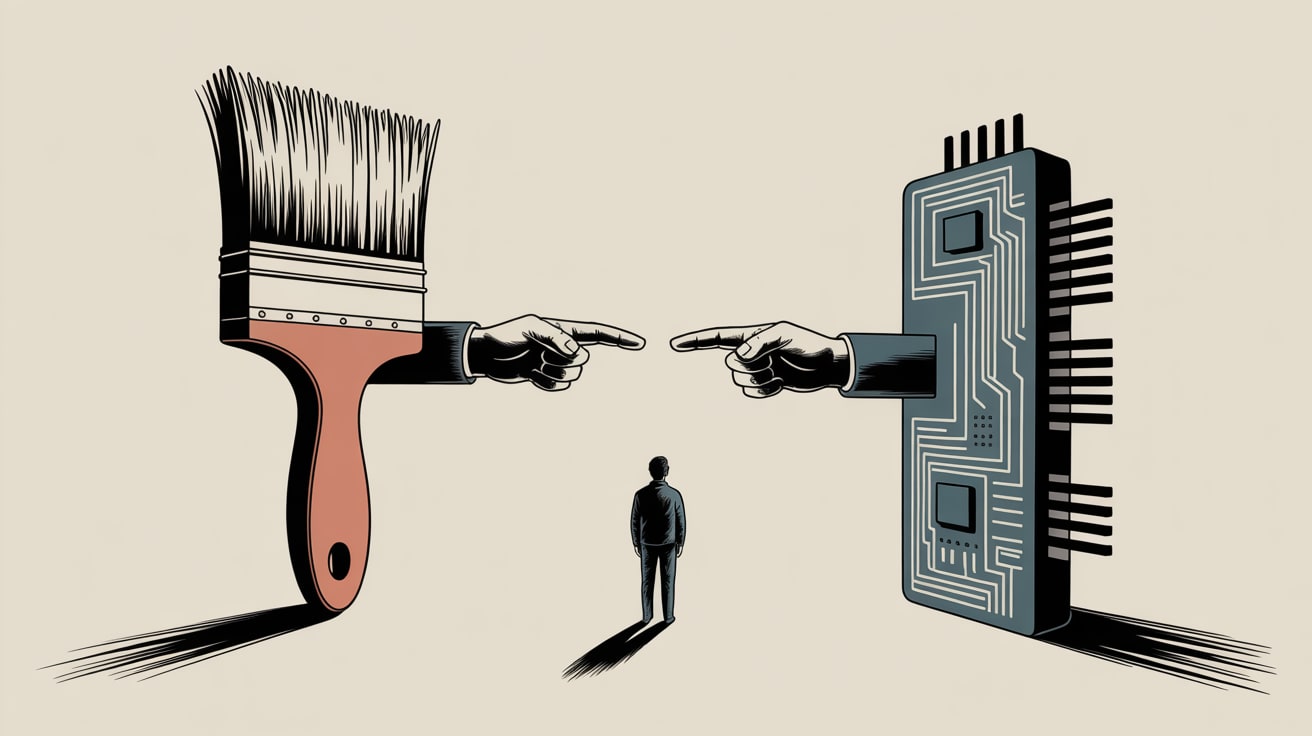
Speckyboy’s Eric Karkovack raises a question that the design-tech community is largely avoiding: if AI makes individual designers and developers more self-sufficient, what happens to the collaborative layer that produces better work?
The argument isn’t anti-AI — it’s structural. When a developer can generate a working UI component without filing a design request, the feedback loop between design intent and technical execution quietly disappears. Junior designers who previously learned by shadowing senior handoffs lose that exposure. Freelancers who built practices around specialised outsourcing find their client pipelines narrowing. The compounding effect is a design culture that ships faster but reasons less carefully about why it’s shipping what it’s shipping.
For brand and marketing teams in Southeast Asia managing campaigns across Shopee, Lazada, and LINE simultaneously, this has a specific risk profile. Platform-native design conventions differ meaningfully between these ecosystems — what reads as trustworthy on Lazada’s product page UI can feel off-brand on a LINE OA rich menu. AI-generated components trained on global design patterns can miss these nuances entirely. The antidote isn’t to slow down AI adoption — it’s to build structured design review rituals that AI acceleration doesn’t erode by default.
The Trust-Latency Gap: What Happens When Tools Shape the Designer
Fabricio Teixeira’s curation at UX Collective this week surfaces something closer to a philosophical concern — but with practical teeth. Chris R. Becker’s observation that “we become what we behold” is more than a provocation. It’s a systems warning. When design teams spend eight hours a day inside AI-assisted tools, their intuitions about what good design feels like start to drift toward what those tools produce efficiently.
This matters for brands because design intuition is the invisible quality control layer that sits upstream of any A/B test. A data-literate team can measure whether a redesigned checkout flow lifted conversion by 3.2%. What’s harder to measure is whether the design team’s baseline instinct for what “feels right” has been subtly recalibrated by autocomplete. The haptics design thread in Teixeira’s issue gestures at the same gap — as interfaces become more sensory and contextual, the design decisions that matter most are the ones that can’t yet be generated from a prompt.
Authenticity as a Design Differentiator — and What Miggie Bacungan Gets Right
Against this backdrop, the work of Filipino multidisciplinary designer Miggie Bacungan — featured in It’s Nice That’s Ones to Watch — reads almost as a corrective. Bacungan builds dense, street market-inspired visual worlds drawn from everyday Southeast Asian visual culture. The work is deliberate in its rejection of the polished, algorithmically safe aesthetic that dominates brand design right now.
For marketing directors managing brand identity across markets as visually diverse as Vietnam, the Philippines, and Indonesia, this is a strategic signal. Audiences in these markets have grown fluent at reading the difference between imagery that reflects their world and imagery that was designed in a template. The brands gaining traction on platforms like TikTok Shop SEA are increasingly those whose visual language feels sourced from the culture rather than applied to it. That’s a creative direction decision — but it’s also a data-backed one. Engagement rates on culturally resonant content consistently outperform generic regional adaptations in platform performance benchmarks across the region.
Three things worth acting on this week:
- Audit your session timeout UX — specifically on mobile and specifically for form-heavy flows. Measure abandonment at the session expiry threshold before assuming it’s a traffic quality problem.
- Build a design review gate that AI can’t skip — at minimum, a 30-minute cross-functional review for any AI-generated component going into a customer-facing template.
- Challenge your brand’s visual sourcing — if your imagery could have been generated for any market in Asia, it probably isn’t working hard enough for any of them.
The uncomfortable question design teams need to sit with in 2026 is this: as AI compresses the time between brief and output, are we making more considered decisions about what we build — or just more of them?
At grzzly, we work with brand and marketing teams across Southeast Asia who are navigating exactly this tension — between AI-accelerated output and the human judgment that makes design actually perform. Whether it’s auditing UX friction in your conversion flows or stress-testing your visual identity against platform realities, we’d rather talk specifics than generalities. Let’s talk

Sources
- https://smashingmagazine.com/2026/04/session-timeouts-accessibility-barrier-authentication-design/
- https://speckyboy.com/ai-change-collaboration-web-designers-developers/
- https://uxdesign.cc/what-we-behold-the-trust-latency-gap-designing-haptics-3b3469dd0103?source=rss----138adf9c44c---4
- https://www.itsnicethat.com/articles/miggie-bacungan-graphic-design-illustration-ones-to-watch-discover-200426

Written by
Mellow GrizzlyTranslating raw data into activated audience segments, predictive models, and decisioning logic. Comfortable at the intersection of the data warehouse and the campaign manager.