Why accessibility gaps, AI-blurred roles, and misaligned teams are quietly undermining UX quality — and what Southeast Asian digital teams can do about it.
Designers, almost universally, want to do right by their users. And yet, A List Apart points out the uncomfortable truth: exclusionary design keeps shipping. Not because anyone intended harm, but because intention and execution are two different pipelines — and in most teams, they’re not talking to each other.
For marketing and growth teams managing digital products across Southeast Asia’s fragmented device landscape, that gap is expensive. A checkout flow that breaks on a mid-range Android device running Thai-language input isn’t a UX failure. It’s a revenue failure.
Accessibility Is a Conversion Problem, Not Just an Ethics One
Alan Dalton’s piece in A List Apart is blunt and refreshing: designers aren’t the problem. The system is. Good people produce inaccessible experiences because accessibility is treated as a compliance checkbox rather than a design constraint from day one.
The business case is direct: WCAG-compliant contrast ratios, keyboard navigability, and alt text aren’t just for screen-reader users. In Southeast Asia, where a significant portion of users access the web on older devices with smaller screens and lower-resolution displays, poor contrast and cluttered layouts create friction for everyone. Shopee’s mobile-first product cards maintain high contrast and large tap targets precisely because their data shows conversion uplift from doing so — not because someone mandated WCAG 2.1.
The implementation fix isn’t a redesign. It’s a gate: add an automated accessibility audit (Axe, Lighthouse, or equivalent) to your CI/CD pipeline. Flag contrast failures and missing ARIA labels before they reach production. This costs a sprint to set up and saves recurring rework cycles.
When AI Blurs the Designer-Engineer Boundary, Quality Suffers
Smashing Magazine’s Carrie Webster identifies a quieter structural problem: as AI tools generate production-ready code from design files, the industry is sleepwalking into a role collapse. Designers who once handed off annotated mockups are now expected to deliver shippable components. The speed gain is real. The quality risk is underappreciated.
The danger isn’t that designers can’t write code. It’s that when they’re optimising for technical output, they’re not optimising for user experience. Micro-interaction decisions, error state logic, and edge case handling — the unglamorous work that separates a functional UI from an intuitive one — get compressed or skipped when the deliverable is a Figma-to-React export rather than a considered specification.
For teams in Southeast Asia managing multi-platform deployments across LINE, web, and app simultaneously, this is acute. A component that renders cleanly in Figma may behave differently inside LINE’s in-app browser or on a Grab mini-program. The designer’s job is to anticipate those failure modes. If they’re heads-down writing JSX, nobody is.
Misaligned Teams Create Experiences That Fall Apart Mid-Journey
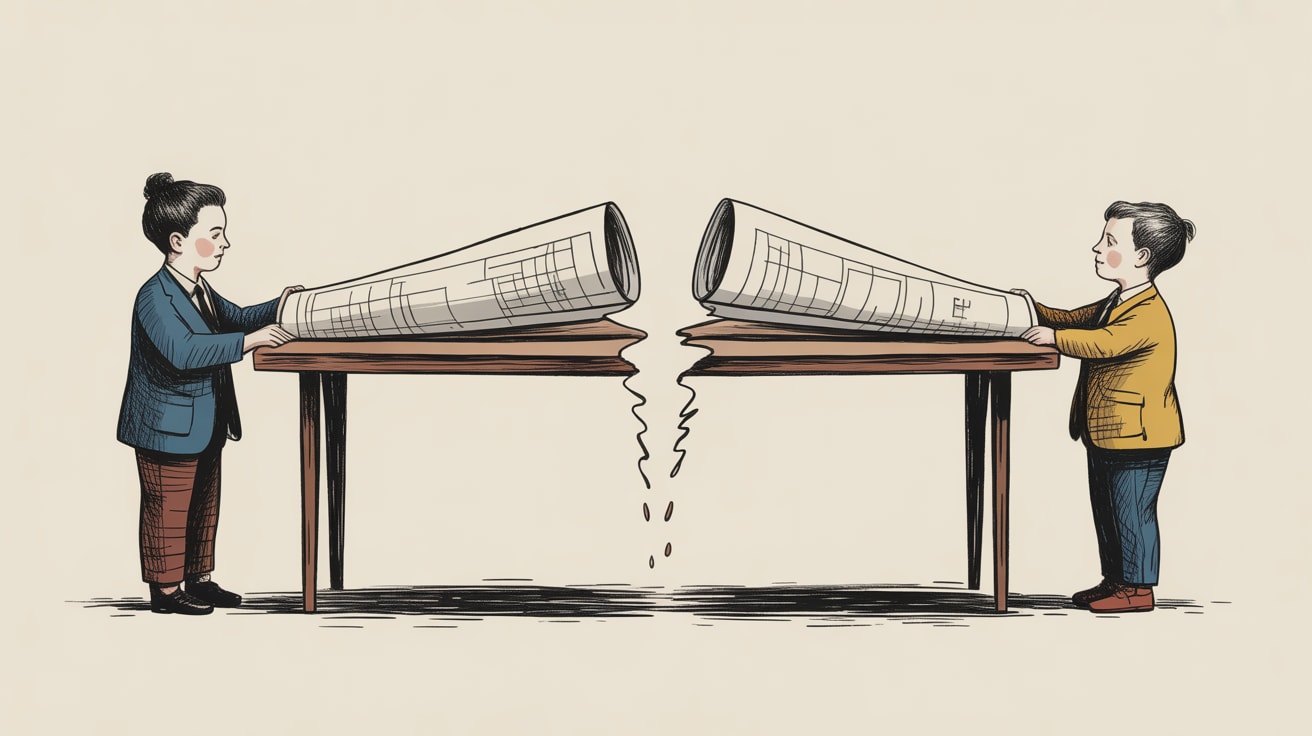
UX Collective contributor Ian Batterbee draws on an improv comedy analogy that maps surprisingly well to multi-squad product environments: when individual players adapt without coordination, the collective performance deteriorates — not through bad decisions, but through incompatible ones.
This plays out constantly in larger digital teams. The growth squad ships a new landing page optimised for paid acquisition. The product team updates the onboarding flow for organic users. Nobody checks that the two create a coherent journey. The seam between them — the moment a paid click lands on a page designed for a different mental model — is where conversion drops and no dashboard tells you why.
The structural fix is a journey-level design review cadence: a monthly session where representatives from growth, product, and UX map active user flows end-to-end, not component by component. This isn’t a design system governance meeting. It’s an experience continuity check. Blaze Type’s founder Matthieu Salvaggio, reflecting on a decade of type design, frames it neatly: audience experience is the sum of every decision, not any single one. The same principle applies to product teams.
Building the Feedback Loop That Closes the Gap
The common thread across these failure modes — accessibility gaps, role collapse, team misalignment — is the absence of a closed feedback loop between design intent and lived user experience. In data terms: the signal exists, but the pipeline to act on it doesn’t.
For growth and marketing directors, the practical intervention is to treat UX quality as a measurable KPI, not a subjective assessment. Define it: task completion rate on critical flows, accessibility error count per release, cross-platform rendering parity score. Instrument it with session recording tools (Hotjar, Microsoft Clarity, or FullStory), then route the findings back to design and engineering in a weekly digest — not a quarterly report.
This is where a data-activation mindset pays off in a design context. You already have the behavioural signals. The question is whether your team has built the decisioning logic to act on them before the next sprint closes.
Key Takeaways
- Add automated accessibility audits to your CI/CD pipeline to catch contrast and ARIA failures before they reach production, not after.
- Protect the designer’s role as experience guardian — AI-generated production code accelerates output but compresses the edge-case thinking that makes interfaces genuinely usable.
- Establish a monthly cross-squad journey review to catch experience discontinuities that component-level design reviews will never surface.
The real question for design leaders in 2026 isn’t which AI tool will make their team faster. It’s whether the team’s quality signals are sharp enough to catch what speed inevitably obscures. As Southeast Asian digital products grow more complex — more platforms, more languages, more entry points — the cost of an unexamined gap between design intent and user reality compounds quietly, sprint by sprint.
At grzzly, we work with digital teams across Southeast Asia to instrument their user experience — connecting behavioural data, design systems, and campaign decisioning into feedback loops that actually close. If your design and growth functions are optimising in silos, that’s a conversation worth having. Let’s talk
Sources
- https://alistapart.com/article/good-designers-bad-websites-a-proposal/
- https://smashingmagazine.com/2026/04/production-ready-becomes-design-deliverable-ux/
- https://uxdesign.cc/what-improv-taught-me-about-why-innovation-falls-out-of-sync-1e3961fa2083?source=rss----138adf9c44c---4
- https://www.itsnicethat.com/articles/blaze-type-10th-birthday-website-sponsored-content-220426

Written by
Mellow GrizzlyTranslating raw data into activated audience segments, predictive models, and decisioning logic. Comfortable at the intersection of the data warehouse and the campaign manager.