Invisalign cut CPL by embedding a quiz inside TikTok ads. Here's what Southeast Asian marketers can steal from that playbook right now.
Somewhere in a quarterly review deck right now, someone is proudly reporting that their TikTok campaign got 4 million views. Their CMO is nodding. Nobody is asking what happened next.
That gap — between attention and action — is where most TikTok budgets quietly disappear.
The Vanity KPI Trap Is Still Claiming Victims
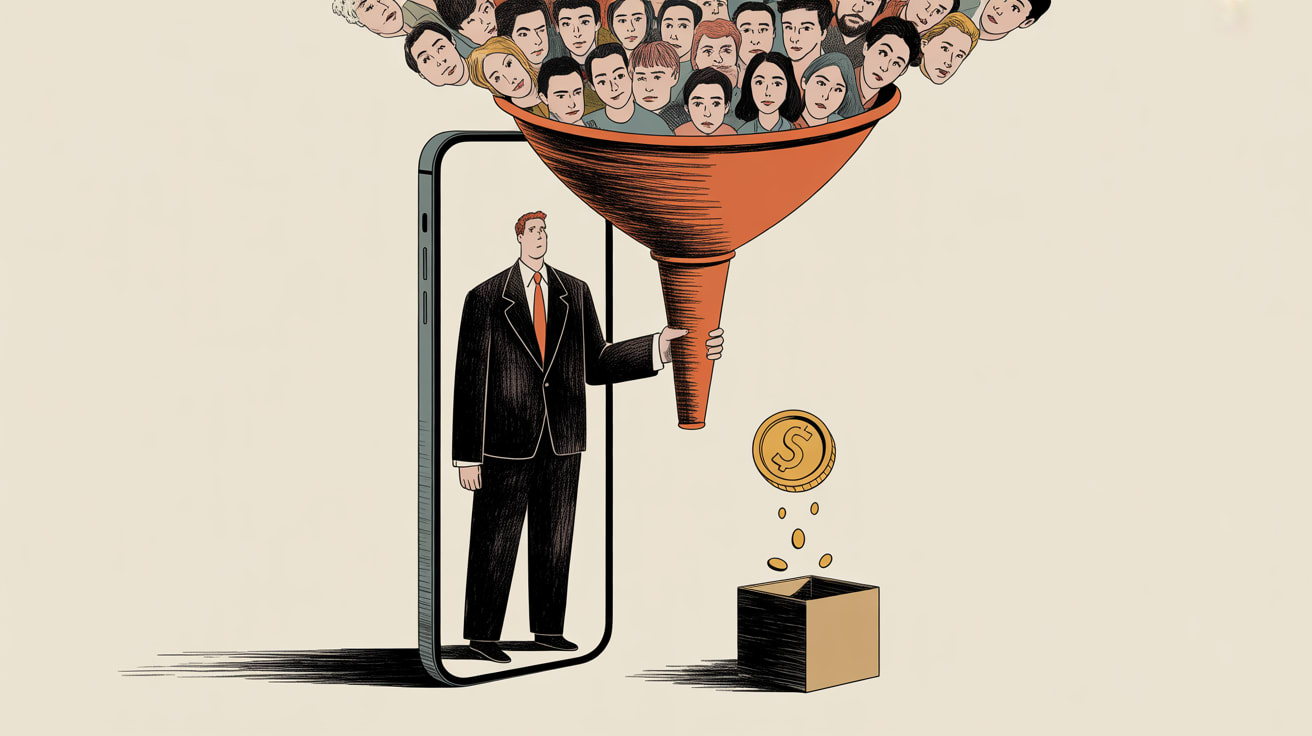
HubSpot’s recent breakdown of high-impact TikTok campaigns makes the problem concrete. Invisalign didn’t launch on TikTok to go viral. They built a Smile Quiz directly into the ad unit — a short interactive experience that asked qualifying questions before anyone hit a lead form. The result: form completion rates jumped by nearly a third, and cost per lead dropped. That’s not a TikTok success story. That’s a pipeline story that happened to use TikTok as the channel.
The lesson isn’t about quizzes specifically. It’s about the decision to treat the ad as the first step in a qualification sequence rather than a standalone awareness play. Most brands in Southeast Asia are still running TikTok like a broadcast medium — good creative, clear CTA, hope for clicks. The Invisalign model flips that logic: pre-qualify inside the platform, so the traffic that exits is already warm.
For markets like Thailand, Vietnam, and the Philippines — where TikTok Shop has collapsed the distance between discovery and purchase — this matters even more. Users aren’t just browsing; they’re deciding. Brands that treat every impression as a potential qualification moment will compound an advantage over those still optimising for reach.
What ‘Good Creative’ Actually Means in a Pipeline Context
There’s a version of TikTok strategy that sounds sophisticated but isn’t: hire a creator, make it feel native, watch the views climb. The platform rewards authenticity, yes — but authenticity without architecture is just content.
The campaigns that actually close deals share a structural logic. They answer a specific question the audience is already asking, then create a natural next step that doesn’t feel like friction. Invisalign’s quiz worked because dental alignment anxiety is a real, searchable, discussable concern. The quiz wasn’t a gimmick — it was a mirror. Users engaged because the content was about them, not about the product.
For Southeast Asian brands, this has a multilingual dimension that’s easy to underestimate. A campaign built around a single insight in English or Bahasa Indonesia may land completely differently in Thai or Tagalog — not just linguistically, but culturally. The emotional hook that drives a Singaporean professional to complete a form is not the same hook that works for a first-time buyer in Surabaya. Localising the qualification mechanism, not just the creative skin, is where the real leverage sits.
AI Is Changing Who Can Run These Campaigns
Social Media Examiner’s 2026 AI Marketing Industry Report drops a number that reframes the competitive landscape: two years ago, roughly one in three marketers used AI daily. Today, it’s nearly three in four. That shift has a specific consequence for TikTok strategy — the production and iteration work that once required an agency retainer is now accessible to teams of two.
This isn’t an argument against agencies. Campaign Live’s recent analysis of H1 holding company results quotes analysts who see the sector adapting rather than contracting — with specialist capability, strategic counsel, and cross-market coordination still commanding real value. What’s changing is the baseline. The execution layer is commoditising fast. A lean in-house team with solid AI tooling can now produce, test, and iterate TikTok content at a pace that would have required a full content studio eighteen months ago.
For growth leads at mid-size Southeast Asian brands, this creates a genuine strategic choice: invest in building that internal capability, or double down on the strategic layer — campaign architecture, audience sequencing, conversion design — where human judgment still has a meaningful edge. The brands that will struggle are those doing neither, still running TikTok on instinct and measuring it on vanity metrics.
From Campaign Thinking to System Thinking
The Invisalign case is instructive precisely because it wasn’t a one-off creative bet. It was a system: a defined audience signal (smile anxiety), a qualification mechanism (the quiz), a conversion path (the lead form), and presumably a nurture sequence on the back end. That’s not a campaign. That’s a pipeline with a TikTok intake valve.
Building that kind of system requires a different set of questions at the brief stage. Not “what should we make?” but “what should someone know, feel, or have done by the time they leave this ad?” Not “how do we hit our reach target?” but “at what point does this audience become qualified, and can we move that point earlier in the funnel?”
For Southeast Asian brands operating across Shopee, TikTok Shop, and LINE simultaneously, the system thinking extends further — each platform has different native behaviours, different drop-off points, different trust signals. A quiz that works in a TikTok ad might need to become a chatbot flow in LINE, or a product bundle prompt in Shopee. The insight travels; the execution adapts.
The brands building durable growth right now aren’t the ones with the most creative talent or the biggest TikTok budgets. They’re the ones who decided to stop measuring attention and start measuring progress.
Which raises the uncomfortable question every marketing director should sit with: if you pulled your last TikTok campaign report tomorrow, would you be able to trace a direct line from those impressions to closed revenue — or would you be reaching for the engagement rate?
At grzzly, we work with marketing teams across Southeast Asia to build exactly this kind of campaign infrastructure — the architecture that connects TikTok spend to pipeline outcomes, not just platform metrics. If you’re rethinking how your digital campaigns convert, we’d enjoy the conversation. Let’s talk
Sources

Written by
Plot GrizzlyDocumenting the campaigns, systems, and decisions that actually moved the needle — with the intellectual honesty to include what failed and why. Narrative rigour as a professional standard.