
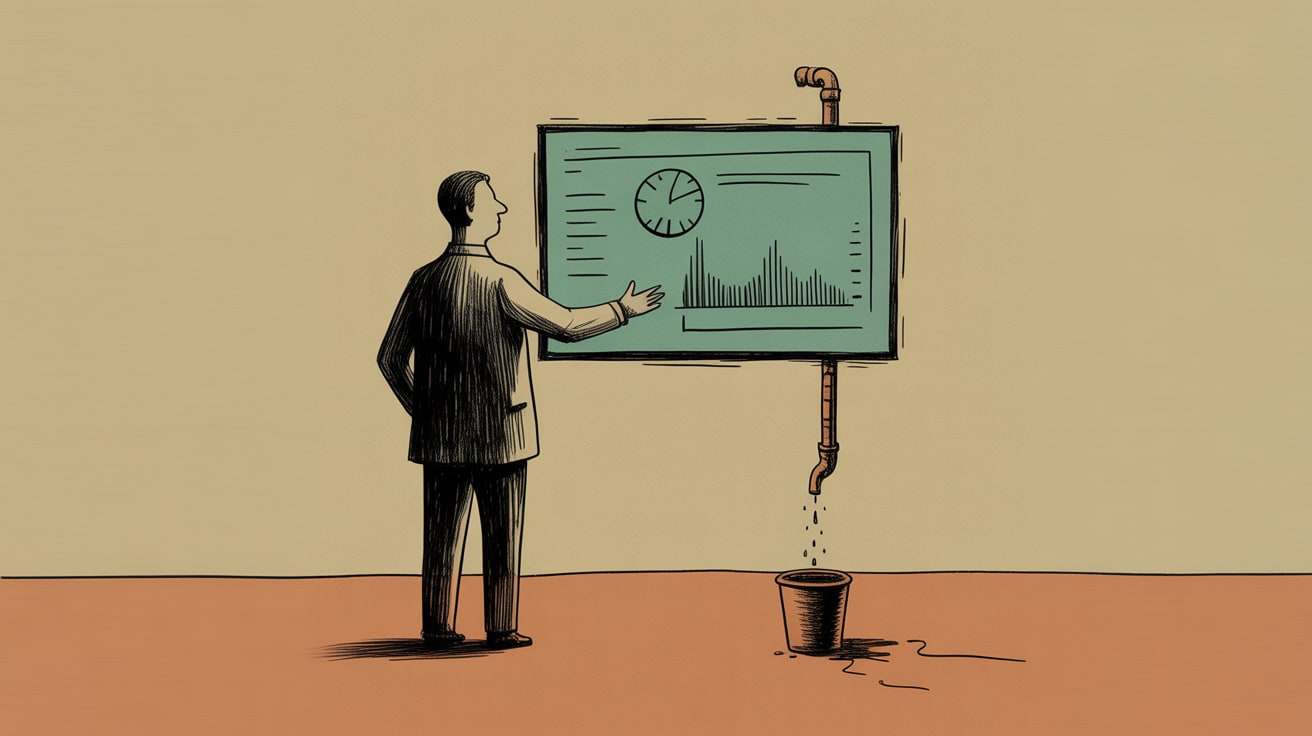
Silent data failures quietly corrupt CEP pipelines. Here's how to detect them before they hollow out your customer engagement strategy.
Your personalisation engine is firing. Your segments are clean. Your journey flows look immaculate in the platform UI. And your engagement rates are quietly bleeding out — because somewhere upstream, a field stopped populating three weeks ago and nobody noticed.
This is the real architecture problem in customer engagement today. Not the lack of sophisticated tooling. Not the absence of AI. It’s the silent failure — the bug that never throws an exception, the data drop that never triggers an alert — that’s hollowing out CEP investments across the region.
The Bug That Doesn’t Wave Its Hand
Monte Carlo’s engineering team recently documented a failure pattern that should be required reading for every martech architect. In their scenario, a release goes out cleanly. No errors. No alerts. But somewhere in a mapping layer, a single field stops flowing — in their insurance example, “driving conviction” silently drops out of a quote request. Downstream systems keep processing. Reports keep generating. The pipeline looks healthy.
Translate that to a customer engagement context: imagine your behavioural scoring model stops receiving purchase-intent signals from your Shopee integration. Your RFM segments don’t break — they just quietly drift stale. High-value customers get re-engagement flows designed for lapsed ones. The campaign runs. The dashboard shows delivery. And you’ve spent three weeks antagonising your best customers with the wrong message at the wrong moment.
The failure mode isn’t dramatic enough to catch. That’s exactly what makes it dangerous.
Why CEP Pipelines Are Especially Vulnerable
Customer engagement platforms are architected for speed and breadth — pulling signals from web, app, CRM, point-of-sale, and third-party platforms simultaneously. In Southeast Asia, that complexity compounds fast. A single brand running across LINE OA, Shopee Ads, a native app, and physical retail is typically stitching together four or five data contracts, each with their own schema conventions and update cadences.
Every handoff between systems is a potential silent failure point. And unlike transactional systems — where a missing field might break a checkout — martech pipelines are designed to be fault-tolerant. They fill in defaults. They skip null values. They keep moving. That resilience is also how bad data propagates undetected for weeks.
Alchemer’s newly launched Iris platform gestures at part of this problem — positioning itself as an AI-native CX layer that unifies feedback signals and guides action across systems. The pitch is coherent: bring the signal-to-action loop closer together. But even the most elegant activation layer is only as good as the data it’s ingesting. AI-driven orchestration applied to corrupted input doesn’t produce smarter engagement. It produces confident mistakes at scale.
Building Observability Into the Engagement Stack
The answer isn’t more QA before launch. It’s continuous observability baked into the pipeline architecture itself — and this is where most martech teams are underinvested.
Data observability means monitoring the statistical properties of your data streams in production, not just checking whether they’re arriving. Practically, for a CEP team, this looks like:
Field-level completeness monitoring. Track the fill rate of every attribute feeding your segmentation and scoring models. If purchase-category signals from your app events drop from 94% to 61% between Tuesday and Wednesday, that’s not a data warehouse problem — that’s a broken integration that needs flagging before your next campaign batch runs.
Segment drift detection. If a high-value segment shrinks 30% in 48 hours without a corresponding business event (a sale ending, a seasonal shift), that’s a signal worth investigating. Automated threshold alerts on segment size changes are cheap to build and disproportionately valuable.
Cross-system reconciliation checks. For teams running across Lazada, Shopee, or platform-native CRM data, run periodic reconciliation jobs that compare record counts and key field distributions between source and destination. Discrepancies surface mapping failures before they compound.
Monte Carlo’s broader argument — that silent failures require proactive detection infrastructure, not just reactive debugging — maps directly onto how mature CEP teams should be thinking about their data contracts.
From Data Hygiene to Engagement Confidence
There’s a strategic dimension here that goes beyond data engineering. The brands in Southeast Asia that will pull ahead in customer engagement aren’t necessarily the ones with the most sophisticated journey orchestration. They’re the ones whose engagement decisions are grounded in data they can actually trust.
Real-time personalisation is a high-stakes activity. When you trigger a win-back offer to a customer in Kuala Lumpur based on a predicted churn score, that score is a function of dozens of upstream data points. If three of them have been silently corrupted for two weeks, you’re not doing personalisation — you’re doing expensive guesswork dressed up as intelligence.
The teams getting this right treat data observability as a first-class product requirement, not an afterthought. They define data SLAs the same way they define campaign SLAs. They build field-level monitoring into their CDP onboarding process. And critically, they create feedback loops between their data engineering and CRM teams so that anomalies surface to the people who can act on them — not just the people who can see them.
The question worth sitting with: if a critical behavioural signal in your engagement stack went silent today, how long would it take your team to notice — and how many customer interactions would have already fired on corrupted assumptions?
At grzzly, we work with growth and CRM teams across Southeast Asia to design CEP architectures that are built for the messiness of real data environments — not just the clean-room assumptions of a platform demo. Data observability strategy, pipeline audits, and engagement framework design are core to how we help brands move from batch-and-blast to genuinely context-aware engagement. If your stack is more complex than you’d like to admit, we should talk. Let’s talk
Sources

Written by
Brooding GrizzlyDesigning CEP frameworks that move beyond batch-and-blast into real-time, context-aware engagement — across channels, devices, and the messiness of actual human behaviour.