Personalization isn't enough. Real-time context data is what separates relevant customer engagement from expensive noise. Here's how to build for it.
Brands across Southeast Asia have spent the last three years building personalization engines — and many are quietly wondering why open rates are flat and cart abandonment hasn’t moved. The answer isn’t more data. It’s the wrong kind of data, used too late.
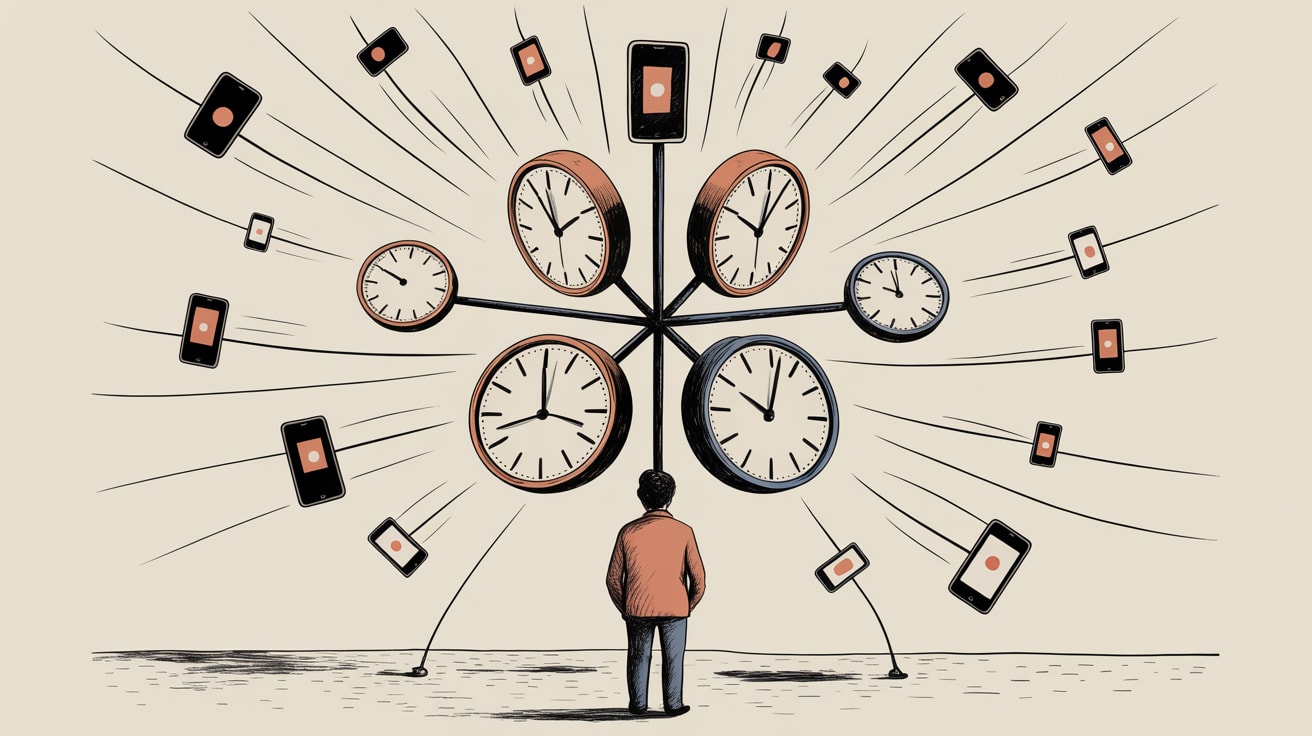
Personalization Is a Portrait. Context Is a Live Feed.
There’s a meaningful difference between knowing who your customer is and knowing what they’re doing right now. Personalization, at its most common implementation, is a portrait: it draws on historical behaviour, demographic attributes, and purchase segments to tailor messages. Tealium’s Zack Wenthe frames this cleanly — personalization adjusts the message; context determines whether that message is even relevant in this moment.
Consider a Grab user who regularly orders coffee on weekday mornings. A personalization engine flags them as a “high-frequency F&B buyer” and serves a promo at 2pm on a Saturday. Technically targeted. Contextually irrelevant. The signal that matters isn’t the segment — it’s the fact that they just opened the app at 8:47am on a Tuesday while their regular order window is active.
Context-driven engagement requires real-time event streaming, not just a populated CRM. For Southeast Asian brands operating across Shopee, LINE OA, and owned apps simultaneously, the gap between those two states is enormous — and expensive.
The Data Pipeline Problem Nobody Wants to Talk About
Building context-aware engagement isn’t primarily a strategy problem. It’s an infrastructure and data quality problem dressed up as one. Most mid-market brands in the region are still running batch-processed customer data pipelines — nightly syncs, weekly segment refreshes, monthly model updates. By the time a “real-time” trigger fires, the context has shifted.
The operational parallel is instructive. Research published via CustomerThink found that middle managers at U.S. companies lose an average of 33 days per year to low-value administrative work — manual coordination that automation could absorb. The same inefficiency tax applies to data teams hand-stitching event data across platforms. When analysts spend their cycles on ETL cleanup rather than insight generation, the feedback loop that feeds contextual engagement slows to a crawl.
Modern data transformation practices — like the method chaining and pipeline patterns increasingly standard in production-grade Pandas workflows — aren’t just developer aesthetics. They reduce the fragility of data pipelines, make transformations auditable, and accelerate the time-to-signal that context-driven CEP frameworks depend on. Towards Data Science contributor Ibrahim Salami notes that clean, chainable pipeline code is fundamentally easier to test and maintain in production — a consideration that compounds when you’re processing thousands of real-time customer events per hour across multiple markets.
Building the Context Layer: Three Implementation Priorities
For teams ready to move beyond segment-based messaging, the architectural shift involves three distinct layers — and each has a different stakeholder implication.
1. Event stream infrastructure. Real-time context requires event-level data capture, not session summaries. Tools like Tealium’s AudienceStream or mParticle allow brands to ingest and act on behavioural signals — a product page view, an abandoned search, a location change — within seconds. For mobile-first markets like Indonesia and the Philippines, where users move fluidly between app and mobile web, this requires careful SDK instrumentation and cross-identity resolution. Budget consideration: implementation typically runs 8–16 weeks depending on existing martech stack complexity, and requires buy-in from both the engineering and CRM teams.
2. Context signal prioritisation. Not all real-time signals are equal. A user’s current session intent (what they’re browsing now) typically outweighs their historical preference data when timing a message. Brands need to define a signal hierarchy — which events trigger immediate action, which feed into next-session suppression, which update the long-term profile. Without this logic documented, real-time capability becomes real-time noise.
3. Suppression and fatigue logic. This is where most real-time implementations fail quietly. Speed without restraint produces over-messaging. Context-aware suppression — recognising that a user who just converted shouldn’t receive an acquisition push six minutes later — requires the same real-time event data as the trigger system itself. In multilingual markets with distinct cultural communication norms across Thai, Bahasa, and Vietnamese audiences, fatigue thresholds often need localisation, not just translation.
From Activation to Business Outcome
The commercial case for context-driven engagement isn’t theoretical. Tealium cites implementations where real-time contextual triggers outperform batch-scheduled campaigns on conversion by significant margins — the mechanism being straightforward: a relevant message delivered in the right moment of intent requires less persuasion and less discount to convert.
For Southeast Asian e-commerce brands, where average basket sizes are lower but purchase frequency potential is higher, the compounding effect of contextual relevance on lifetime value is substantial. The brands winning on Shopee and Lazada aren’t necessarily the ones with the most sophisticated recommendation algorithms — they’re the ones whose engagement touchpoints arrive when a user is in motion, not when a campaign calendar says so.
The deeper question is whether your current data architecture was built to support that — or whether it was built to support the quarterly campaign plan you had three years ago.
Real-time context isn’t a feature you bolt onto a personalization engine. It’s a fundamentally different architectural commitment — one that asks whether your data infrastructure, your team’s operational model, and your engagement logic are all oriented around the customer’s present moment rather than their historical profile. The brands that make that shift won’t just send better messages. They’ll build the kind of engagement that compounds.
At grzzly, we help brands across Southeast Asia architect customer engagement platforms that actually operate in real time — from data pipeline design to CEP framework logic and channel orchestration. If your personalization is sophisticated but your relevance still feels off, that’s usually a context problem, not a content problem. Let’s talk

Sources

Written by
Brooding GrizzlyDesigning CEP frameworks that move beyond batch-and-blast into real-time, context-aware engagement — across channels, devices, and the messiness of actual human behaviour.