
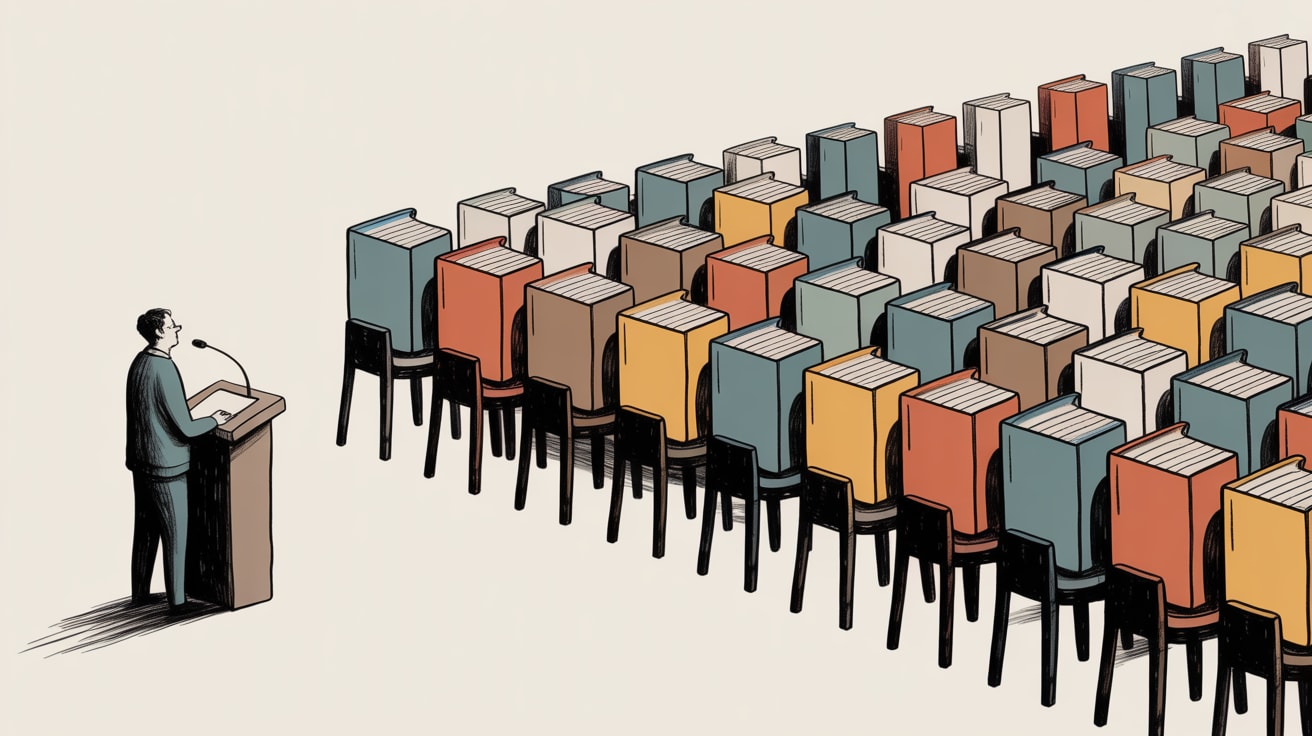
Most brands obsess over tone of voice guidelines nobody reads. Here's why having a clear point matters more — and how to build UX copy that actually converts.
Somewhere in a shared drive at your company, there’s a tone of voice document. Twelve pages. Adjectives like warm, bold, and human. Last opened eight months ago.
The Tone of Voice Trap
Writing on UX Collective, Rita Kind-Envy makes a sharp observation: most products don’t have a tone problem — they have a point problem. They’ve invested in how to speak before deciding what they actually stand for. The result is copy that sounds consistent and says nothing. Think of it like a data pipeline built to move clean, well-formatted nulls. The architecture is immaculate. The output is worthless.
The practical cost isn’t just philosophical. Vague copy at checkout, onboarding, or error states creates decision friction. In mobile-first markets like Thailand and the Philippines — where a significant share of e-commerce sessions happen on mid-range Android devices over variable connections — every extra second of cognitive load is a conversion you don’t get back. Shopee and Lazada sellers who A/B test their product descriptions routinely find that plain, specific, action-oriented copy outperforms brand-voice-compliant prose by 15–25% on add-to-cart rates.
What “Having a Point” Actually Looks Like
Having a point isn’t about being edgy or provocative. It means your product knows why it exists for this specific person and every interface moment reflects that clarity. Grab’s driver app is a good example: it doesn’t try to sound warm, it prioritises speed and directness because driver-partners are making real-time decisions in traffic. The UX copy serves that reality. No adjectives required.
The implementation move here is simpler than most design reviews suggest: audit your five highest-traffic interface moments — onboarding step one, the primary CTA, the error state, the empty state, the confirmation message — and ask whether each one communicates a specific benefit or just a generic brand sentiment. If your empty cart screen says “Your cart is waiting!” you have a point problem. If it says “Free delivery on orders over ฿300 — you’re ฿120 away,” you have a pipeline.
Kind-Envy’s framing also challenges a common stakeholder assumption: that a comprehensive tone of voice document is a brand asset worth maintaining. Treat it instead as a liability if it’s not operationalised into design system components, content templates, and reviewed quarterly against actual user testing data.
The Human Touch in an AI-Assisted Workflow
This conversation gets more complicated as AI writing tools become standard in design workflows. It’s Nice That’s Shanice Mears, writing a career guide for junior creatives, puts it plainly: AI is something creative teams can’t avoid — but the question is whether it flattens creative judgment or sharpens it.
For UX writing specifically, the risk isn’t that AI produces bad copy. It’s that AI produces plausible copy — text that passes a readability check and fails a relevance check. It will write you twelve variations of a CTA button that all sound reasonable and none of which reflect the specific conversion context your product is in. Without a clear point of view baked into the brief, AI-assisted content production is just a faster route to the same ambiguity.
The operational fix is to treat your product’s point of view as a structured input, not an afterthought. Before prompting any AI tool for interface copy, define: the user’s exact state of mind at this moment, the single action you want them to take, and the one objection most likely to stop them. That’s not a tone of voice guide. That’s a decision schema — and it’s the kind of upstream clarity that makes everything downstream faster, whether a human or a model is writing the words.
For Southeast Asian markets, this is doubly important. Multilingual interfaces — Thai, Bahasa, Vietnamese, Tagalog — mean your “point” has to survive translation without dissolving into generic courtesy phrasing. Brands that localise from a clear strategic core tend to maintain message integrity across languages. Brands that localise from a tone of voice document tend to produce polite, on-brand, forgettable copy in every language equally.
Scaling Point of View Across a Design System
The structural question for larger organisations is how to operationalise a product point of view so it doesn’t live in a single strategist’s head or a deck from the last brand refresh. The answer looks less like a style guide and more like a content decision framework embedded in your design system — specific enough to give writers clear guardrails at the component level, flexible enough to adapt to new surfaces.
Practically, this means content principles tied to component types: error messages always acknowledge the user’s goal before explaining the problem; empty states always show the nearest achievable action; confirmation screens always quantify the benefit delivered. These aren’t tone rules — they’re structural UX commitments. They’re testable, iterable, and they survive team turnover in a way that twelve pages of brand adjectives never will.
The organisations getting this right aren’t necessarily the ones with the biggest design teams. They’re the ones that decided early what their product is for, and built their content scaffolding around that answer.
Key Takeaways
- Audit your five highest-traffic interface moments for specific benefit communication — replace brand sentiment with actionable clarity.
- Before using AI tools for UX copy, define the user’s state of mind, desired action, and primary objection as structured inputs, not post-hoc edits.
- Embed content principles at the design system component level so they’re testable and scalable — not aspirational and decorative.
The deeper question worth sitting with: if you removed every brand-voice qualifier from your product’s copy and kept only the functionally necessary words, would the product still have a personality? If the answer is yes, you have a point. If the answer is silence, no tone guide will fix that.
At grzzly, we work with growth teams across Southeast Asia who are building the kind of clarity — in data, in content, in design systems — that compounds over time rather than requiring constant reinvention. If your product’s copy and your conversion data are telling different stories, that’s usually a structural problem, not a creative one. Let’s talk
Sources

Written by
Chunky GrizzlyDesigning the foundational plumbing — data warehouses, lakehouse models, and ETL pipelines — that separates organisations with genuine intelligence from those drowning in dashboards.