AI is reshaping UX decisions — but mistaking predictions for certainties is a design failure. Here's how probabilistic thinking changes the game.
AI told your product team it was 87% confident. So the team shipped the feature. The model was wrong. The feature flopped. And nobody had built any mechanism to catch that possibility — because the interface presented the prediction as settled fact.
This is the quiet design failure spreading across product teams in 2026, and Smashing Magazine’s Pratik Joglekar has put a useful name to the antidote: Probabilistic Design.
What Probabilistic Design Actually Means (and Why It’s Not Just a Mindset)
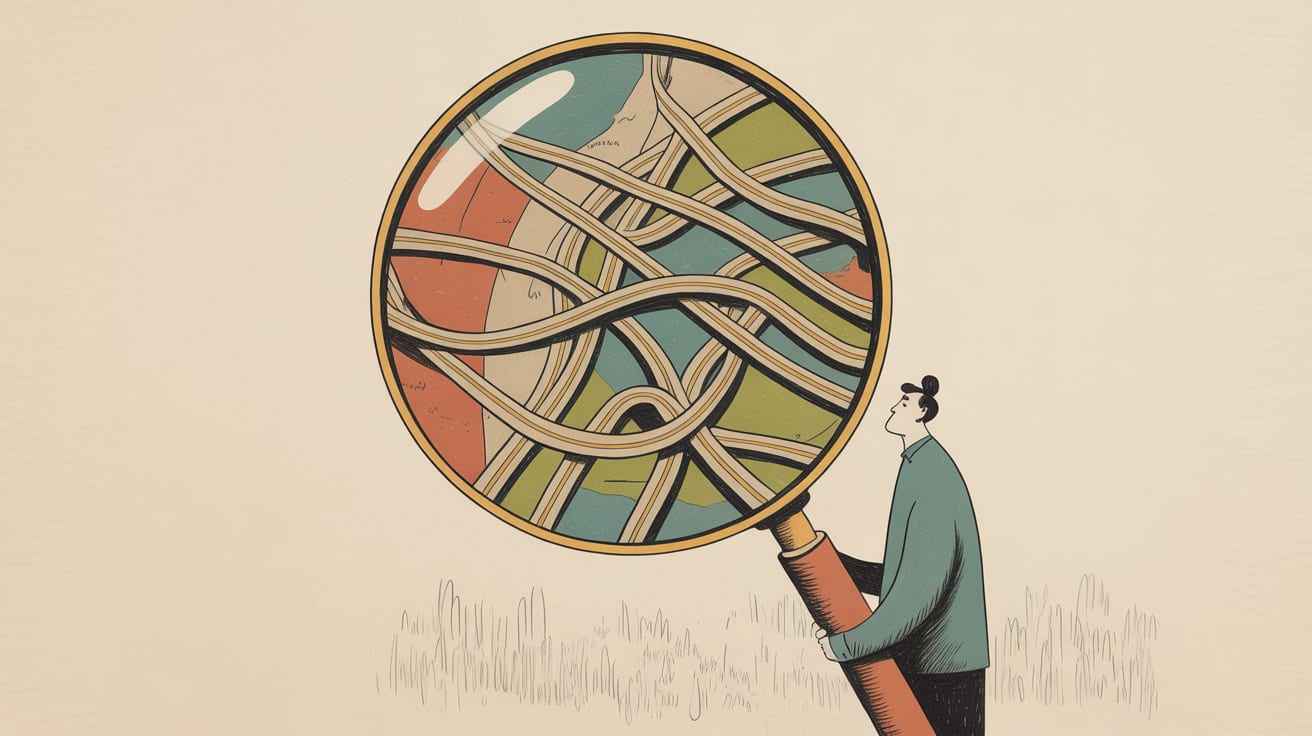
The core idea is deceptively simple: AI outputs are not answers, they are distributions. A recommendation engine suggesting Product A over Product B isn’t declaring a winner — it’s expressing a weighted likelihood based on incomplete data. The design failure happens when that nuance gets stripped away before it reaches the user, or worse, before it reaches the product team making decisions on top of it.
Joglekar’s argument, grounded in practical UX methodology, is that teams need to design for the uncertainty rather than flatten it. That means building interfaces that expose confidence intervals where relevant, designing fallback states that aren’t afterthoughts, and structuring user flows so that a wrong prediction doesn’t result in irreversible user friction.
For a Shopee or Lazada merchant dashboard, this is immediately tangible: a demand forecasting widget that shows a range (“likely 800–1,200 units this week”) is more honest — and more useful — than one that states “forecast: 1,014 units” with false precision. The former prompts a stock buffer decision. The latter prompts false confidence.
The Design System Implications Are Bigger Than One Feature
Here’s where this gets commercially interesting. Probabilistic thinking isn’t a feature-level fix — it’s a design system decision. Once you accept that AI outputs carry uncertainty, you need a consistent visual language for communicating that uncertainty across your entire product.
That means: How does your typography scale signal confidence? Does a low-confidence recommendation look visually different from a high-confidence one? Do your colour conventions (already complex in Southeast Asia’s culturally diverse markets, where red signals luck in some contexts and danger in others) carry enough semantic weight to communicate probability gradients without creating anxiety?
Grab’s super-app interface offers an instructive reference point. Estimated arrival times are presented as ranges during high-uncertainty periods — “6–12 min” — rather than pinpoint predictions. That’s not hedging. That’s honest interface design that reduces frustration when the prediction misses, and builds long-term trust in the product’s reliability.
For design teams scaling across multiple markets and languages, the challenge compounds. A probability indicator that reads clearly in English may lose its nuance when truncated in Thai or Bahasa Indonesia on a smaller mobile viewport. These aren’t edge cases in Southeast Asia — they’re the norm.
How to Actually Implement This Without a Six-Month Redesign
The practical objection from most product stakeholders is predictable: “We don’t have time to redesign the entire decision architecture.” Fair. But probabilistic design doesn’t require a ground-up rebuild — it requires a deliberate audit of where AI outputs currently appear in your product and a triage of which ones carry the highest stakes if wrong.
Start with three categories: high-stakes, irreversible actions (payment flows, subscription commitments, inventory orders); medium-stakes, reversible recommendations (content personalisation, search rankings, next-best-action prompts); and low-stakes, exploratory surfaces (discovery feeds, suggestion carousels). Each category warrants a different confidence communication convention, and you can ship them incrementally.
The implementation pitfall to avoid: designing uncertainty indicators that are so prominent they erode user confidence in the product overall. There’s a calibration here. Netflix doesn’t show you a confidence score on its recommendations — it shows you a percentage match, which implies precision while actually communicating relative likelihood. That’s a deliberate UX decision to preserve the perception of capability while still being more honest than a flat recommendation. Whether that’s the right trade-off depends on your product’s trust model, but it’s a choice worth making explicitly rather than by default.
For data products and publisher monetisation specifically, the stakes are higher still. If you’re selling audience intelligence or predictive targeting to media buyers, and your dashboard presents AI-derived segments as definitive rather than probabilistic, you’re setting expectations that your model will eventually fail to meet. Building confidence ranges into your reporting interface isn’t a weakness — it’s a premium signal that your team understands the data well enough to be honest about its limits.
The Awards Lens: Why Probabilistic Design Will Define the Next Wave of Recognised Work
UX Collective’s Zeeshan Khalid recently published a sharp guide on positioning design work for award recognition — and one thread running through his framework is that juries increasingly reward work that demonstrates sophisticated problem framing, not just polished execution. Designing for uncertainty is exactly the kind of sophisticated framing that separates work that looks good in a portfolio from work that demonstrably changes outcomes.
The design teams that will build the most durable commercial advantage in the AI era aren’t those who ship AI features fastest — they’re those who design the most honest interfaces around those features. In markets as competitive and trust-sensitive as Southeast Asia’s e-commerce and fintech sectors, that honesty isn’t just good UX. It’s a brand positioning strategy.
Key takeaways for your team:
- Audit every AI output currently surfaced in your product and classify it by stakes level — this single exercise will reveal where your probabilistic design debt is highest.
- Build a shared visual language for confidence and uncertainty into your design system now, before the number of AI-informed features makes retrofitting prohibitively expensive.
- In Southeast Asian markets, test uncertainty indicators across your key languages and mobile viewports before scaling — what reads as nuanced in one language may read as alarming or invisible in another.
The more interesting question isn’t whether your design system can accommodate probabilistic outputs. It’s whether your organisation’s decision-making culture can. The interface is often just a mirror of the internal certainty bias — and that’s a harder redesign.
At grzzly, we work with digital and data teams across Southeast Asia who are navigating exactly this tension — building AI-informed products that need to communicate intelligently to users without either overselling capability or undermining trust. If you’re rethinking how your dashboards, product surfaces, or data products present AI-derived insights, we’d enjoy the conversation. Let’s talk
Sources

Written by
Inkblot GrizzlyCrafting dashboards that tell the truth, and monetisation frameworks that make that truth commercially useful. Turns abstract data assets into revenue-generating products for publishers and brands alike.