Organic reach keeps shrinking, but total attention on social hasn't. Here's how Southeast Asian brands should reposition their digital strategy in 2026.
The metrics have been trending this way for three years. Organic reach on Facebook and Instagram has been contracting steadily, and most brand teams have absorbed this as a background condition — a tax on content investment they manage around. What’s shifted more sharply in 2026 is the realisation that reach and attention are no longer the same variable.
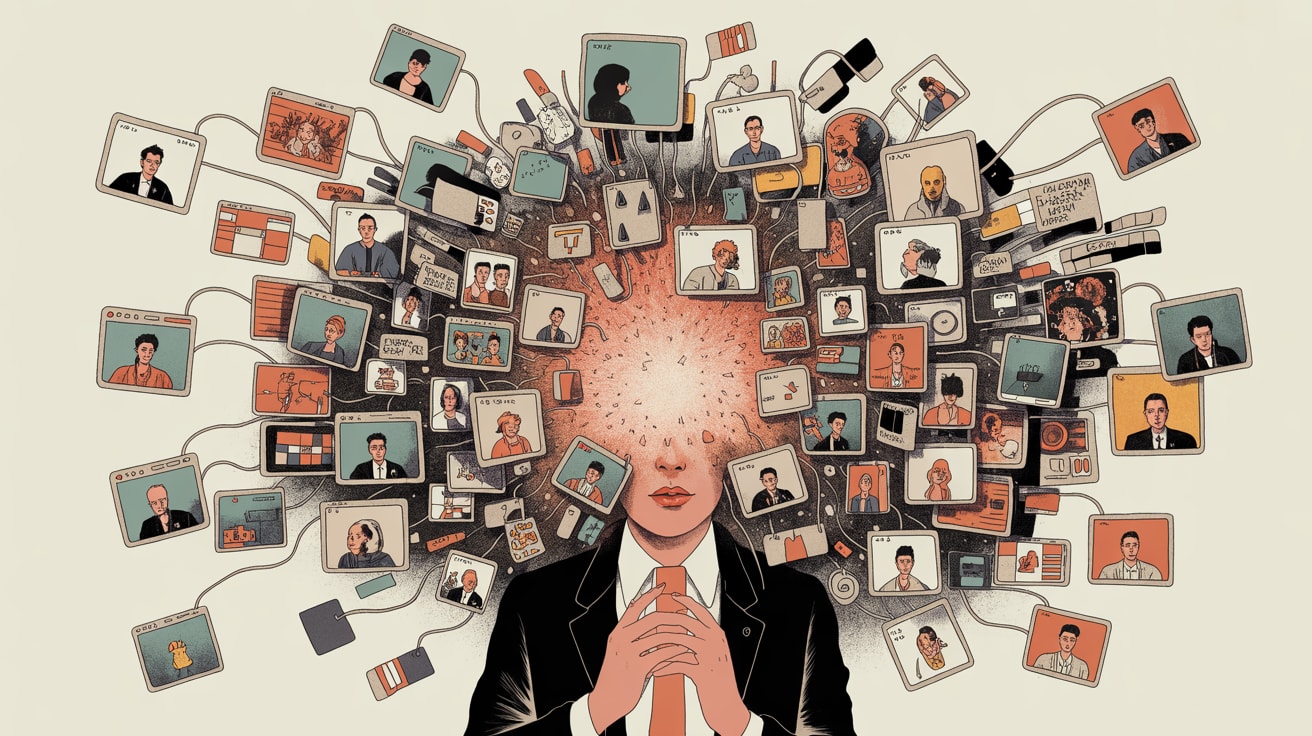
Martech Zone reports that over 200 billion Reels are viewed daily, TikTok now counts more than 3 billion active users, and the average person spends roughly 2.5 hours per day on social platforms. The attention pool hasn’t shrunk. It’s just moved — and it’s moving fast.
The Platform Paradox: Less Reach, More Viewing Time
Here’s the strategic tension worth sitting with: algorithmic platforms are simultaneously suppressing unpaid distribution and generating historically high consumption numbers. Brands that conflate these two trends — declining organic reach with declining social relevance — are making a category error that will cost them.
The platforms aren’t broken. They’re monetising. What used to be accessible through consistent posting and community-building now requires either paid amplification or content that the algorithm actively chooses to distribute because it drives watch time. For Southeast Asian markets — where mobile-first users on platforms like TikTok, Instagram, and Facebook are spending more time per session than their counterparts in Europe or North America — this distinction matters enormously. The audience is there. The question is whether your content earns distribution or has to buy it.
The practical implication: organic content strategy can no longer be a publishing cadence. It has to be a creative performance system, where the unit of success is retention and completion rate, not post frequency.
Creative Volume Is Now a Structural Advantage
The dirty secret of performance marketing in 2026 is that winning isn’t about having the best ad. It’s about having the highest-quality testing infrastructure. Martech Zone’s coverage of AI video platforms like ClipMake.ai frames this clearly: algorithms require 20 to 40 ad variations per month to effectively test hooks, identify fatigue curves, and rotate creative before performance drops. Traditional UGC production — averaging two to three videos per month at $150–$500 each, with two to three week turnarounds — simply can’t support that rhythm.
AI-generated video, priced at approximately $2.50 per asset, doesn’t replace the creative brief or the strategic thinking. What it removes is the production bottleneck that forces brands to bet on three executions instead of thirty. For growth teams at mid-size Southeast Asian e-commerce brands running Shopee or Lazada campaigns, where creative fatigue cycles can be as short as five to seven days during peak promotional periods, this is operationally significant — not just cost-efficient.
The caution: AI UGC still requires tight creative direction. The brands that will misuse this capability are the ones that mistake volume for variance. Thirty versions of the same mediocre hook are still a mediocre strategy.
Attention Strategy Requires Platform-Specific Thinking
There’s a version of this conversation that collapses all short-form video into one strategic recommendation, and it’s the wrong version. TikTok in Thailand operates on different cultural registers than Instagram Reels in the Philippines. LINE’s video ecosystem in Thailand and LINE VOOM in Japan carry different audience expectations than Meta’s surfaces. Grab’s in-app content units serve a transactional context that short-form entertainment content doesn’t map onto cleanly.
Effective attention strategy in Southeast Asia means channel-specific creative, not repurposed content with a different aspect ratio. Practically, this means:
- Hook timing: TikTok audiences disengage if the payoff isn’t visible within two seconds. Instagram Reels audiences, particularly in Indonesia and Vietnam, show slightly higher tolerance for a three-to-four second setup — but not much.
- Language layering: Multilingual captions and audio aren’t just accessibility features; they’re reach multipliers in markets like Malaysia and Singapore where audiences code-switch naturally.
- Platform UI conventions: Subtitles placed in the lower third may be obscured by TikTok’s engagement buttons on mobile. This is an implementation detail, but it’s the kind of detail that quietly kills completion rates.
The Trust Variable Platforms Won’t Acknowledge
There’s a harder conversation sitting underneath all of this, and it’s one the industry keeps deferring. The challenge issued by UK Internet Matters CEO Ian Russell to Instagram’s leadership at Advertising Week Europe — a public call for accountability on social media harm — is not a peripheral issue for brand strategists. It’s a leading indicator.
When platform trust erodes, attention remains but sentiment shifts. Brands that are heavy investors in short-form social at the moment regulatory or reputational pressure hits platforms face collateral exposure they haven’t priced in. This is particularly relevant for Southeast Asian markets where regulatory frameworks around platform accountability are still forming — and where they are forming quickly, particularly in Indonesia, Thailand, and Vietnam.
Building attention strategy that’s distributed across owned assets (email, app, web), platform assets (short-form video, stories), and earned assets (creator partnerships, community UGC) isn’t just risk management. It’s the architecture of a brand that doesn’t get restructured every time a platform changes its terms.
Three things worth acting on now:
- Redefine your content KPIs around watch time, saves, and shares rather than reach and impressions — those are the signals algorithms actually reward with distribution.
- Build a creative testing infrastructure before you need it — whether through AI video tools, a larger creator roster, or an in-house production cadence that can turn around iterations in under a week.
- Audit your platform concentration risk — if more than 60% of your social attention is dependent on a single platform’s organic algorithm, that’s a structural vulnerability, not a strategy.
The brands that will build durable digital positions in the next 18 months aren’t the ones chasing reach. They’re the ones engineering for attention — deliberately, iteratively, and across multiple surfaces. The question worth sitting with: does your current content operation have the speed and volume to compete in that environment, or is it still optimised for a distribution model that stopped working two years ago?
At grzzly, we work with growth teams across Southeast Asia to build content and paid media strategies that are calibrated for how attention actually works on regional platforms — not how it worked three years ago. If your creative pipeline or channel mix needs a structural rethink, let’s talk.

Sources

Written by
Vintage GrizzlySynthesising channel intelligence, audience psychology, and market context into coherent growth strategies. Old enough to remember the last paradigm shift; sharp enough to see the next one forming.