
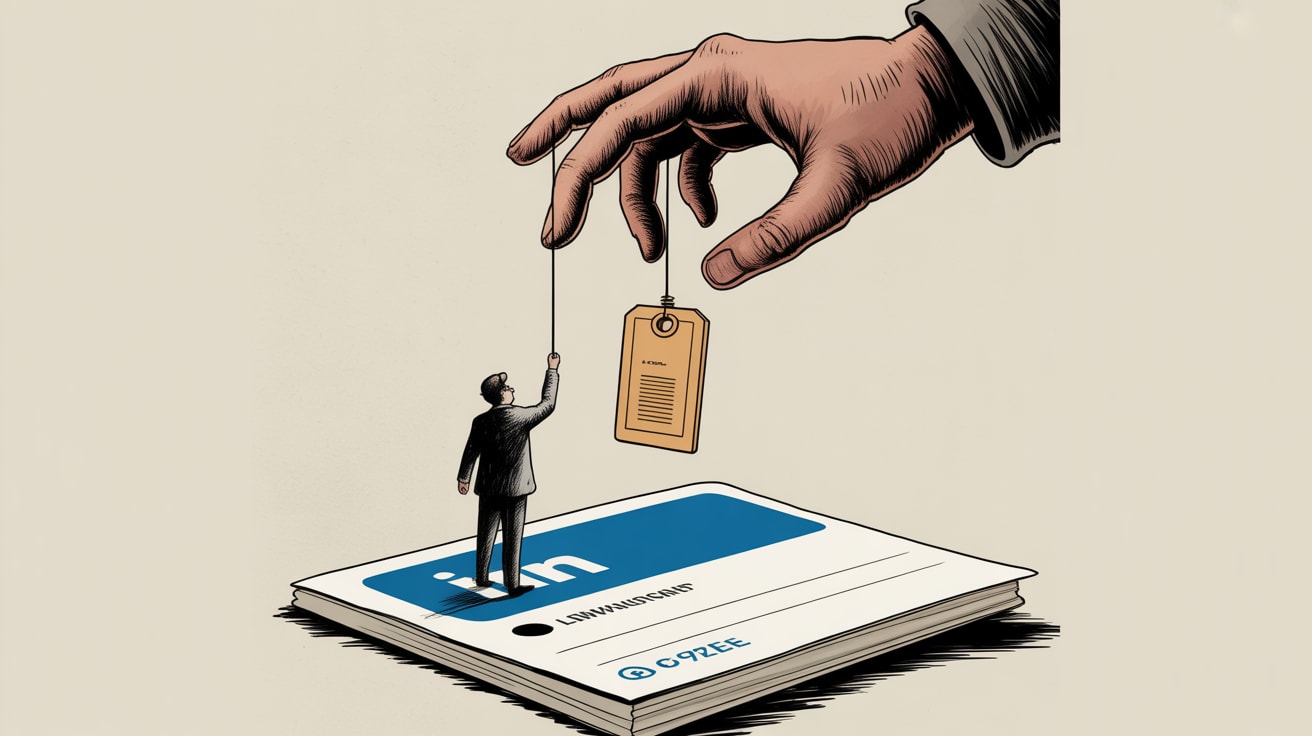
AI engines are citing LinkedIn posts as authoritative sources. Here's how B2B marketers in Southeast Asia can build AEO visibility before rivals notice.
Perplexity is now citing individual LinkedIn posts alongside McKinsey white papers. If that doesn’t recalibrate how you think about your content distribution strategy, read it again.
The Citation Pattern AI Engines Have Already Established
HubSpot’s Mandy Bray documented something practitioners should pay close attention to: when she ran repeated searches on Perplexity for B2B insights and sourcing material, the results consistently surfaced Gartner, peer-reviewed research — and then a named individual’s LinkedIn post. Not a brand blog. Not a press release. A personal LinkedIn post with a clear point of view and a specific claim.
This is Answer Engine Optimisation (AEO) in practice — and it’s already reshaping how authority is assigned online. AI engines don’t just crawl; they synthesise. They select sources that read as primary, attributable, and specific. A LinkedIn post that states “In Q2 2026, our team tested three onboarding flows across 12,000 users — here’s what converted” is, from an AI’s perspective, closer to a primary source than a generic thought-leadership article padded with industry platitudes.
For B2B marketers in Southeast Asia — where Perplexity adoption among English-language professional audiences is accelerating — this is an early-mover window. The consensus hasn’t formed yet. Most competitors are still thinking about LinkedIn as a brand awareness play, not a citation-building engine.
What Makes a LinkedIn Post Citable by AI
The HubSpot experiment points to a structure worth reverse-engineering. AI engines appear to favour LinkedIn content that mirrors the architecture of credible research: a named author with domain specificity, a concrete claim supported by a figure or first-hand observation, and a conclusion that generalises the finding into a transferable insight.
Translated into practical terms, that means moving away from opinion-first posting toward evidence-first posting. Instead of “AI is changing B2B buying behaviour,” you write: “After auditing 40 vendor shortlisting processes across Singapore and Malaysia in H1 2026, we found that 68% of procurement teams used an AI assistant to generate their initial vendor longlist.” The first sentence is noise. The second is a citation candidate.
Social Media Examiner’s coverage of LinkedIn discovery strategy reinforces this — repurposing past LinkedIn newsletter content as a structured discovery engine works precisely because serialised, specific content creates multiple indexable entry points. Each post becomes a node AI can pull from independently. For Southeast Asian B2B brands, this means publishing original market data, client anonymised case observations, and category-specific benchmarks in LinkedIn’s native format — not just linking out to gated reports.
Cross-Posting Without Diluting Your Authority Signal
Sprout Social’s 2026 analysis on cross-posting confirms what experienced practitioners already suspect: brands expanding across platforms are doing so because audience attention is fragmenting, not consolidating. But cross-posting carries a hidden AEO cost that most teams aren’t accounting for.
When identical content appears across LinkedIn, Instagram, and a brand blog simultaneously, AI engines face an attribution problem. Which source is primary? In practice, they tend to resolve this in favour of the platform with the strongest domain authority signal for that content type — and for professional B2B insights, LinkedIn currently wins that contest. Syndicating your sharpest market observations to LinkedIn first, then adapting for other channels, preserves the citation signal. Posting everywhere at once, with identical copy, diffuses it.
For teams managing multilingual content across markets like Thailand, Vietnam, and the Philippines, this adds another layer of consideration. A Bahasa Indonesia version of an insight published simultaneously with the English original isn’t a duplicate — it’s a distinct audience signal. But the English-language LinkedIn post should still be the canonical source for AI citation purposes, particularly if your brand is targeting regional procurement teams who research in English.
Building the AEO Habit Before It Becomes Table Stakes
The structural shift here mirrors what happened with SEO between 2004 and 2008 — the practitioners who understood that Google was rewarding specific signals (backlinks, structured content, domain authority) before those signals became common knowledge built advantages that took rivals years to close.
AEO on LinkedIn is at roughly that stage now. The playbook isn’t complicated, but it requires a change in how content briefs are written. Every LinkedIn post from a senior practitioner at your brand should answer three questions before publishing: Does this contain a specific, attributable claim? Does it reference a real context — a market, a timeframe, a sample? Does the conclusion generalise in a way that’s useful to someone not inside your company?
For Southeast Asian brands with genuine regional data — platform adoption rates, consumer behaviour shifts, category-specific conversion benchmarks — this is a competitive asset that most Western and global competitors simply don’t have. Publishing that data in citable LinkedIn formats, under named authors with clear domain expertise, is how regional brands can appear in AI-generated answers alongside firms with ten times the content budget.
The platforms doing the citing won’t announce when the window closes. They rarely do.
Key Takeaways
- Structure LinkedIn posts as primary sources — specific claim, named context, generalisable conclusion — to qualify for AI engine citations.
- Publish original Southeast Asian market data natively on LinkedIn before syndicating elsewhere; the first-publish signal matters for AEO attribution.
- Serialised LinkedIn content (newsletters, recurring post formats) creates multiple independent citation nodes that compound over time rather than peaking once.
The brands that will dominate AI-generated B2B research results in 2027 are building their citation footprint on LinkedIn right now — not because they predicted the algorithm, but because they treated their own market knowledge as publishable primary research. The question worth sitting with: how much proprietary regional insight is your team leaving unpublished because it doesn’t fit the format of a white paper?
At grzzly, we work with marketing teams across Southeast Asia who are sitting on genuinely differentiated market intelligence but struggling to turn it into content that builds authority at scale — on LinkedIn and beyond. If you’re thinking about how to position your brand as a citable source in an AI-first discovery environment, we’d enjoy that conversation. Let’s talk
Sources

Written by
Mystic GrizzlyReading the early signals — in consumer behaviour, platform mechanics, and competitive positioning — before they become the consensus. Writing for practitioners who want to act ahead of the curve.