
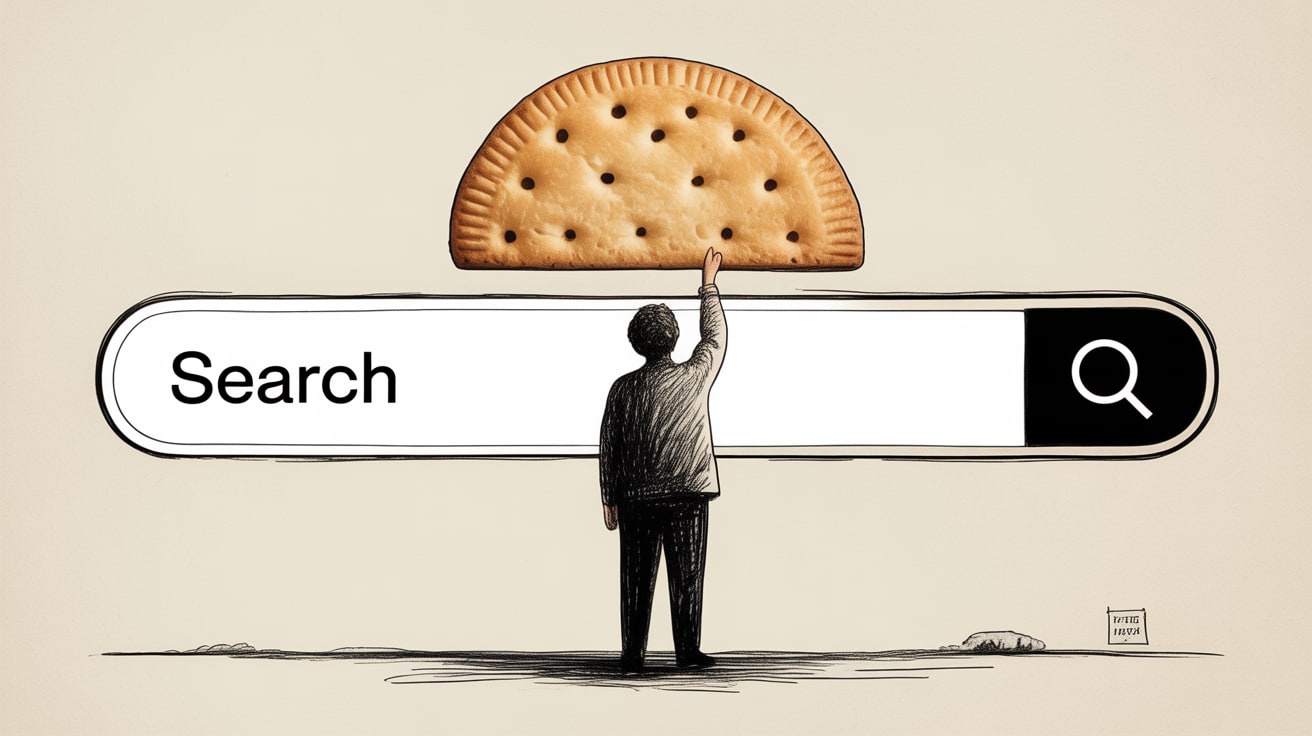
From nostalgic ads to AI search KPIs, here's what Southeast Asian marketers must rethink about brand visibility in 2026.
Jaffa Cakes just tried to out-nostalgic themselves — and the timing is more strategically interesting than it looks.
In August 2026, the UK biscuit brand revived the bones of its iconic 1999 ‘Full moon, half moon, total eclipse’ ad, playfully nodding to the original while updating the creative. Campaign Live flagged it as a rare case of a brand deliberately wrestling with its own cultural legacy. But read it through a 2026 lens and there’s a sharper question underneath: in an era where AI search engines are rewriting what ‘discovery’ means, is brand memorability becoming a distribution strategy again?
Why Traffic and Search Rank Are Becoming Vanity Metrics
HubSpot’s Ramona Sukhraj put it plainly this week: for over a decade, marketers were warned against chasing vanity metrics. Now, organic traffic and keyword ranking are joining that list. AI-powered search engines — Perplexity, SearchGPT, Gemini’s AI Overviews — are increasingly synthesising answers directly on the results page, meaning a top-three ranking no longer guarantees a click.
The KPIs that actually matter now are citation rate (how often your content is referenced by AI responses), share of AI-generated answer snippets, and brand mention velocity across authoritative third-party sources. For Southeast Asian brands, this shift hits harder: markets like Thailand, Vietnam, and the Philippines have mobile-first audiences who are already comfortable with conversational search via LINE, Grab, and integrated super-app interfaces. If your brand isn’t structured to be cited rather than just found, you’re already behind.
The strategic pivot is to create content with clear attribution signals — named authors, specific data points, cited research — so that AI models can confidently reference your brand as a source rather than paraphrasing you into anonymity.
The Jaffa Cakes Principle: Branded Memory as Search Infrastructure
This is where the Jaffa Cakes case study stops being a creative curiosity and starts being a strategy brief. The 1999 ad worked because it created a mental shortcut so distinctive that 27 years later, the brand can simply gesture at it and audiences fill in the rest. That’s not nostalgia marketing — that’s brand equity functioning as a retrieval cue.
In an AI search world, retrieval cues matter structurally. AI models are trained on the web’s collective memory. Brands that have generated consistent, distinctive, high-engagement creative over time — brands that mean something specific — are more likely to surface in AI-generated responses because they appear across more contexts, in more authoritative sources, with more consistent associations.
For Southeast Asian brands, this means the work of building genuinely memorable creative isn’t just a brand health exercise. It’s foundational infrastructure for AI search visibility. A brand that’s been generically competent across five years of content has a thinner footprint in the training data than one that took creative risks and earned cultural conversation.
AI Image Homogeneity Is the Same Problem, Smaller Scale
Social Media Examiner’s Michael Stelzner published a sharp diagnostic this week: most AI-generated brand images look identical because marketers are using near-identical prompts fed into the same default models. The visual output converges on a kind of aspirational beige — polished, inoffensive, forgettable.
The fix Stelzner outlines is a seven-pillar prompt framework that introduces brand-specific constraints: reference images from your actual visual identity, specific compositional instructions, and multi-model tools like Magnific for added textural control. The underlying principle maps directly to the search visibility problem: generic inputs produce generic outputs, and generic outputs don’t earn citations, engagement, or cultural memory.
For teams running content across Shopee storefronts, LINE campaigns, and TikTok Shop simultaneously — which describes most mid-market SEA brands right now — the temptation is to default to fast, uniform AI visuals. The compounding cost of that shortcut is a brand that AI models (and human audiences) can’t distinguish from the category noise.
Content Volume Without Brand Distinctiveness Is a Treadmill
Sprout Social’s Mahnoor Sheikh published a practical guide to batching 30 days of Instagram content in a single day — and it’s genuinely useful operational advice. Theme clustering, pre-built templates, batch filming: the efficiency gains are real, especially for lean regional teams managing multiple markets.
But there’s a structural tension worth naming. Content batching optimises for volume and consistency. Neither of those things, by themselves, build brand memory. The Jaffa Cakes lesson, the AI image problem, and the new AI search KPIs all point to the same underlying truth: the brands that will compound in visibility over the next three years are those that treat distinctiveness as a system, not an occasional campaign.
The practical integration is to use batching for your high-frequency, lower-stakes content — product updates, educational posts, community engagement — while protecting deliberate creative capacity for the 20% of output that’s meant to be genuinely memorable. That ratio isn’t a creative opinion; it’s increasingly an algorithm one.
Key Takeaways
- Track AI citation rate and brand mention velocity alongside traditional traffic metrics — they’re the leading indicators of search visibility in 2026.
- Distinctive brand creative isn’t just a marketing investment; it’s training data infrastructure that shapes how AI models represent you in search responses.
- Use content batching to protect creative bandwidth — efficiency tools should serve brand distinctiveness, not replace it.
The deeper question this week’s evidence raises: if AI search increasingly rewards brands with rich, distinctive, widely-cited histories, does that shift the competitive advantage back toward brands with genuine longevity and creative courage — and away from brands that optimised purely for volume? It’s too early to call, but the Jaffa Cakes gambit looks less like nostalgia and more like a very old brand reading a very new map.
At grzzly, we work with growth teams across Southeast Asia who are navigating exactly this inflection point — figuring out which legacy brand assets to amplify, which content systems to build, and how to structure visibility for an AI-mediated search landscape. If your team is rethinking how brand strategy and content operations fit together in 2026, we’d enjoy that conversation. Let’s talk
Sources
- https://www.campaignlive.co.uk/article/jaffa-cakes-playfully-tries-eclipse-classic-1999-full-moon-half-moon-ad/1967199
- https://blog.hubspot.com/marketing/ai-search-kpis
- https://www.socialmediaexaminer.com/why-your-ai-images-look-like-everyone-elses-and-how-to-fix-it/
- https://sproutsocial.com/insights/batch-content-instagram/

Written by
Vintage GrizzlySynthesising channel intelligence, audience psychology, and market context into coherent growth strategies. Old enough to remember the last paradigm shift; sharp enough to see the next one forming.