
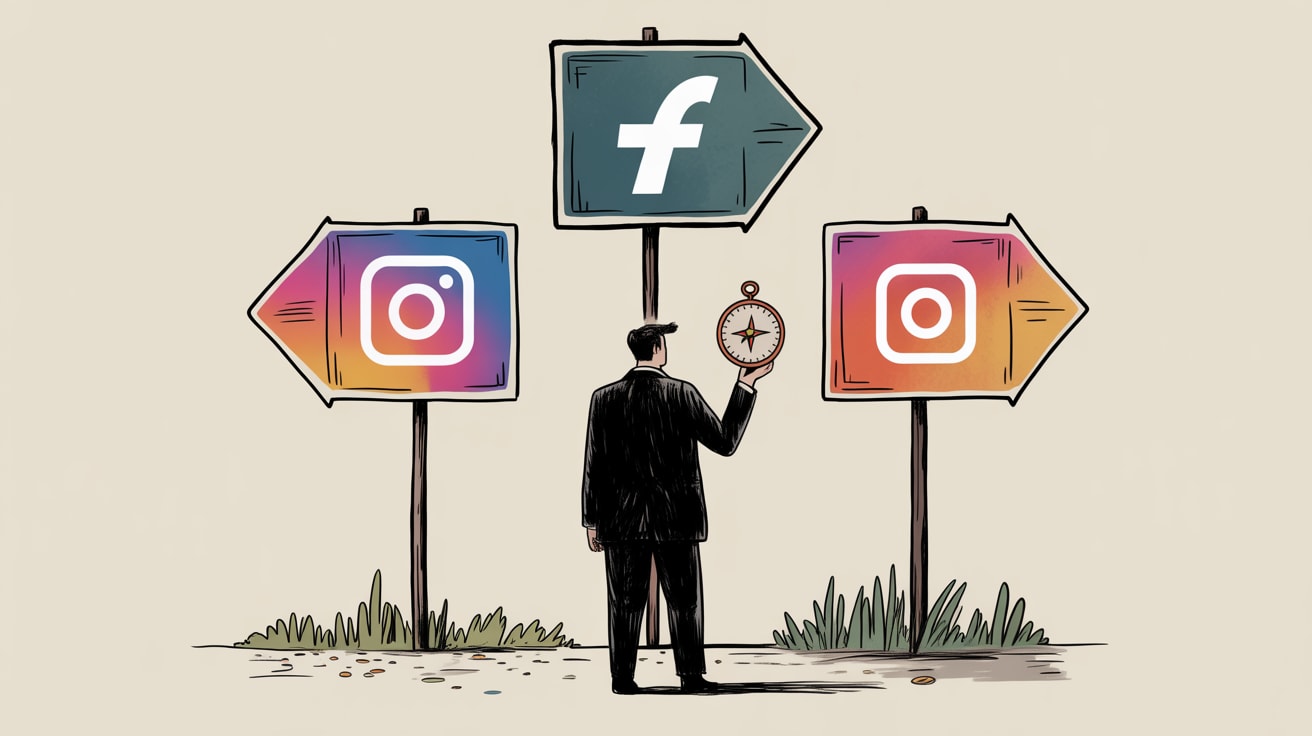
Three digital strategy shifts Southeast Asia teams should act on now: carousel growth, influencer tier selection, and picking the right AEO tool.
The algorithm giveth, and the algorithm pivoteth. Three separate signals landed this week that, taken together, point toward a broader recalibration in how digital teams should be allocating attention and budget across content, influencer, and search. None of them are dramatic. All of them are actionable.
Instagram Carousels Are Doing What Reels Were Supposed To
The received wisdom for the past two years has been unambiguous: if you are not producing short-form video, you are invisible on Instagram. Social Media Examiner’s analysis challenges that assumption directly. Carousels — the multi-slide, swipeable format that most brand teams treat as a content afterthought — are generating meaningful follower growth and lead volume without requiring a production crew or a founder willing to perform on camera daily.
The mechanism is straightforward: Instagram’s algorithm rewards saves and shares more heavily than passive views, and carousels consistently outperform Reels on both metrics because they require active engagement. A viewer who swipes through seven slides on competitor benchmarking or a tactical how-to has demonstrated far stronger intent than someone who watched a 30-second video to completion.
For Southeast Asian brand teams, this matters practically. Mobile-first audiences across the region are already habituated to swiping — it is the native gesture of Shopee browsing, LINE sticker packs, and TikTok discovery. A well-structured carousel that teaches something specific (not just announces something) maps directly onto that behaviour. The production barrier is also lower: a Canva-built ten-slide framework post costs a fraction of even a modest Reels shoot.
The executional trap to avoid: carousels that front-load the conclusion. The first slide is the hook — it needs to create a reason to swipe, not resolve the tension prematurely.
Follower Count Is a Proxy Metric That Keeps Misleading Briefs
Sprout Social’s research on influencer follower count and audience expectations surfaces something that most experienced practitioners know but few briefs actually reflect: follower count shapes what an audience expects from a creator, and misaligning that expectation with your campaign objective is a reliable way to waste budget.
The core finding is that larger accounts — macro and mega-influencers — set audience expectations around entertainment and aspiration. Followers come for the persona, not the recommendation. Micro and nano creators, by contrast, have cultivated trust through specificity and accessibility. Their audiences follow them because they feel like a knowledgeable peer, which means product recommendations carry substantially more weight.
The strategic implication: if your campaign goal is reach and brand awareness, a macro influencer delivers that efficiently. If your goal is purchase intent or category education — which is the actual brief for most mid-market Southeast Asian brands running performance-adjacent campaigns — a cluster of micro-creators in adjacent verticals will outperform a single high-follower account, often at lower total cost.
The failure mode here is procurement logic bleeding into marketing decisions. Buying one RM 80,000 influencer post is easier to approve and easier to report than coordinating fifteen RM 5,000 creators. Easier is not the same as effective. Brand teams in Malaysia, Indonesia, and Thailand increasingly have the data to make this case internally — the gap is usually in building the workflow to manage distributed creator relationships at scale.
The AEO Tool Question Is Actually a Team Structure Question
As answer engine optimisation matures from buzzword to budget line, teams are having to make real tool decisions. HubSpot’s breakdown of Profound versus Semrush in the AEO space is useful precisely because it reframes the question: this is not about which tool is better, it is about which team is using it and for what purpose.
Semrush has extended its existing SEO infrastructure into AEO territory — prompt tracking, AI visibility monitoring, brand mention analysis across LLM outputs. For teams already running Semrush for traditional search, the incremental cost of activating AEO features is low and the workflow integration is relatively smooth. The limitation is depth: Semrush’s AEO coverage skews toward Google’s AI Overviews and broader search-adjacent surfaces.
Profound, by contrast, was built ground-up for LLM visibility — tracking how brands appear across ChatGPT, Perplexity, Claude, and Gemini with more granular prompt simulation and competitive share-of-voice reporting. It is a better tool for teams with a dedicated AEO brief and stakeholders who need to demonstrate AI visibility as a discrete metric.
For most Southeast Asian marketing teams, the honest answer is: start with Semrush’s AEO features if you are already subscribed, and evaluate Profound when AI-driven discovery becomes a meaningful traffic source in your category. Right now, for most B2C verticals in the region, traditional search and social still dominate the discovery funnel. Building AEO capability is a legitimate investment — over-indexing on tooling before the channel matures is a distraction.
The broader strategic question is who owns the AEO brief. SEO teams understand the content signals but often lack the prompt engineering instinct. Content teams have the editorial muscle but may not engage with the technical visibility layer. The brands that will do this well are the ones that resolve the ownership question before the tool question.
What This Week’s Signals Add Up To
Three apparently unrelated topics — carousel content, influencer tier selection, AEO tooling — share a common thread: default assumptions are expensive. The default that video is the only Instagram format worth investing in. The default that follower count is a reliable proxy for campaign impact. The default that AEO requires a specialised standalone tool from day one.
In each case, the evidence points toward a more deliberate, outcomes-first approach. Format selection should follow engagement mechanics, not platform hype cycles. Influencer selection should follow audience trust architecture, not reach numbers. Tool selection should follow team capability and channel maturity, not vendor positioning.
The brands building durable digital growth in Southeast Asia right now are the ones treating these as connected strategic decisions, not isolated channel tactics. The question worth sitting with: which of your current defaults are you maintaining out of habit rather than evidence?
At grzzly, we work with growth teams across Southeast Asia on exactly this kind of strategic recalibration — auditing what is actually driving outcomes versus what is being maintained out of momentum, and building the frameworks to make better decisions faster. If any of this landed close to a conversation you are already having internally, let’s talk.
Sources

Written by
Plot GrizzlyDocumenting the campaigns, systems, and decisions that actually moved the needle — with the intellectual honesty to include what failed and why. Narrative rigour as a professional standard.