AI-fatigued users are rewarding brands that look human. Here's how handmade design choices translate into measurable trust and conversion gains.
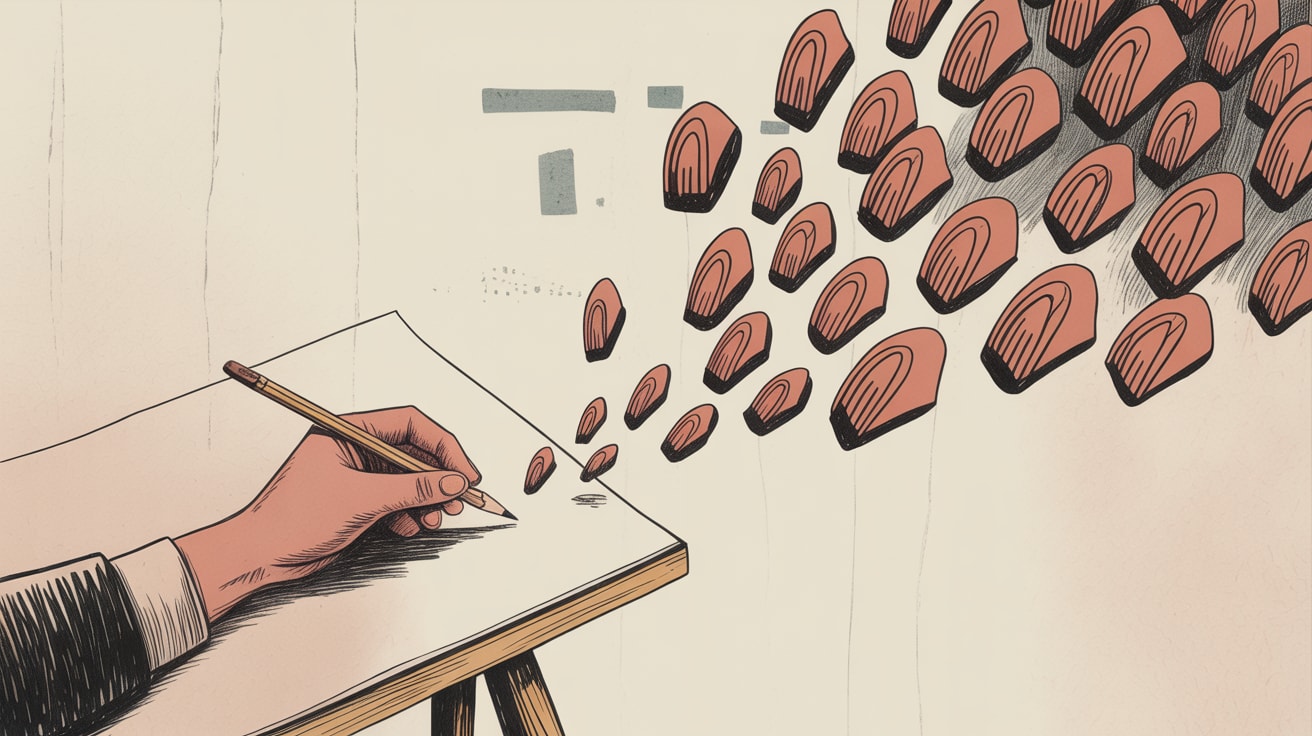
Nielsen Norman Group just named something most brand teams have been sensing but not measuring: users are actively developing fatigue toward AI-generated design, and they’re starting to trust interfaces that feel noticeably human.
For those of us who sit at the intersection of data and campaign execution, this isn’t a soft creative observation — it’s a signal worth instrumenting.
The Data Behind the Human Touch
Nielsen Norman Group’s research on handmade design catalogues a specific user behaviour pattern: when interfaces or content look algorithmically perfect — flawless symmetry, stock-smooth imagery, templated layouts — trust scores drop. Users can’t always articulate why, but their behaviour does: lower dwell time, higher bounce rates, reduced form completion.
The implication is direct. If your segmentation model is built around high-intent users — people already in consideration or comparison mode — and your landing experience reads as machine-assembled, you’re burning qualified traffic. In Southeast Asia, where Shopee and Lazada have trained users to expect hyper-polished, template-heavy product pages, brands that introduce even small signals of human craft — hand-lettered typography, imperfect illustrated icons, editorial photography with visible art direction — are creating measurable pattern interruptions that hold attention longer.
This is a behavioural data point, not an aesthetic preference.
What “Human” Actually Means in a Design System Context
The risk in taking NNGroup’s finding at face value is misapplying it as license for inconsistency. Deliberately human-feeling design is not the same as unpolished design. The distinction matters enormously when you’re trying to scale across a multilingual, multi-platform campaign in a market like Southeast Asia.
Handmade signals work at the component level: a slightly irregular border radius on a CTA button, illustrated avatars with visible brush texture rather than photo-realistic renders, copy that breaks grammatical symmetry in a way a language model wouldn’t. These are surgical choices, not a rejection of your design system.
For mobile-first execution — which covers the majority of your active users across TH, PH, ID, and VN — this translates to: don’t let your component library default to perfectly centred, perfectly weighted layouts on every screen. The UX Collective’s recent framing of design critique as collaborative knowledge-building is useful here: your designers need a shared vocabulary for when to introduce human friction versus when polish is the right call. That judgment can’t be automated.
The Legacy System Problem Nobody Wants to Talk About
Here’s where the strategic conversation gets uncomfortable. Smashing Magazine’s Vitaly Friedman recently published practical guidelines for driving UX impact inside organisations running legacy systems — and the underlying problem he describes maps almost exactly onto why handmade design principles fail to reach production.
Most mid-to-large brands in Southeast Asia are running digital marketing on a stack that was never designed for the kind of component-level flexibility that human-feeling design requires. CMS platforms, e-commerce backends, and CRM-integrated landing page builders impose visual constraints that push everything toward template uniformity. Your design team can craft beautiful, intentionally imperfect assets, and the CMS will flatten them into the same grid every other brand is using.
The practical fix isn’t a full platform migration — it’s identifying the highest-value touchpoints where custom rendering is possible and treating those as your human-signal real estate. For most brands, that’s the first viewport on mobile landing pages, the hero unit in push notifications, and the first frame of social video. Instrument those specifically. A/B test handmade asset variants against polished defaults and measure time-on-page, scroll depth, and conversion rate — not just click-through.
Activating the Signal: From Design Principle to Audience Decisioning
This is where my instinct as someone who builds audience segments kicks in. Handmade design as a trust signal isn’t uniformly valuable across every segment in your database. It indexes higher among specific audience profiles: users who’ve been retargeted multiple times and are showing fatigue signals, first-party audiences with high brand recall but low recent conversion, and new-to-brand traffic arriving from content or influencer channels rather than performance media.
That means you can operationalise this. Tag the creative variants — polished vs. handmade-signal — and map performance back against your segment definitions. If your CDP or DMP supports it, build a decisioning rule: users who’ve seen the same polished creative three or more times in the last 14 days get routed to the handmade variant. Run it for 30 days and look at the conversion delta. The NNGroup research gives you the hypothesis. Your own first-party data gives you the proof.
For teams managing multilingual campaigns, there’s an added layer: hand-crafted visual signals translate across language barriers in ways that polished template design does not. A hand-drawn element communicates human attention regardless of whether the accompanying copy is in Thai, Tagalog, or Bahasa Indonesia. That’s a meaningful efficiency in markets where creative localisation costs are non-trivial.
Key Takeaways
- Instrument handmade design variants against your highest-fatigue audience segments first — that’s where the trust signal has the most measurable impact.
- Identify the three highest-value mobile touchpoints in your funnel where component-level flexibility exists, and use those as your human-signal real estate.
- Build a creative decisioning rule in your CDP: users with three or more exposures to polished creative variants should be automatically routed to handmade-signal alternatives.
The deeper question this research opens is whether brands are ready to treat design choices as audience signals rather than brand guidelines. A/B testing copy and offers is table stakes. A/B testing the degree of human imperfection in your visual language — and routing based on behavioural data — is where the next frontier sits. Are your design and data teams even in the same room for that conversation?
At grzzly, we work with brand and growth teams across Southeast Asia on exactly this: connecting design decisions to first-party data infrastructure so that creative choices become measurable, testable, and scalable. If your design and analytics functions are still operating in separate lanes, that’s the gap we’d want to close with you. Let’s talk

Sources

Written by
Mellow GrizzlyTranslating raw data into activated audience segments, predictive models, and decisioning logic. Comfortable at the intersection of the data warehouse and the campaign manager.