Google's March core update, doubling Gemini referrals, and ChatGPT Ads — what Southeast Asia's search teams need to know right now.
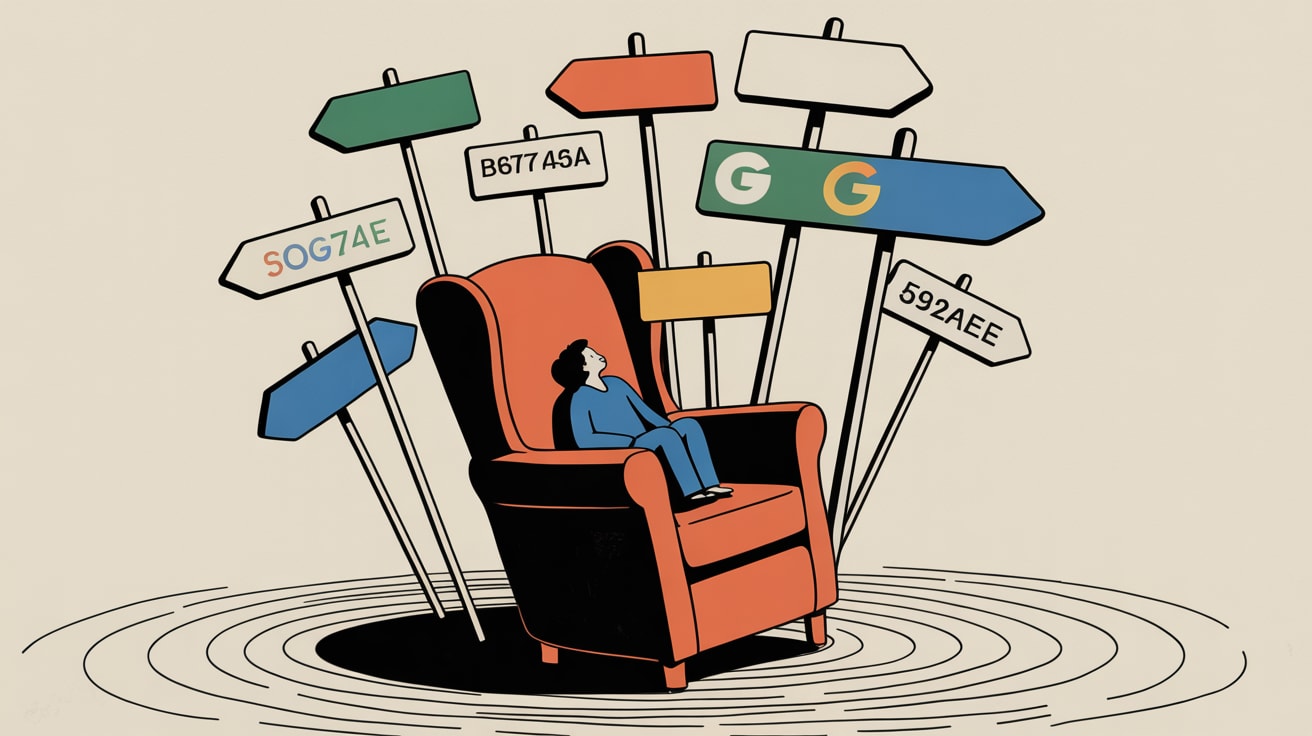
Gemini referral traffic has doubled. ChatGPT is selling ad inventory. And Google’s March core update is mid-rollout as you read this. The search landscape isn’t evolving — it’s forking.
Google’s March Core Update: What the Timing Tells You
Google’s March 2026 core update began rolling out in the first week of April, and if history is a reliable guide, full settlement takes two to three weeks. Search Engine Journal’s SEO Pulse coverage notes that the update arrived alongside Gary Illyes’ unusually detailed public explanation of Googlebot’s crawling architecture — a rare transparency move that itself signals something.
Illyes confirmed that Googlebot operates within crawl budget constraints shaped by server response times, not just site size. For large e-commerce properties on platforms like Lazada or brands running sprawling regional microsites across Thailand, Vietnam, and the Philippines, this matters acutely: slow server responses don’t just hurt user experience, they limit how much of your content Google is willing to index at any given time.
Splitting sitemaps into multiple files — a tactic Google’s John Mueller recently addressed directly — isn’t about gaming the algorithm. Mueller’s position is straightforward: it’s a housekeeping decision, useful for large sites that want cleaner error reporting and easier diagnostics, not a ranking lever. Treat it accordingly. If your sitemap is under 50,000 URLs and performing cleanly, splitting it buys you nothing.
Gemini Referrals Are Doubling — and That’s the Real Signal
The figure that deserves the most attention from this week’s data: Gemini referral traffic has doubled in recent months. Search Engine Journal’s reporting frames this as an emerging trend, but for teams serious about Generative Engine Optimisation (GEO), it confirms what the evidence has been suggesting — AI-powered search surfaces are becoming legitimate distribution channels, not experimental footnotes.
This is where GEO diverges meaningfully from classic SEO. Google’s traditional ranking systems reward topical authority built through backlink graphs and structured content hierarchies. Gemini’s citation behaviour, like that of ChatGPT’s browse mode, appears to weight source credibility, answer specificity, and structured data clarity. Brands that have invested in E-E-A-T signals — demonstrable expertise, clear authorship, well-structured FAQ and how-to markup — are better positioned to earn AI citations than brands optimising purely for keyword density.
For Southeast Asian brands, the practical implication is this: if your content strategy has been built around ranking for transactional Thai or Bahasa Indonesia queries, you need a parallel track focused on being cited in AI-generated answers to those same questions. The user intent is identical; the engine mechanics are not.
ChatGPT Ads: Budget Line Item or Brand Insurance?
OpenAI’s expansion of ChatGPT Ads — including the rollout of self-serve access — is the kind of announcement that arrives quietly and matters loudly. Search Engine Journal’s Brooke Osmundson raises the right question for PPC managers: is this a genuine new acquisition channel, or just another surface where brands have to spend defensively to protect their own name?
The honest answer right now is: probably both, depending on your category. For high-consideration purchases where users are actively researching inside ChatGPT — travel, financial services, B2B software — there’s a real argument for early-mover investment. For FMCG brands or those selling on Shopee and Tokopedia where the purchase path rarely runs through a generative AI interface, the calculus is less clear.
What’s worth watching is how ChatGPT’s ad placement interacts with its organic citation behaviour. If paid placements influence which brands appear in AI-generated recommendations — even subtly — then the channel becomes significantly more strategic. That dynamic hasn’t been confirmed, but it’s the question every search lead should be putting to their agency right now.
For Southeast Asian teams managing multilingual campaigns across markets with varying digital ad regulations, the self-serve model also introduces compliance complexity. Thailand’s PDPA, Indonesia’s Personal Data Protection Law, and Vietnam’s Cybersecurity Law all have implications for how audience targeting data can be used — even on a US-headquartered platform.
Recalibrating Your Search Stack for 2026
The through-line across this week’s developments isn’t chaos — it’s stratification. Search is splitting into distinct layers: traditional SERP ranking, AI-cited authority, and now paid placement within generative interfaces. Each layer has different success criteria and different optimisation levers.
Teams that treat these as a single “search” problem will underperform on all three. The smarter move is to map your content assets against each layer explicitly. What earns you traditional organic rankings? What earns you AI citations? What earns you paid visibility in conversational interfaces? The overlap exists, but it isn’t total — and the gaps are where rankings get quietly stolen.
The brands winning search visibility in 2026 won’t be those who picked the right channel. They’ll be the ones who understood that channels are no longer the right unit of analysis.
Key Takeaways
- Gemini referral traffic doubling is a direct mandate to invest in GEO alongside classic SEO — AI citation and SERP ranking require different content architectures.
- ChatGPT Ads self-serve access demands a strategic position now, even if that position is a reasoned decision to wait — passivity isn’t neutrality.
- Googlebot crawl architecture is server-response-dependent; for large multi-market sites in Southeast Asia, infrastructure performance is a search strategy decision, not just a DevOps one.
The deeper provocation here isn’t which engine to optimise for — it’s whether the mental model of “search” still holds when the answer increasingly arrives before the query is finished. When machines anticipate intent, what does discovery even mean?
At grzzly, we work with growth and marketing teams across Southeast Asia to build search strategies that account for all three layers: traditional SEO, generative engine optimisation, and emerging paid AI placements. If your current search roadmap was built before Gemini referral traffic was a line item worth tracking, it’s probably time to revisit it. Let’s talk
Sources

Written by
Cosmic GrizzlyMapping the evolving cosmos of search — from traditional SERP dominance to answer engine optimisation and AI-cited authority. Obsessed with how machines decide what the world deserves to read.