Three 2026 signals — channel hierarchy myths, TikTok pipeline tactics, and AI adoption data — reveal what smart digital marketing strategy looks like now.
Social media is not the beginning of the story. Neither is AI, or TikTok, or whatever platform just published a shiny new ad format. Three separate signals published this week — on channel strategy, TikTok campaign design, and AI adoption — converge on the same uncomfortable truth: most brands are optimising the wrong thing.
The Social Hierarchy Problem Nobody Wants to Admit
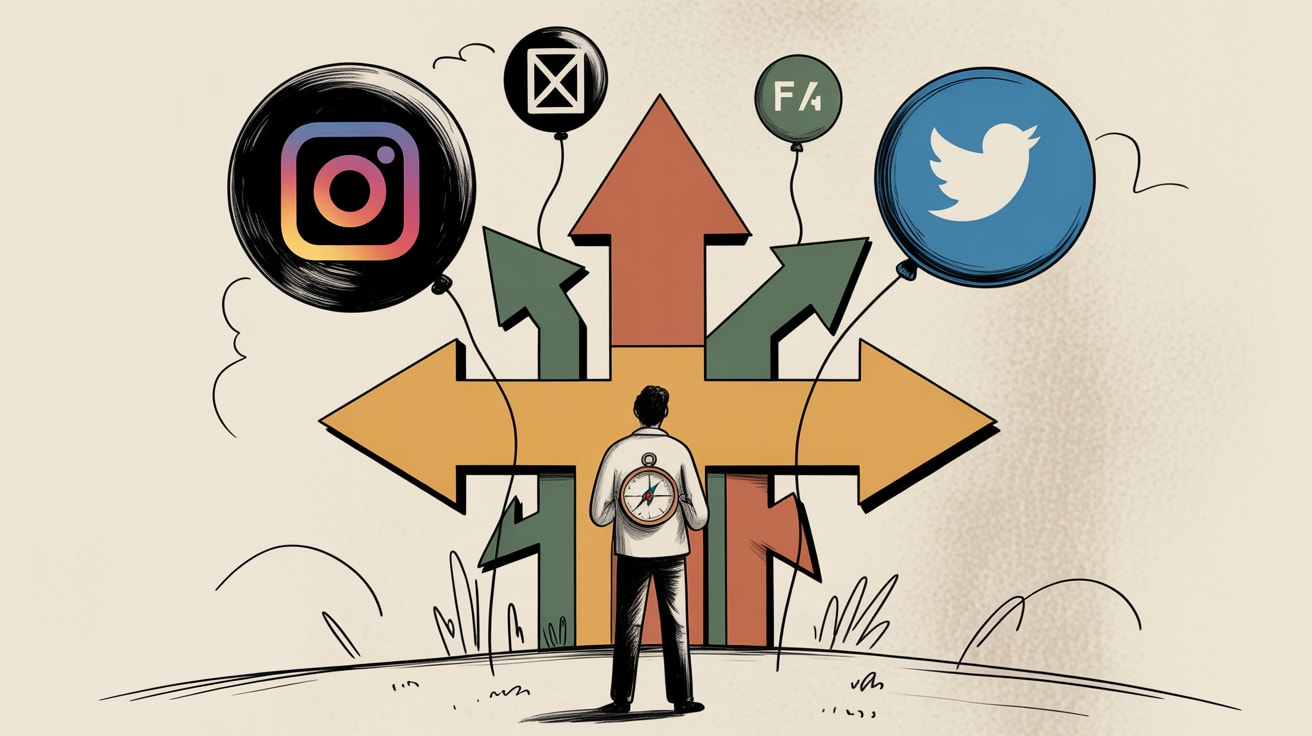
Campaign Live raised something practitioners have been tiptoeing around for years: social media performance is downstream of cultural relevance, not the other way around. Brands that consistently win on social — high organic reach, strong engagement, low CAC — almost always have a broader media presence working underneath. Television, out-of-home, PR, events. The social numbers look great because the brand already means something before the scroll.
This matters acutely in Southeast Asia, where platform ecosystems are dense and competitive. A brand on Shopee, LINE, or TikTok Shop is competing with thousands of SKUs in the same category. The brands cutting through aren’t necessarily outspending on social ads — they’re the ones whose offline or above-the-line presence gives consumers a reason to pause when they see the post. In Thailand, CP Foods’ consistent broadcast presence makes its social content punch above its production budget. The lesson: channel hierarchy is a myth, but cultural groundwork is not.
For strategists, this reframes budget allocation conversations. Cutting traditional media to fund social often reduces social performance within 12–18 months, because the cultural signal that amplifies social content slowly degrades.
TikTok Campaigns Built for Pipeline, Not Applause
HubSpot’s breakdown of Invisalign’s TikTok approach is one of the more instructive case studies circulating this month. Rather than serving a standard lead-generation form post-click, Invisalign embedded a Smile Quiz directly into the ad unit. The result: 32% more form completions at a lower cost per lead. The quiz did two things simultaneously — it pre-qualified intent and it created a moment of personalisation that reduced the cognitive friction of submitting contact details.
This is the tactic most brands running TikTok campaigns in Southeast Asia are skipping. The dominant approach is still: creative video → swipe-up → landing page → form. Each handoff is a drop-off point. Interactive ad formats — polls, quizzes, gamified elements — compress that funnel. For categories where purchase consideration is high (insurance, fintech, healthcare, education), the quiz-to-lead mechanic deserves serious testing.
The implementation requirement is real: you need a quiz or interactive element designed for mobile-first, sub-30-second engagement, that connects cleanly to your CRM. That’s a cross-functional build, not a social team deliverable. But Invisalign’s numbers suggest the investment has a clear return.
AI Adoption: The Gap Between Daily Use and Strategic Depth
Social Media Examiner’s 2026 AI Marketing Industry Report contains a figure worth sitting with: roughly three in four marketers now use AI daily, up from about one in three two years ago. That is a compressed adoption curve by any measure — steeper than mobile, arguably steeper than social itself at equivalent maturity.
The nuance, which the report surfaces, is that daily use is concentrated in content production and scheduling — the execution layer. Strategic applications: audience modelling, competitive signal analysis, campaign architecture, predictive budget allocation — these remain underpenetrated. The implication for mid-to-large brands in Southeast Asia is a window: while competitors are using AI to produce more content faster, there’s an asymmetric advantage available to teams that deploy AI at the planning layer instead.
A concrete example: using AI to analyse platform-specific comment sentiment across Indonesian, Thai, and Vietnamese markets simultaneously — something that would have required three separate research workstreams 18 months ago — now takes hours. That speed advantage at the insight stage compounds into better creative briefs, better targeting parameters, and better channel sequencing decisions. The brands treating AI as a production tool are getting marginal efficiency gains. The ones treating it as a strategic input are building durable edge.
Connecting the Signals: What This Week Is Actually Telling You
These three stories aren’t about social, TikTok, or AI independently. They’re about the same underlying tension in digital marketing strategy right now: the gap between what’s easy to measure and what actually drives business outcomes.
Social engagement is easy to measure. A 32% lift in form completions is harder to build but far more valuable. Daily AI usage is easy to track. Using AI to reshape your planning process is harder to institutionalise but strategically differentiating. Traditional media’s contribution to social performance is difficult to attribute cleanly — which is exactly why it keeps getting cut.
The early signal here is about which brands will be pulling ahead in 2027. They’ll be the ones who resisted the pressure to simplify their strategy down to what fits in a dashboard, and instead invested in the infrastructure — cultural, technical, and analytical — that makes every channel work harder.
The question worth asking internally: are your current digital strategy decisions optimising for the metric, or for the outcome?
grzzly works with growth-focused brands across Southeast Asia to close exactly this gap — between what the dashboard shows and what’s actually driving commercial results. If these signals are raising questions about how your channel mix, TikTok approach, or AI deployment stack up, we should compare notes. Let’s talk
Sources

Written by
Mystic GrizzlyReading the early signals — in consumer behaviour, platform mechanics, and competitive positioning — before they become the consensus. Writing for practitioners who want to act ahead of the curve.