
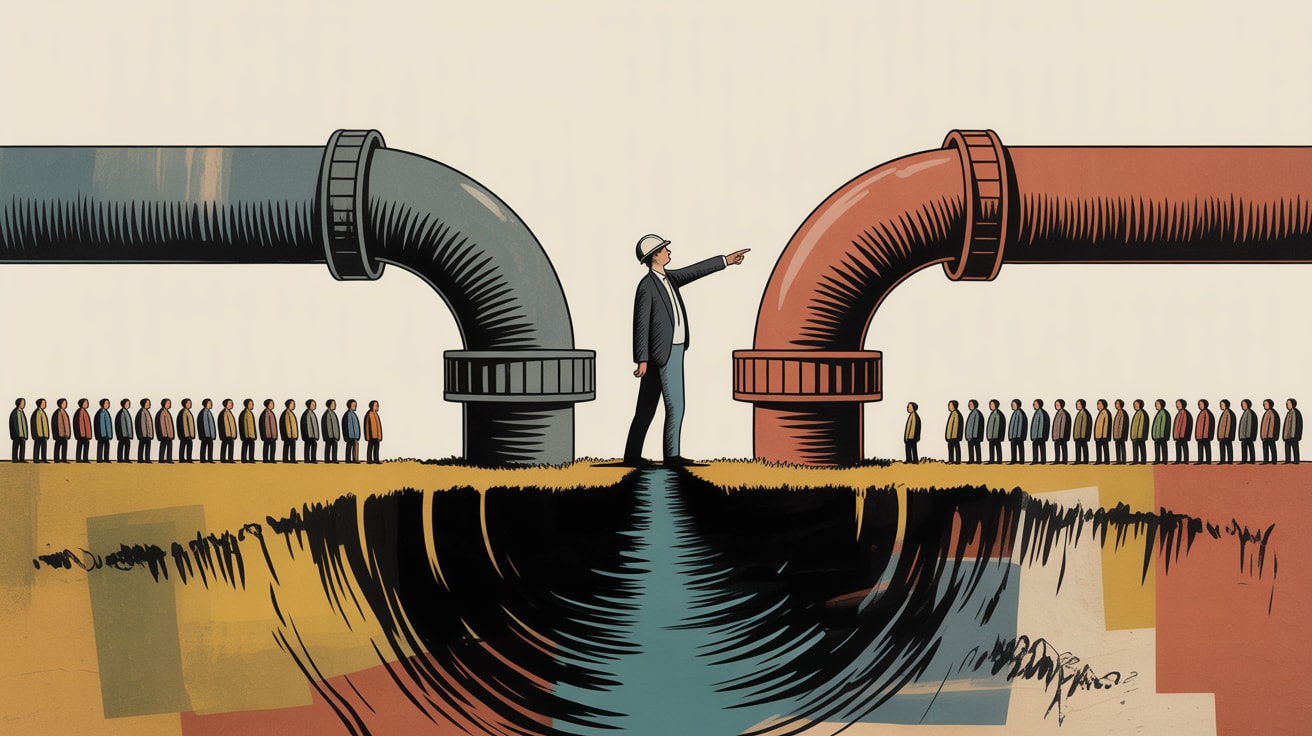
Your data lives in the cloud. Your customers don't wait there. Close the activation gap before it costs you real revenue in Southeast Asia.
Brands across Southeast Asia spent the last three years migrating customer data into cloud warehouses — Snowflake, BigQuery, Databricks — and calling it a stack transformation. Tealium’s Nick Albertini puts the problem plainly: storage consolidation was sold as stack consolidation, and marketing teams are now paying the price of that category error.
The data is consolidated. The customer, unfortunately, is not.
The Cloud Became the Center. Activation Stayed on the Periphery.
Here’s what actually happened: the data warehouse became the system of record, which made sense. Centralising fragmented customer data — transactions, behavioural signals, offline touchpoints — into a single governed environment is genuinely valuable. The problem is that warehouse architecture is optimised for querying at rest, not acting in motion.
Marketing teams that handed over their activation layer in exchange for “one source of truth” discovered the truth arrives 24 hours late. Batch exports. Scheduled syncs. Campaign audiences built on yesterday’s behaviour, fired at tomorrow’s customer. For brands running promotions on Shopee or triggering push notifications through LINE OA, that latency isn’t a technical nuisance — it’s a conversion killer.
Tealium reports that marketing teams are being asked to give up precisely the capability they were never supposed to surrender: the ability to act on data in the moment it becomes meaningful.
Real-Time Engagement Requires a Different Architectural Posture
A Customer Engagement Platform (CEP) framework built for actual human behaviour doesn’t start with where data lives — it starts with when decisions need to be made. In practice, that means distinguishing between three decisioning horizons:
Millisecond decisions (next-best-action at point of interaction) require stream processing and edge-adjacent compute — not a round-trip to the warehouse. Grab’s dynamic pricing engine doesn’t ask Redshift what a fair surge multiplier is mid-ride.
Minute-level decisions (triggered sequences, real-time segment updates) can tolerate lightweight latency but must be event-driven, not schedule-driven. A cart abandonment trigger that fires six hours later because the sync ran at midnight is just a different kind of batch-and-blast.
Day-level decisions (audience building, predictive modelling, lookalike expansion) are legitimately suited to the warehouse. This is where the cloud earns its place — and where confusing it with the full activation stack begins.
The activation gap emerges when teams treat all three horizons as warehouse problems.
The Southeast Asia Wrinkle: Fragmented Platforms, One Customer
In markets like Indonesia, Thailand, and the Philippines, the activation challenge is compounded by platform fragmentation that Western martech stacks were never designed to navigate. A single customer might browse on a Shopee app, message via LINE, convert through a GrabMart bundle, and receive post-purchase support on WhatsApp — across four platforms with four separate identity graphs and zero native data-sharing.
Batch-oriented activation doesn’t just fail here — it actively creates incoherence. Brands that can’t resolve identity across these touchpoints in near-real-time end up sending a loyalty reward to a customer who already churned, or a win-back offer to someone mid-checkout on a competitor platform.
The architectural response requires an intermediary layer — a streaming identity resolution and decisioning service — that sits between the warehouse and the channels. This isn’t a CDP replacement; it’s the activation infrastructure the CDP always assumed you had but rarely specified.
Practically, this looks like: Kafka or Pub/Sub for event streaming, a real-time profile store (Redis or similar) that materialises the warehouse’s slow attributes alongside live behavioural signals, and a decisioning engine that can evaluate rules or ML-scored recommendations against that unified profile within a single request cycle. For multilingual markets, this layer also needs to carry localisation context — a triggered message in Bahasa Indonesia and one in Thai aren’t just translations, they may require entirely different creative logic.
The AI Layer Doesn’t Fix Broken Plumbing
There’s a growing reflex to solve the activation gap with AI — dropping a propensity model or a generative personalisation layer on top of an architecture that still runs on nightly batch exports. It doesn’t work. A model that predicts churn with 89% accuracy is only as useful as the speed at which that prediction can trigger a retention intervention.
The more interesting AI application — and one that’s genuinely emerging in mature CEP implementations — is using ML to manage the decisioning logic itself: learning optimal send times per user, dynamically adjusting sequence logic based on engagement patterns, or scoring micro-segments in real time rather than rebuilding static audiences weekly. But none of that is recoverable if the underlying data pipeline runs on a 24-hour lag.
The analogy that keeps coming up in these conversations: a Formula 1 car with a great engine and a map from last Tuesday. The engine is impressive. The map is the problem.
Key Takeaways
- Moving to a data cloud solves storage and governance — it does not solve activation latency; those are different problems requiring different infrastructure.
- Real-time CEP in Southeast Asia requires an identity resolution and decisioning layer that bridges the warehouse and fragmented platform ecosystems like LINE, Shopee, and Grab.
- AI-driven personalisation only compounds existing activation architecture — a predictive model layered onto batch pipelines produces precisely timed recommendations that arrive too late.
The question worth sitting with: if your current data stack tells you everything about your customer but can only act on it tomorrow, what is the actual business value of knowing? The brands that pull ahead in Southeast Asia’s next growth cycle won’t necessarily have more data — they’ll have shorter distances between insight and action.
At grzzly, we work with marketing and data teams across Southeast Asia to design CEP frameworks that close exactly this gap — connecting warehouse intelligence to real-time activation across the platforms where your customers actually spend their time. If your stack is smarter than your campaigns, that’s a solvable problem. Let’s talk
Sources

Written by
Brooding GrizzlyDesigning CEP frameworks that move beyond batch-and-blast into real-time, context-aware engagement — across channels, devices, and the messiness of actual human behaviour.