
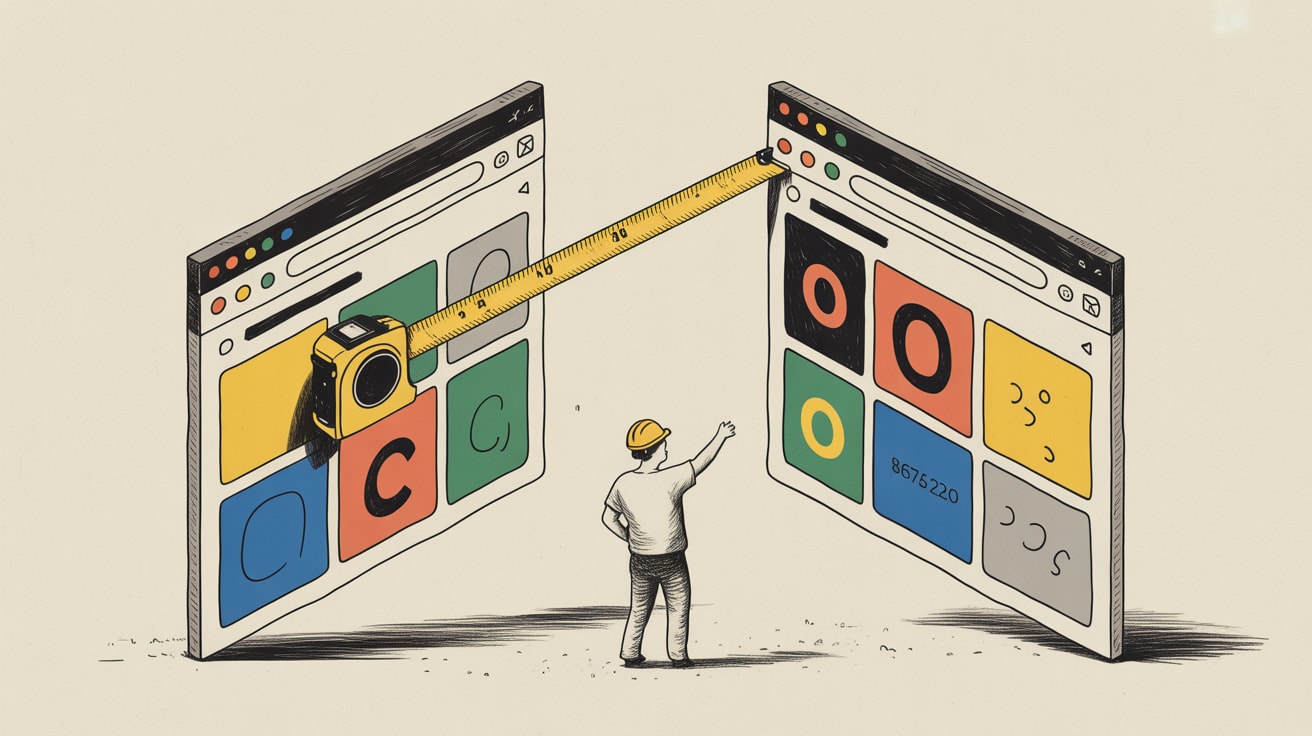
CSS gap decorations land in Chrome 149, MDN traffic data goes public, and luxury UX raises the bar. Here's what each signal means for your stack.
Three browser-side developments dropped this week that, taken individually, look like routine frontend news. Taken together, they sketch a quiet but consequential shift in how the web is built, measured, and experienced — and if you’re responsible for digital performance in Southeast Asia, at least two of them have immediate implications for your roadmap.
CSS Gap Decorations: The Layout Primitive You Didn’t Know You Were Waiting For
As of Chrome and Edge 149, CSS gap decorations are fully supported — meaning you can now style the gutters inside grid and flex layouts directly, without hacks involving pseudo-elements, border tricks, or JavaScript-injected dividers. CSS-Tricks covers the spec thoroughly, and the short version is this: column-rule-style properties now apply to gaps, giving you stroke, color, and style control with a single declaration.
For marketing teams producing high-volume content — think Shopee campaign pages, Lazada brand stores, or LINE VOOM carousels — this matters more than it sounds. Gutters are invisible design decisions that compound at scale. A consistent, CSS-native way to style them means fewer layout bugs across breakpoints, cleaner component boundaries in design systems, and less QA overhead when templates are repurposed across markets. Implementation caveat: until Firefox ships support (check MDN before you commit), treat this as a progressive enhancement. Build the fallback first; the decoration is a bonus.
MDN’s Traffic Data Is Public — and That’s a Surprisingly Useful Signal
Bramus flagged something quietly useful this week: MDN exposes real, up-to-date page view data at popularities.mdn.mozilla.net/current.csv. The dataset reflects what developers are actually looking up — not what they say they’re prioritising in surveys.
For anyone doing platform or technology planning, this is a low-noise signal. If Flexbox documentation is getting 4× the traffic of Grid, that tells you something about where your average contractor’s mental model lives — which is directly relevant when you’re deciding how prescriptive your component library needs to be. For tracking and tag management specifically, the JavaScript and Web APIs sections are worth watching: spikes in traffic around topics like the Topics API, Privacy Sandbox, or Permissions Policy tend to precede adoption waves by six to twelve months. Bramus built a quick visualiser using Google AI Studio to explore the data; it’s worth twenty minutes of your time if you want a read on where browser platform attention is drifting right now.
Interaction as Brand Narrative: What Luxury UX Is Teaching the Rest of Us
Digital studio Bonhomme published a reflection on their work building immersive experiences for luxury brands — and while the aesthetic territory is rarified, the strategic argument translates cleanly downmarket. Their thesis: the interaction is the story. Hover states, transitions, scroll behaviors, and micro-animations aren’t decorative flourishes; they are the primary medium through which brand character is communicated in a digital context.
This is easy to dismiss as luxury-sector navel-gazing until you look at what Grab and Sea Group have done with their super-app interfaces. The difference between a GrabFood interaction that feels premium and one that feels transactional is almost entirely in the motion design and response latency — not the visual identity. The failure mode here is implementing interaction design without instrumenting it. If you’re running A/B tests on CTA copy but not on transition timing or scroll reveal behavior, you have a measurement gap. Set up event tracking on interaction milestones — first meaningful animation complete, scroll depth at key modules, hover engagement on interactive elements — before you ship, not after. You can’t optimise what you didn’t think to measure.
Reading Platform Signals Before They Become Industry Consensus
What connects these three items isn’t a theme — it’s a posture. CSS gap decorations reward teams who track spec maturity, not just browser release notes. MDN traffic data rewards teams who treat developer behavior as a leading indicator. Bonhomme’s work rewards teams who instrument experience quality, not just conversion events.
In Southeast Asian markets, where a single campaign might render across five device tiers, three languages, and two major platform ecosystems simultaneously, the cost of catching up to platform changes reactively is higher than elsewhere. The teams getting ahead of it aren’t smarter — they’re just reading earlier.
Key Takeaways
- Implement CSS gap decorations as progressive enhancement now; build browser-safe fallbacks first and treat Chrome/Edge 149+ support as an accelerator, not a dependency.
- Add
popularities.mdn.mozilla.net/current.csvto your quarterly technology radar process — developer documentation traffic is a reliable six-to-twelve month leading indicator for API adoption. - Instrument interaction milestones — animation completion, scroll depth, hover engagement — before launching experience-led campaigns, so you have optimisation data from day one.
The quieter question worth sitting with: if the most useful browser platform signals are already public — MDN traffic, spec changelogs, Chromium intent threads — what does that say about the value of the industry analyst reports your team is paying for? The data is there. The question is whether anyone on your team has the mandate to read it.
At grzzly, we spend a lot of time exactly here — at the intersection of platform capability, tracking architecture, and what’s actually measurable in production. If your team is trying to stay ahead of browser changes while keeping your data layer intact across Southeast Asian markets, that’s a conversation we’re built for. Let’s talk
Sources

Written by
Cryptic GrizzlyFluent in server-side tagging, consent-mode logic, and the intricate diplomacy of getting marketing and engineering to agree on a data layer. Nothing ships without a QA plan.