
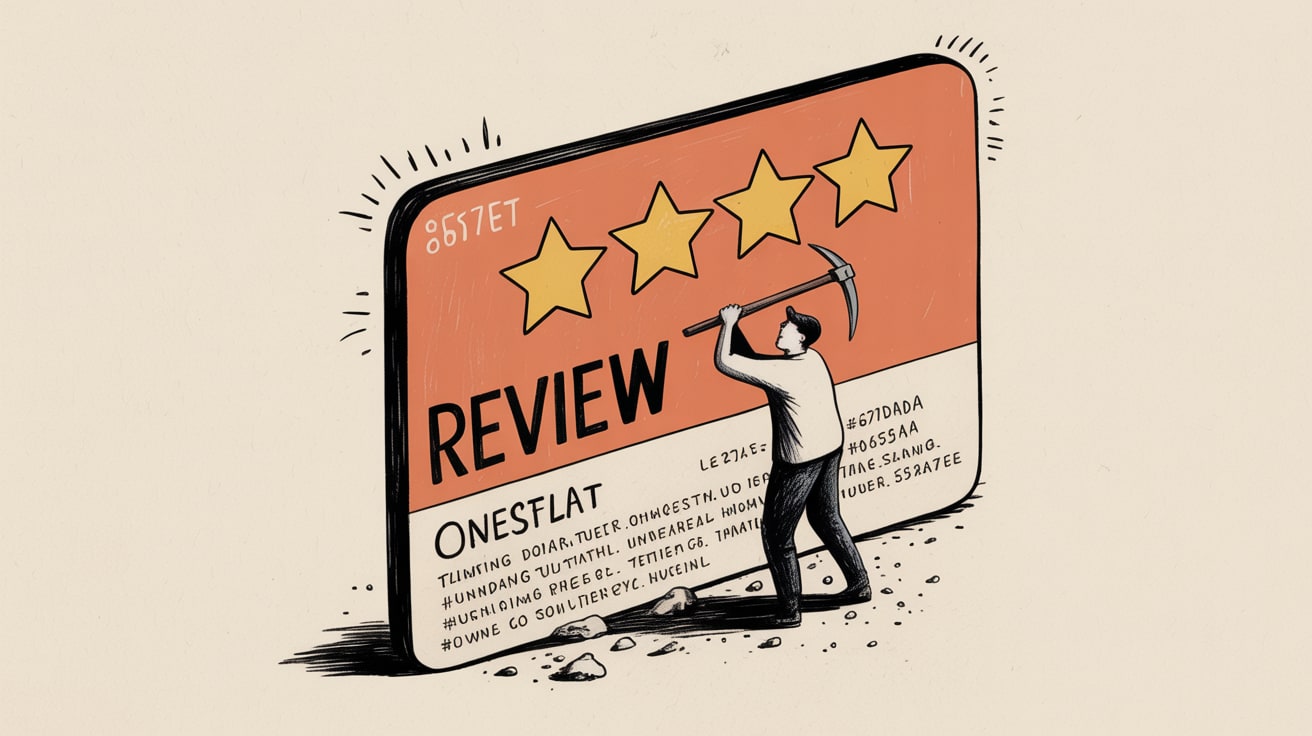
Competitor bad reviews are a goldmine of UX signal. Here's how to turn user frustration data into a defensible design strategy for Southeast Asian brands.
Most competitive UX research stops at screenshots. Someone grabs the competitor’s homepage, drops it into a deck, and the team spends forty minutes debating font choices. That’s not research — that’s decoration. The actual signal lives one layer deeper, in the places where real users have already told you, in plain language, exactly what they hate.
Negative Reviews Are Pre-Segmented Usability Research
Kai Wong’s analysis on UX Collective makes the case plainly: competitor reviews — on app stores, Shopee, Lazada, Google Play, Trustpilot — are structured usability data that most design teams simply ignore. When a Shopee seller tool accumulates 200 one-star reviews complaining that “the bulk upload always crashes on the last step,” that’s not anecdote. That’s a validated friction point, confirmed by volume, with zero recruitment cost on your side.
The analytical move here is to cluster complaints by theme and calculate frequency. If 34% of negative reviews for a competing logistics app mention “can’t find past orders on mobile,” you now have a prioritisation argument that doesn’t rest on gut feel. You have evidence. That evidence belongs in your design brief, your sprint planning, and — critically — your stakeholder presentation when you need budget to fix the same flow in your own product before a competitor does.
For Southeast Asian teams, Google Play reviews in local languages (Bahasa Indonesia, Thai, Vietnamese) are frequently overlooked and disproportionately candid. A quick export via a scraping tool or even manual sampling across 90 days of reviews can surface patterns in under a day.
Translating Complaints Into Specific Design Briefs
The mistake most teams make after gathering this data is staying too abstract. “Users find navigation confusing” is not a design brief. “Users on Android mid-range devices cannot locate the reorder button after checkout completion, resulting in drop-off before the repeat purchase” — that is a design brief.
The framing discipline matters here. Each clustered complaint should be translated into: the user’s goal, the specific step where the friction occurs, and the hypothesised design fix. This three-part structure does two things simultaneously. It gives designers a precise brief to work against, and it gives business stakeholders a direct line from UX investment to revenue outcome — in this case, repeat purchase rate.
This is where the data activation mindset pays off in design contexts. The same logic that governs audience segmentation — identify the behaviour, identify the drop-off, hypothesise the intervention — applies cleanly to UX problem framing. You’re not decorating a screen; you’re closing a conversion gap that a competitor has already proven exists.
Brand Identity as Defensible Positioning, Not Just Aesthetics
The Bon Elliot skincare identity, developed by Little Troop, offers a useful counterpoint to the evidence-first argument above. The studio drew on Kubrick’s compositional symmetry and Irving Penn’s essentialist still-life photography — not as aesthetic whimsy, but as a deliberate signal to a specific audience segment: buyers fatigued by cluttered, maximalist beauty packaging who associate restraint with quality and scientific credibility.
That’s a positioning decision expressed through design. And it’s measurable. In beauty e-commerce, packaging perception directly influences add-to-cart rates — particularly on mobile, where a product thumbnail is often 80×80 pixels and visual hierarchy collapses fast. A clean, high-contrast identity with minimal type survives that compression. A busy one doesn’t.
The broader principle: visual identity choices should be traceable back to audience insight. Which segment are you signalling to? What do they associate with trustworthiness in this category? What does the competitive visual landscape look like, and where is the white space? These are not questions for the mood board phase — they’re strategic inputs that should precede it.
For brands operating across Southeast Asian markets, this analysis gets more complex. Color symbolism varies significantly between markets — white carries mourning associations in parts of the region that it doesn’t carry in Western beauty contexts. A design system built purely on Western minimalism cues can misfire in ways that A/B testing in Singapore won’t catch until you’re running in Vietnam or Thailand.
Turning Evidence Into Stakeholder Buy-In
Here’s the implementation reality that most UX process guides skip: even with strong evidence, design changes require stakeholder alignment, and stakeholders respond to business framing, not UX framing. The competitor review analysis approach is particularly powerful in this context because the data is external and unimpeachable. You’re not citing your own user tests (which stakeholders sometimes dismiss as biased samples) — you’re citing what customers are publicly saying about the market.
Present it as competitive intelligence, not design advocacy. “Our closest competitor has 847 reviews in the last six months citing checkout confusion on mobile — here’s our current checkout flow compared to the friction points they’ve documented” lands differently than “we think the checkout UX could be improved.” One is a business risk conversation. The other is a creative preference conversation.
Timeline consideration: a structured review-mining exercise for three to five competitors, clustered by theme and prioritised by frequency, typically takes one analyst two to three days. The output should be a ranked list of design opportunities, each with a business case, not a visual redesign proposal. The redesign comes after alignment, not before it.
Key Takeaways
- Cluster competitor reviews by complaint theme and calculate frequency — volume transforms anecdote into prioritisation evidence your stakeholders can act on.
- Translate each complaint cluster into a three-part design brief: user goal, friction point, hypothesised fix — this connects UX work directly to conversion outcomes.
- Treat brand identity decisions as audience segmentation decisions — visual choices should be traceable to specific market signals, especially across culturally diverse Southeast Asian markets.
The deeper question this raises: if competitor reviews are this rich a source of validated design signal, what are you doing with your own one-star reviews? Most teams read them defensively, looking for product bugs to escalate. Read them the way a data analyst reads churn data — as a map of the exact moments your product lost the argument. That reframe alone tends to change what gets prioritised in the next sprint.
At grzzly, we work with digital and marketing teams across Southeast Asia to turn exactly this kind of messy, multi-source signal — reviews, behavioural data, platform analytics — into design and campaign decisions that can be defended in a boardroom and measured in a dashboard. If your team is sitting on competitive intelligence you’re not sure how to activate, we’re good at that translation. Let’s talk

Sources

Written by
Mellow GrizzlyTranslating raw data into activated audience segments, predictive models, and decisioning logic. Comfortable at the intersection of the data warehouse and the campaign manager.