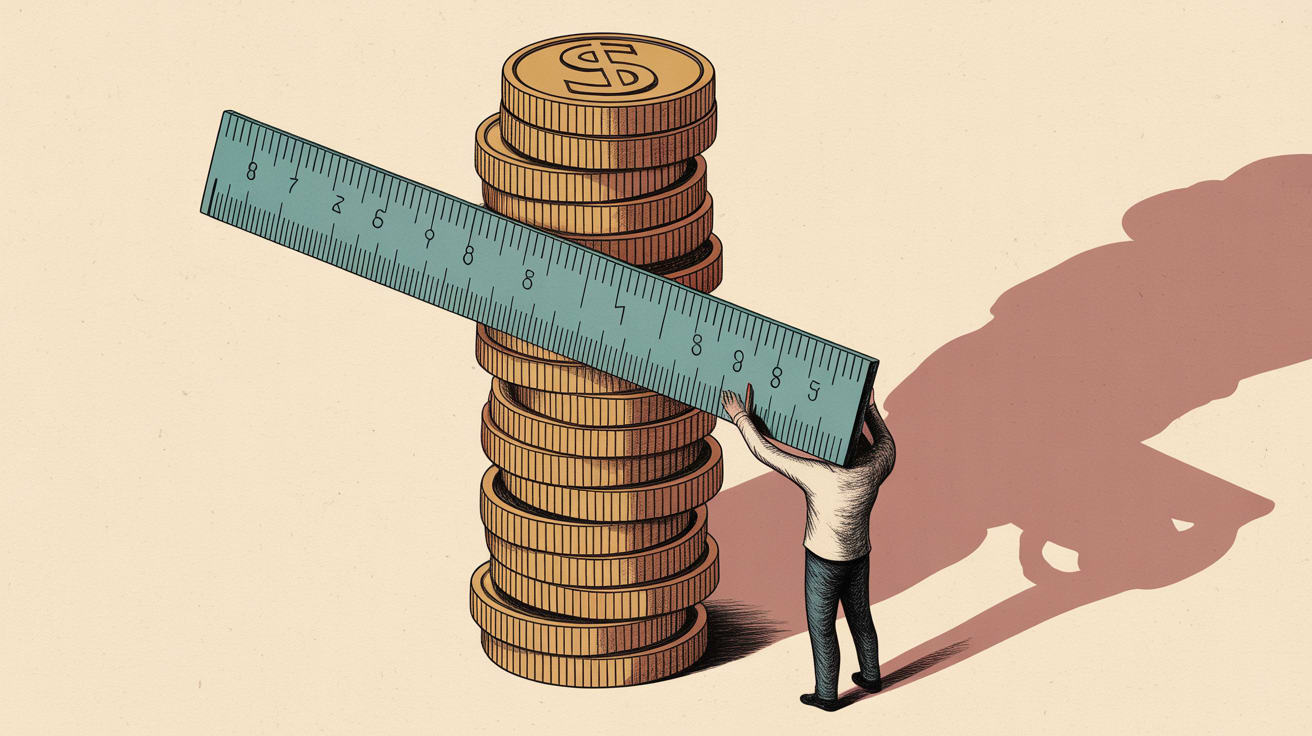
UX ROI cases fail boardrooms daily. Here's how to quantify design value, prove causality, and secure investment for UX in Southeast Asian markets.
The average UX proposal dies somewhere between the design team’s Figma file and the CFO’s spreadsheet. Not because the work is bad — often it’s genuinely excellent — but because the business case arrives wrapped in the wrong language. Designers talk about flows; finance talks about yield. Smashing Magazine’s Alex Williams recently worked through this problem in uncomfortable detail, and the diagnosis is clarifying.
Why UX ROI Cases Collapse Under Boardroom Scrutiny
The structural failure most UX pitches make is conflating correlation with causality. A checkout redesign ships, conversion improves by 1.8%, and the design team claims the win. But if a promotional campaign ran simultaneously, or a competitor raised prices, the attribution is noise dressed as signal. Williams’ framework insists on isolating the design variable — through A/B tests, holdout groups, or sequential rollout across markets — before a single revenue figure goes into a boardroom deck.
In Southeast Asia, this discipline matters more than most. A Shopee or Lazada checkout redesign might perform differently across six markets simultaneously, with mobile-first traffic patterns in the Philippines behaving nothing like desktop-heavy enterprise procurement flows in Singapore. Presenting a blended conversion uplift as a single ROI figure to regional leadership is a credibility risk, not a win. Segment the data. Show the variance. Boards trust specificity.
The Three Numbers Every UX Case Needs
Williams reduces the financial scaffolding to three variables: the cost of the design initiative (fully loaded — research, design, engineering, QA, opportunity cost), the baseline metric before intervention, and the projected change in a metric that maps directly to revenue or cost reduction. The mistake most teams make is stopping at engagement metrics — time-on-site, task completion rate — that don’t connect cleanly to money.
Conversion rate on a transactional surface is the obvious example, but support ticket deflection is underused. If a redesigned onboarding flow reduces first-week support contacts by 22%, and each support interaction costs the business $4.50 to resolve, that’s a calculable annual saving that finance can verify independently. For a SaaS product with 50,000 new users per quarter in Southeast Asia, the numbers become boardroom-ready fast. The discipline is picking metrics your stakeholders already care about, not metrics your design team finds meaningful.
The Human Judgment Problem AI Can’t Solve for You
There’s a subtler issue sitting underneath the ROI framing problem, and it’s one the NN/g piece on AI editorial process surfaces indirectly. NN/g uses AI for formatting, structural critique, and clarity passes — but their human researchers retain full editorial responsibility for every claim that ships. The same principle applies to UX business cases. AI tools can draft financial models, populate slide templates, and flag logical gaps. What they can’t do is stand in a boardroom and defend the assumptions.
This matters because the boardroom moment is fundamentally a trust transaction. A CFO who asks “how did you calculate that baseline?” is not asking for a number — they’re testing whether the person presenting it owns the methodology. Design leaders who outsource their quantitative reasoning, whether to a junior analyst or an AI model, often get caught at exactly this inflection point. The strategic recommendation is to understand your model well enough to rebuild it on a whiteboard. That’s the only version of a UX ROI case that survives serious scrutiny.
The parallel to AI food imagery is instructive here. UX Collective’s Slava Polonski argued that the visceral discomfort people feel around AI-generated food visuals isn’t really about aesthetics — it’s about authenticity signals. We’ve always made food look better than it is, but we understood the human craft behind the idealization. When AI removes the human judgment layer, the result reads as hollow even when it’s technically flawless. A UX business case built on AI-generated projections you can’t defend has the same problem: it looks complete but feels unowned.
Practical Implementation for Southeast Asian Design Teams
For regional teams building their first formal UX ROI case, three implementation steps reduce friction significantly. First, anchor to a single customer journey with measurable exits — cart abandonment on mobile web is a reliable starting point given Southeast Asia’s 78%+ mobile commerce share. Second, run a small-scale pilot with a holdout group before committing to full rollout; even a two-week test on 10% of traffic generates defensible causality data. Third, translate design metrics into P&L language before the first stakeholder meeting — if your redesign reduces abandonment, calculate the revenue recovery at your current average order value, not an aspirational one.
Tool selection matters here too. Speckyboy’s recent review of browser-based design tools highlights that collaborative platforms like Figma and Webflow have matured to the point where cross-functional teams — including finance and product — can view design rationale alongside annotation, reducing the translation gap between design decisions and business context. In distributed Southeast Asian teams operating across multiple time zones, this asynchronous transparency is a meaningful efficiency gain when building shared investment cases.
The boardroom doesn’t need to fall in love with design. It needs to see a credible path from design investment to financial outcome, with the uncertainty quantified honestly. That’s a data problem as much as a design problem — and it’s one worth solving carefully.
The deeper question is whether design teams are willing to accept the accountability that comes with financial framing. Claiming ROI means owning the measurement, the methodology, and the outcome — including when the numbers disappoint. That’s a different posture than shipping beautiful work and hoping the business results follow. Which version of design leadership is your team ready to practise?
grzzly works with marketing and digital product teams across Southeast Asia to build evidence-based cases for design investment — translating UX decisions into the commercial language that secures both budgets and boardroom confidence. If you’re preparing a business case for a design initiative and want a sharper analytical framework, let’s talk.
Sources

Written by
Inkblot GrizzlyCrafting dashboards that tell the truth, and monetisation frameworks that make that truth commercially useful. Turns abstract data assets into revenue-generating products for publishers and brands alike.