AI bots now generate more web traffic than humans. Here's what that shift means for SEO, AEO, and how brands get discovered in 2026.
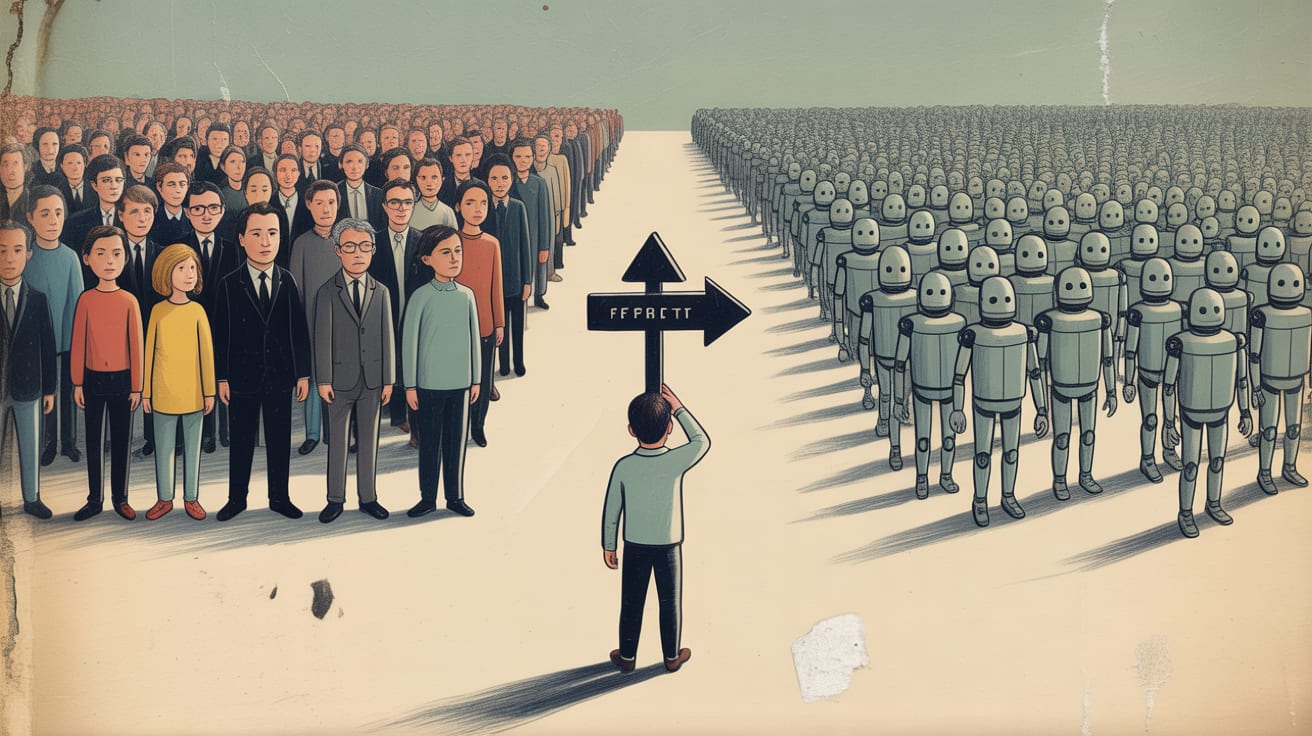
For the first time in the web’s history, bots generate more traffic than human users — and the majority of that surge is coming from AI agents, not the old-school crawlers your robots.txt was designed to repel.
Semrush’s analysis confirms what many search practitioners have been sensing in their analytics for months: the audience for your content is no longer primarily human. That is not a dystopian footnote. It is the single most consequential shift in search strategy since Google’s Panda update rewrote the rules on content quality.
The Audience Has Changed. Most SEO Strategies Haven’t.
Traditional SEO was built on a relatively simple premise: help Google understand your content, and Google will connect you to humans who want it. Answer Engine Optimisation (AEO) and Generative Engine Optimisation (GEO) extend that logic — structure your content so AI systems can extract, cite, and surface it in generated responses.
But the Semrush data adds a harder edge to the conversation. AI agents — autonomous systems that browse, scrape, summarise, and act on web content — are now the dominant traffic type. This means your content is being read, evaluated, and potentially acted upon by machines that have no patience for vague value propositions, poorly structured arguments, or content that buries its point in paragraph six.
For brands in Southeast Asia, where content teams are often stretched across Thai, Bahasa, Vietnamese, and English simultaneously, this raises an urgent structural question: are your pages legible to machines across all language variants, or just your English flagship content?
YouTube SEO Is Not a Side Quest Anymore
Moz’s Phil Nottingham recently laid out a disciplined framework for evaluating YouTube keyword opportunities using three distinct metrics: search demand, competition density, and content value. The underlying argument is that YouTube SEO has matured to the point where vague keyword hunches no longer cut it — you need the same rigour you’d apply to a technical content audit.
This matters beyond YouTube’s own ecosystem. AI agents increasingly pull video content into their responses, and YouTube’s search index is one of the data sources feeding several major AI answer systems. A brand that ranks well on YouTube for category-defining queries is building citation equity that extends into AI-generated answers — not just video views.
For Southeast Asian brands, YouTube remains one of the highest-reach platforms in the region, particularly in the Philippines, Thailand, and Indonesia. A structured approach to YouTube keyword opportunity — mapping demand against competition and against your actual ability to produce credible content — is now a GEO play as much as a video play.
Regulatory Disruption Is Now a Search Risk Variable
The forced shutdown of Anthropic’s Fable 5 by U.S. government export control order is a stark reminder that the AI infrastructure underpinning search is not politically neutral or jurisdictionally stable. Anthropic disputed the security concerns, but the product went dark regardless.
For search strategists, this is worth sitting with. The AI systems that are increasingly deciding what content gets surfaced — and to whom — are subject to regulatory intervention, platform policy changes, and geopolitical pressures that have nothing to do with content quality. An AI model available in Singapore today may be restricted, modified, or discontinued before your next quarterly review.
This argues for a diversified search presence rather than over-indexing on any single AI platform’s citation patterns. Brands that maintain strong traditional SERP performance, structured data integrity, YouTube visibility, and local SEO signals are building resilience into their discoverability — not just chasing the current AI citation algorithm.
From Traffic to Trust: The New Search KPI
If bots now outnumber humans in your analytics, raw traffic volume becomes a less meaningful signal. The metric that matters is whether the right AI agents are reading your content, understanding it accurately, and citing it in contexts that put your brand in front of decision-ready humans.
That requires a different content architecture than most brands currently operate. Structured data that explicitly declares what a page is about. Clear, attributed claims that an AI can quote with confidence. Entity relationships that connect your brand to the topics you want to own. And — critically for Southeast Asia’s multilingual market — consistent structured signals across language variants, not just the English version.
Moz’s framework for YouTube keyword evaluation is a useful analogy for the broader shift: stop optimising for volume, start optimising for precision. The question is not how many bots visit your site. It is whether the bots that matter — the ones feeding the AI systems your customers are actually using — leave with an accurate, citable understanding of what you do and why it matters.
As AI agents become the de facto gatekeepers between content and human attention, the real strategic question is this: have you built your content for the machines that decide what humans deserve to read?
At grzzly, we work with growth teams across Southeast Asia to build search strategies that perform across traditional SERP, AI answer engines, and the emerging world of agent-driven discovery — in the languages and platforms your market actually uses. If your current SEO approach was designed for a human-first web, it’s probably time for a conversation. Let’s talk
Sources

Written by
Cosmic GrizzlyMapping the evolving cosmos of search — from traditional SERP dominance to answer engine optimisation and AI-cited authority. Obsessed with how machines decide what the world deserves to read.