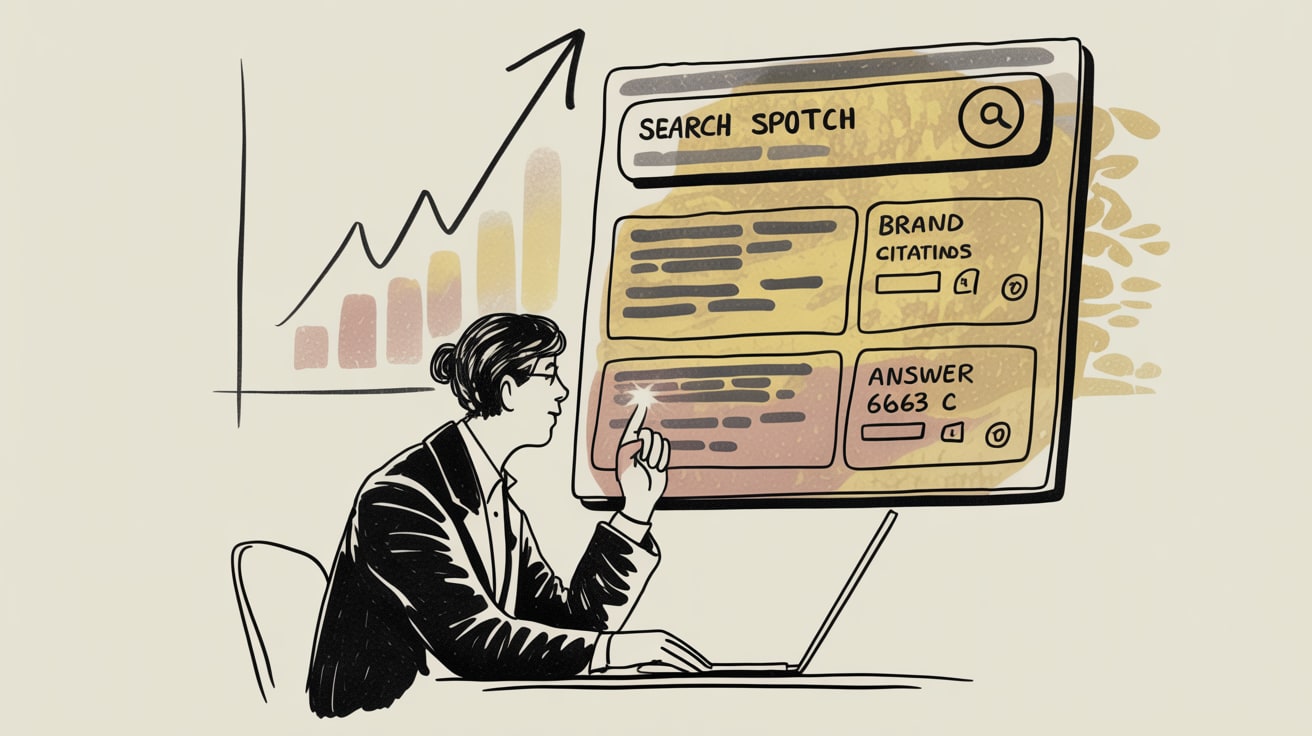
Answer engine optimization is delivering measurable returns in 2026. Real AEO case studies show why AI search visibility is now a core digital marketing strategy.
Fifty-eight percent of marketers now report that visitors referred by AI tools convert at higher rates than traditional organic traffic. That number, from HubSpot’s 2026 State of Marketing report, should reframe how your team allocates content and SEO budget for the rest of the year.
Answer engine optimization — getting your brand cited inside AI-generated responses from ChatGPT, Perplexity, and Gemini — is no longer a forward-looking experiment. It’s producing measurable pipeline outcomes today. The question isn’t whether to invest. It’s whether you’re already behind.
Why AI Search Converts Better Than Traditional Organic
The conversion premium on AI-referred traffic isn’t accidental. When a buyer asks Perplexity which CRM fits a 50-person B2B services team and your brand appears in the answer with a specific, credible rationale, you’re not competing for attention — you’re already the recommendation. The consideration phase has partially collapsed by the time the user reaches your site.
This is structurally different from ranking on page one of Google. Traditional organic puts you in a list; AI answers put you in a sentence. The implicit endorsement is stronger, the context is richer, and the user’s intent is sharper. Brands that understand this are treating AEO not as an SEO sub-discipline but as a trust and positioning play — closer to earned media than keyword optimization.
In SEA markets, where buyers on platforms like Shopee or Grab are already accustomed to algorithmically curated recommendations, the psychological transfer to AI-generated answers is shorter than in Western markets. The trust infrastructure is already there.
What the Case Studies Actually Show
HubSpot’s 2026 research aggregates multiple brand examples across B2B and B2C categories. The consistent pattern: brands that structured content around specific, answerable questions — rather than broad topic clusters — saw disproportionate citation rates inside AI responses.
One recurring tactical finding is the importance of what you might call answer-ready content architecture. This means leading with direct, declarative statements that a language model can lift cleanly as a response, supporting those statements with structured data or FAQ schema, and ensuring that your claimed expertise is corroborated across multiple authoritative external sources — not just on your own domain.
A FinTech comparison site that restructured its product explainer pages around user decision questions (“Which digital wallet has the lowest forex fees in Thailand?”) reported a 34% increase in AI-referred sessions within 90 days, with session-to-lead conversion running at nearly double their organic baseline. The content didn’t change in substance — the structure did.
Building an AEO Strategy That Scales
Most teams approach AEO by auditing existing content for question-based reformatting. That’s necessary but insufficient. The brands seeing durable citation rates are doing three things simultaneously.
First, they’re mapping the specific questions their buyers ask at each stage of the decision journey — not generic category questions, but the precise, comparative, criteria-driven questions that appear in AI prompts. “What’s the best email marketing tool?” is a Google query. “Which email platform handles transactional compliance for neobanks operating across multiple SEA jurisdictions?” is an AI prompt. The specificity gap between these two is where AEO opportunity lives.
Second, they’re building citation credibility through third-party corroboration — analyst mentions, press coverage, review platform presence, and structured data that signals expertise and recency to crawlers feeding AI training sets. A brand that exists only on its own website is a thin citation for an AI model trying to give a confident answer.
Third, they’re modernizing the pipeline infrastructure behind the traffic. There’s limited value in earning AI-referred visitors if your lead capture, CRM routing, and follow-up sequences aren’t built to handle intent-rich, lower-funnel buyers. Asynchronous lead capture — forms, chatbots, and scheduling tools that work outside business hours — becomes critical when AI referrals arrive at unpredictable times across multiple time zones, as is common across SEA markets.
The Competitive Window Is Narrowing
Early-signal thinking suggests the AEO advantage follows the classic diffusion curve: the brands investing now are capturing disproportionate citation share while the consensus is still debating whether AI search is “real” traffic. By the time most marketing planning cycles catch up, the structural positions will be harder to displace.
The parallel to early SEO investment in 2010–2012 is instructive but imperfect. AI answer engines update their knowledge and citation patterns faster than Google’s index historically moved. That cuts both ways — late movers can close gaps more quickly, but early movers can also be displaced if they stop investing. AEO isn’t a set-and-forget content project. It’s an ongoing optimization practice.
For SEA brands specifically, the multilingual dimension adds a layer of complexity that most global AEO playbooks ignore. AI models answering queries in Bahasa Indonesia, Thai, or Filipino draw on different training corpora with different citation density. Brands that invest in authoritative, structured content in local languages — not just translated English — are positioned to own answer space that most competitors haven’t even identified as contested territory.
The signals are early enough to act on, but late enough that hesitation has a cost. The brands that will own AI-referred pipeline in 2027 are making structural content and infrastructure decisions right now.
At grzzly, we work with SEA marketing teams building content and digital strategy that performs where buyers are actually discovering brands — including inside AI-generated answers. If your team is starting to map an AEO approach or wants a sharper read on where your current content stands in AI search, we’d enjoy that conversation. Let’s talk

Sources

Written by
Mystic GrizzlyReading the early signals — in consumer behaviour, platform mechanics, and competitive positioning — before they become the consensus. Writing for practitioners who want to act ahead of the curve.