Alert fatigue isn't just a telecom ops problem — it's a CEP design failure. Here's how to architect signal-first data systems that drive real engagement.
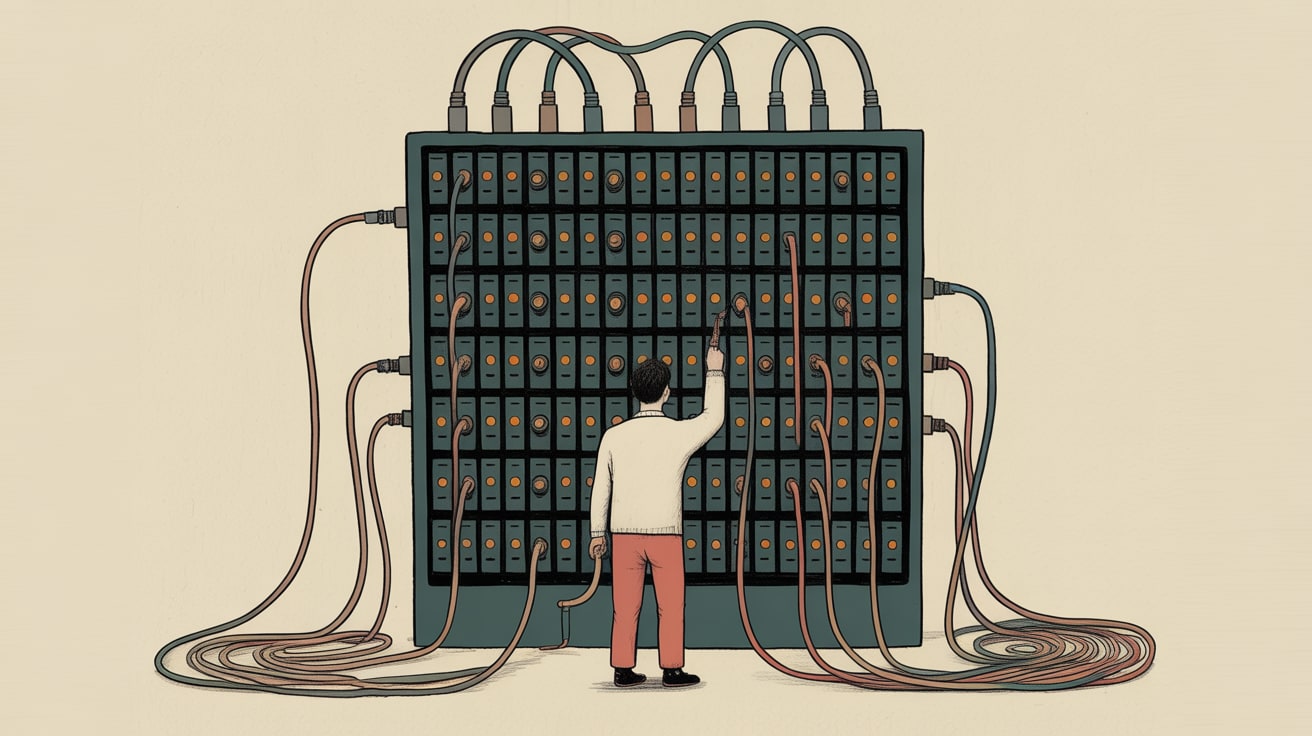
Most customer engagement platforms are, at their core, alarm management systems in disguise. A user abandons a cart — send a push. A loyalty tier lapses — trigger an email. A session goes quiet — fire a retargeting ad. Each signal treated as its own emergency, each channel responding independently. The result is exactly what telecom network operations teams have been living with for a decade: alert fatigue. The signals multiply, the noise overwhelms, and the humans (or models) nominally in control stop trusting any of it.
The fix isn’t better automation. It’s a different architectural philosophy — one that the AIOps world is finally codifying, and that customer engagement teams should be paying close attention to.
Why Alarm-First Architectures Fail at Scale
In telecom AIOps, the traditional model triggers an alarm for every anomalous event — a packet drop, a latency spike, a handover failure. Amir Hossein Karami’s analysis in Towards Data Science describes how large operators are replacing this with an incident-first approach: events are correlated, grouped, and contextualised before any alert is surfaced. The system asks what is actually broken for the customer? rather than what metric crossed a threshold?
The parallel in customer engagement is uncomfortably direct. A user who opens three emails without clicking, abandons a browse session mid-scroll, and ignores a push notification isn’t generating three separate signals — they’re generating one coherent behavioural incident: this message, this channel, or this offer isn’t working for this person right now. Batch-and-blast CEP architectures treat each of those events as isolated triggers. Incident-first CEP architectures treat them as a unified context that should reshape what happens next.
The architectural implication is significant. You need event correlation logic upstream of your campaign layer, not inside it. This means a unified event stream — ideally a real-time data lake or streaming pipeline — where behavioural signals are stitched into sessions, sessions into journeys, and journeys into intent states before any engagement decision is made.
Data Observability Is the Unsexy Prerequisite
Here’s where the architecture gets complicated in practice: your signals are only as reliable as your data pipelines, and most enterprise data stacks are a patchwork of clouds, vendors, and handoffs. Monte Carlo’s recent integration expansion is instructive — the data observability platform is now meeting teams inside Databricks, Salesforce, Microsoft Teams, and Claude in the same workflow, because that’s the reality of how enterprise data actually moves. No single vendor owns the stack; the data does laps.
For CEP teams, this heterogeneity is a hidden failure mode. An audience segment that looks current in your CDP may be based on an event feed that silently degraded three hours ago. A real-time personalisation trigger firing on stale session data isn’t real-time — it’s confidently wrong. Data observability tooling — monitoring for freshness, schema drift, and pipeline anomalies — isn’t a data engineering luxury. It’s a customer experience risk management layer.
The practical implication: before you invest in more sophisticated engagement logic, audit the data contracts between your event sources and your CEP. Define SLAs for data freshness by signal type. Cart abandonment data going stale within 15 minutes is a different risk profile than CRM attribute data going stale within 24 hours. Treat them differently.
Multilingual Complexity Is a Data Architecture Problem Too
Zendesk’s expansion of real-time voice translation across languages in its contact centre product surfaces a dimension of CEP architecture that Southeast Asian teams feel acutely: language isn’t a localisation checkbox, it’s a data routing problem.
In a market like the Philippines, a single customer may interact with a brand in English on desktop, Filipino in a mobile app, and Cebuano over a voice call — sometimes within the same week. Engagement platforms that treat language as a static user attribute will misfire. The architecture needs to capture language-in-context: what language was this session conducted in? What language did the user respond in last time? What’s the likely language for this channel at this time of day?
This is non-trivial to implement. It requires language detection at the event level, not just at the profile level, and it requires your CEP’s decisioning layer to consider language as a real-time signal rather than a stored preference. Brands running multi-language markets across Shopee, LINE, and their own apps are operating essentially multilingual event streams — and most off-the-shelf CEP configurations aren’t built for that out of the box.
The tactical starting point: instrument language detection at the session layer for your top three channels, feed it back as an event attribute, and build your first journey variants around language-in-context rather than profile-level language preference. The performance delta is typically significant.
Building the Incident-First CEP: Where to Start
Translating incident-first logic from telecom AIOps into a CEP framework requires four concrete shifts:
1. Centralise your event stream before your campaign layer. All behavioural signals — app events, web events, transactional events, support interactions — should flow into a single streaming pipeline (Kafka, Kinesis, or equivalent) before any engagement tool sees them. This is your correlation layer.
2. Define your incident types. What combinations of signals constitute a meaningful customer state? Disengagement, purchase intent, frustration, reactivation — define these as named incident types with explicit signal combinations and recency windows. This is your segmentation logic, but built on event patterns rather than static attributes.
3. Build engagement decisions on incident state, not raw events. Your CEP should receive an incident classification — “this customer is showing disengagement signals across email and push over 14 days” — not a raw event stream. The decisioning layer stays clean; the complexity lives upstream.
4. Monitor your signal quality continuously. Implement data observability on your event pipelines with alerting thresholds tuned to the latency requirements of each signal type. A degraded session event feed that’s powering real-time personalisation is a P1 incident for your marketing team, not just your data team.
The customer engagement platforms that will matter in 2027 aren’t the ones with the most channels or the most automation rules. They’re the ones built on data architectures that know the difference between a signal and a symptom — and act on the latter.
Is your CEP stack actually designed to think in incidents, or is it just a faster alarm system?
At grzzly, we spend a lot of time inside exactly this kind of architecture challenge — helping brands across Southeast Asia move from channel-centric campaign logic to context-aware engagement systems that hold up under the real messiness of multilingual, multi-platform, multi-device customer behaviour. If your CEP is generating more noise than signal, that’s a design problem worth solving properly. Let’s talk
Sources

Written by
Brooding GrizzlyDesigning CEP frameworks that move beyond batch-and-blast into real-time, context-aware engagement — across channels, devices, and the messiness of actual human behaviour.