AI-referred traffic is up 600% since 2025. Here's what that means for your organic strategy, email stack, and brand discovery in Southeast Asia.
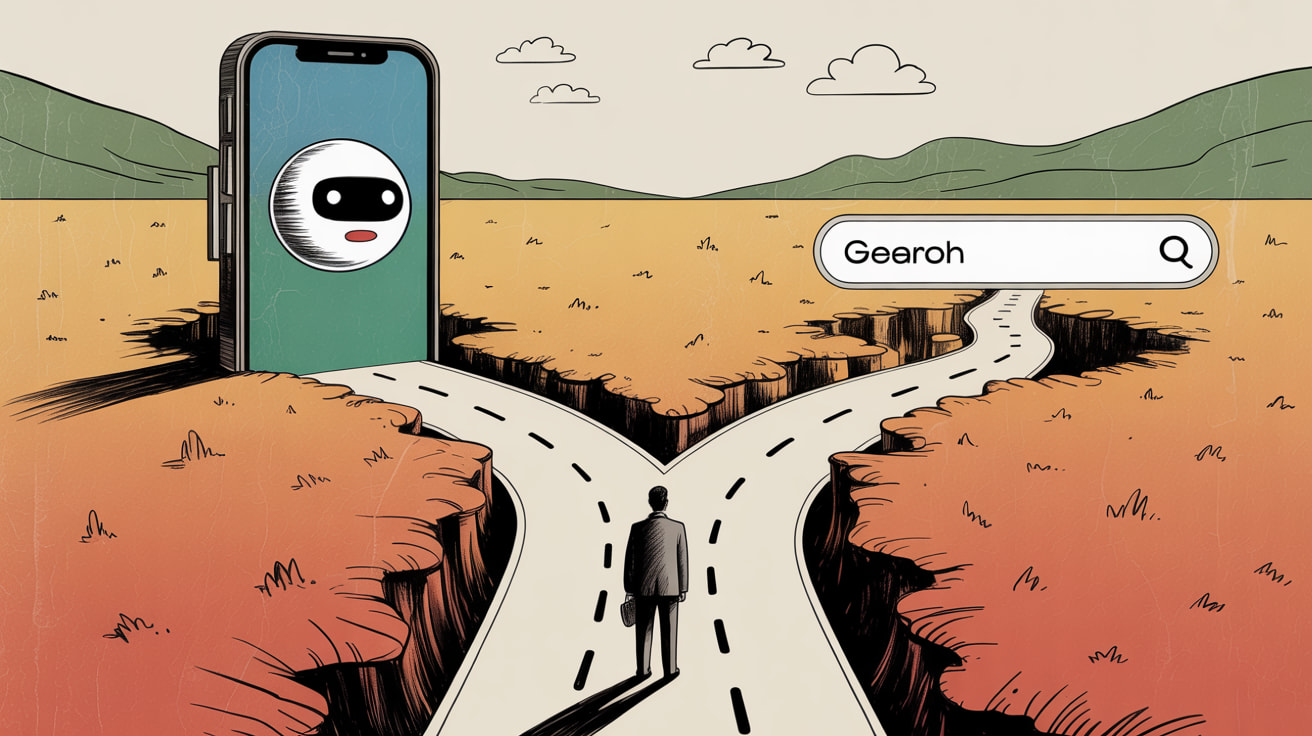
AI-referred traffic has grown 600% since January 2025, according to HubSpot’s analysis of the AEO landscape. That number sounds alarming — until you stop treating it as a threat and start treating it as a map.
The real question isn’t whether AI is killing web traffic. It’s whether your brand is positioned to be found in the places traffic is actually going.
The Traffic Isn’t Dying — It’s Fragmenting
Every few years, the industry eulogises a channel. Email was supposed to be dead by 2015. Blogging by 2020. Organic search is now getting its funeral rites, courtesy of AI Overviews and generative answer engines.
HubSpot’s data tells a more nuanced story: AI Overviews do suppress click-through rates on informational queries — users get the answer without visiting the source. But transactional and brand-specific queries still drive meaningful traffic. The brands losing ground are the ones that built their entire discovery engine on middle-of-funnel informational content and called it an SEO strategy.
For Southeast Asian markets, the fragmentation cuts differently. With a significant portion of users entering the web primarily through super-apps — Grab, Shopee, LINE — brand discovery was never purely Google-dependent to begin with. The shift to AI-mediated search is, in some ways, a more gradual transition here than in markets where Google held near-total dominance.
Answer Engine Optimization Is Real, and the Window Is Still Open
Two platforms — Profound and AthenaHQ — have emerged specifically to help brands track and improve their visibility inside AI-generated answers. This is what’s being called Answer Engine Optimization, or AEO: the practice of structuring content so that LLMs cite your brand when answering relevant queries.
The strategic logic is sound. If a procurement manager in Jakarta asks an AI assistant to recommend a logistics SaaS platform, and your brand doesn’t appear in that answer, you’ve lost a discovery moment that no retargeting campaign can recover.
The practical implication: auditing how your brand currently appears — or doesn’t — in AI-generated answers should be on Q2 roadmaps now, not Q4. Tools like Profound offer share-of-voice metrics inside AI responses; AthenaHQ focuses more on pipeline attribution from AI-referred traffic. Neither is inexpensive, but the alternative is flying blind during a period of structural change in how B2B and considered-purchase B2C decisions get made.
One implementation note: AEO favours brands with dense, well-structured owned content — FAQs, comparison pages, technical documentation. If your content architecture was built for keyword density rather than answer clarity, you’ll need to refactor before these tools move the needle.
Email Is Having a Quiet Renaissance — For Good Reason
While the industry debates AI search, email is doing something quietly remarkable: converting. HubSpot’s 2026 State of Marketing report finds that 93.2% of marketers say personalised or segmented experiences generate more leads and purchases. Nearly half are now using AI to scale that personalisation beyond what manual segmentation could achieve.
This isn’t nostalgia for an old channel. It’s a recognition that email is one of the few owned surfaces where brands can deliver a genuinely personalised experience without being subject to a platform algorithm. In Southeast Asia, where WhatsApp and LINE Business compete for the same attention, email still holds its ground for considered purchases and B2B nurture — particularly among professional audiences in Singapore, Malaysia, and the Philippines.
The AI-driven personalization approaches that are actually working go beyond first-name tokens. Behavioural sequencing — where email content adapts based on which product pages a contact visited, which category they browsed on Shopee, or how they responded to a previous send — is where the measurable lift comes from. One tactical starting point: use AI to build dynamic send-time models segmented by geography and device type, then layer in content variation by purchase stage. Teams running this approach report open-rate improvements in the 15–25% range without increasing list size.
The Automation Layer That Makes All of This Work
Here’s where strategic intent often stalls: the tools exist, the data exists, but the operational infrastructure to connect them doesn’t. Workflow automation is the unglamorous substrate that allows AI personalization, AEO content publishing, and cross-channel orchestration to function at scale.
The choice of automation platform should map to growth stage, not aspiration. Early-stage teams chasing Salesforce-grade complexity before their data is clean enough to support it will spend six months building workflows that fire incorrectly and erode trust in the system. A well-configured mid-tier stack — HubSpot workflows, for instance, paired with a clean CRM — can execute lead scoring, email sequencing, and rep assignment in a single automated flow with a fraction of the implementation overhead.
For Southeast Asian teams specifically, the multi-language requirement adds a layer of complexity most Western automation playbooks ignore. A lead coming in through a Bahasa Indonesia landing page should trigger a different nurture sequence than one from an English-language campaign — not just in language, but in cadence, tone, and offer type. Building that logic into your automation architecture from day one is significantly cheaper than retrofitting it later.
Key Takeaways
- Audit your brand’s presence in AI-generated answers now — AEO share-of-voice is becoming as strategically important as organic search ranking, and the early-mover window is still open.
- AI-driven email personalisation works when it’s behavioural, not cosmetic — move beyond name tokens toward dynamic content that adapts to purchase stage and on-site behaviour.
- Automation infrastructure should match your current data maturity, not your future ambitions — a clean mid-tier stack executed well outperforms an over-engineered one that misfires.
The brands that will navigate this transition well aren’t the ones that picked the right channel — they’re the ones that built a system where each channel reinforces the others. AI search feeds email lists. Email nurture improves AEO content signals. Automation connects the plumbing. The strategic question worth sitting with: if your brand disappeared from every AI-generated answer tomorrow, how much of your pipeline would you actually notice missing?
At grzzly, we work with marketing teams across Southeast Asia who are facing exactly this pressure — figuring out where to place their bets as discovery channels shift underneath them. Whether that’s auditing your AEO exposure, rebuilding email personalisation logic, or stress-testing your automation stack, we’d rather have that conversation early than after the traffic drop shows up in the dashboard. Let’s talk

Sources

Written by
Vintage GrizzlySynthesising channel intelligence, audience psychology, and market context into coherent growth strategies. Old enough to remember the last paradigm shift; sharp enough to see the next one forming.