
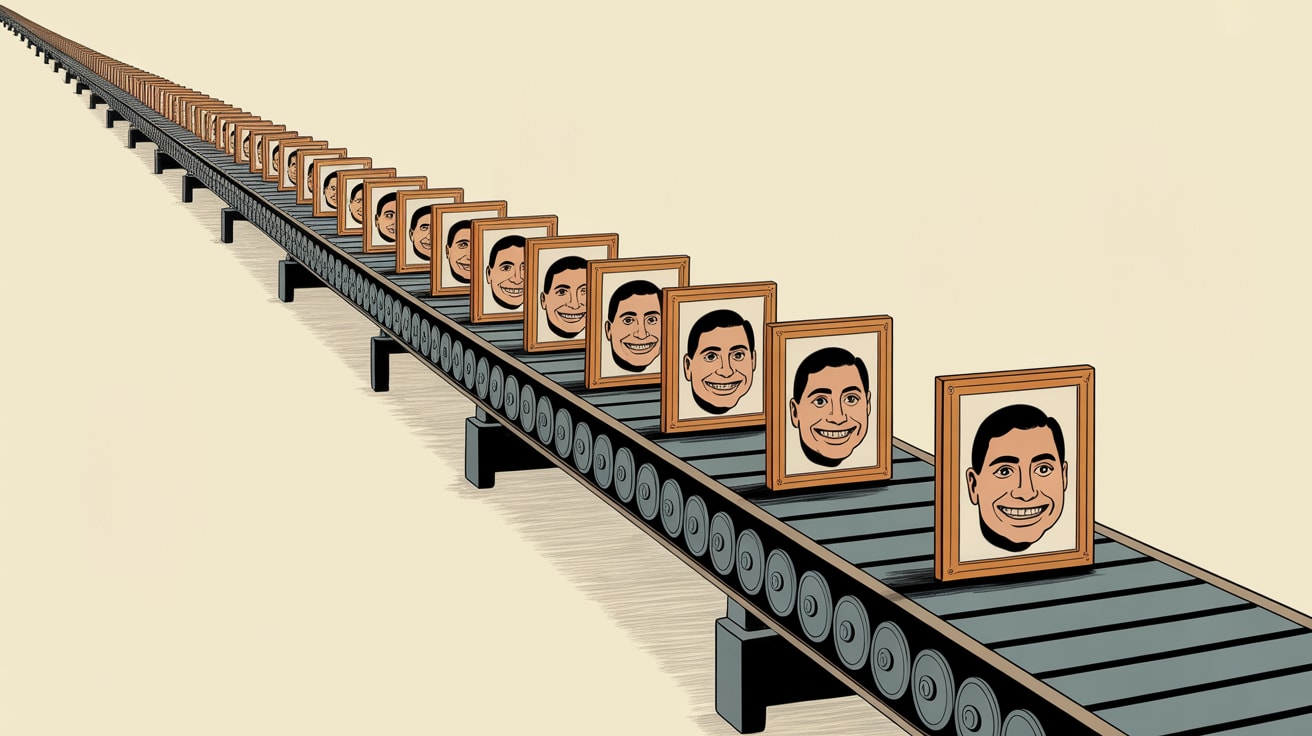
AI-generated UGC ads at $2.50 each sound like a steal — until you understand what you're actually buying. A strategic read for Southeast Asian growth teams.
The algorithm is hungry. Performance marketers running paid social on TikTok, Meta, or Shopee’s ad network know the drill: you need 20–40 ad variations a month to test hooks, surface winners, and rotate out fatigued creatives before your CPMs crater. Traditional UGC production — real creators, real turnarounds — gives you 2–3 videos a month at $150–$500 a clip, with two-to-three week lead times that make rapid iteration feel like trying to sprint in wet cement.
Enter tools like ClipMake.ai, which promises AI-generated UGC-style video ads at $2.50 each. That’s not a typo. The pitch is direct: replace the creator, keep the format, slash the cost. For performance teams drowning in creative debt, it reads like a lifeline. But the signal worth watching here isn’t the price point — it’s what the industry restructuring happening in parallel tells us about where value is actually shifting.
Volume Is a Solved Problem. Strategy Isn’t.
ClipMake and tools like it solve a real operational bottleneck. If your growth loop genuinely requires 30 ad variations a month, automating the production layer isn’t a compromise — it’s table stakes. Martech Zone’s Douglas Karr frames the vendor-client tension well: the question was never whether you could find something cheaper. It’s whether cheaper is actually a better deal once you account for what it costs to fix the work.
AI-generated UGC can produce volume. What it can’t do — yet — is generate the kind of culturally specific, platform-native authenticity that drives the trust signals UGC was invented to replicate. On TikTok Thailand or Instagram Reels in Indonesia, audiences have finely calibrated detectors for content that feels manufactured. An AI avatar speaking scripted Bahasa Indonesia in a Shopee-style unboxing format may clear the format bar while failing the credibility test entirely. The $2.50 creative that gets zero completion rate costs more than the $300 creator who converts.
The Agency Side Is Watching — and Repositioning Fast
The creative production disruption isn’t happening in a vacuum. Serviceplan Group UK’s decision to hire an entire social and creator team from Atomic London — four appointments in one move — is the kind of structural signal that’s easy to misread as a routine talent play. It isn’t. Campaign Live reports this follows “growing client demand for social and creator expertise,” which is agency-speak for: our clients are realising that creator strategy is now a core competency, not a bolt-on.
This mirrors what’s happening at the top of the network stack. Incoming Dentsu CEO Takeshi Sano’s first address to staff, as reported by Campaign Live, centred on client-centricity and execution-led transformation — language that sounds generic until you read it against the backdrop of Dentsu’s sweeping international restructure. The subtext: holding companies are acknowledging that their old delivery model — big strategy, slow production — is being outflanked on both ends. AI tools are eating the production floor; specialist boutiques are eating the strategy brief.
For Southeast Asian marketing directors, the implication is concrete: your agency roster may be quietly becoming obsolete at the edges, even if the centre holds.
What Smart Brands Are Actually Doing With AI Creative
The brands getting this right aren’t choosing between AI production and human creators — they’re using them at different points in the funnel with deliberate intent. A useful mental model: AI-generated variants for top-of-funnel hook testing across Meta and TikTok, where volume and speed matter; creator-produced content for mid-funnel consideration and community-building, where authenticity and cultural specificity do the heavy lifting.
Grab’s marketing team — operating across eight Southeast Asian markets with distinct language and cultural contexts — can’t afford to localise 40 ad variants by hand for every campaign cycle. AI production tooling solves the localisation-at-scale problem. But Grab’s brand trust is built on hyperlocal relevance, which means the creative brief, the cultural QA, and the creator relationships still require human judgment. The $2.50 video earns its place in the stack only when the strategy above it is sound.
The pitfall to avoid: using AI creative volume as a substitute for creative strategy. More variations of a weak concept is still a weak concept — just at higher frequency.
The Vendor Relationship Reframe Every Team Needs
Karr’s point about the prospect who balked at his hourly rate applies directly here. The $2.50 UGC ad and the $300 creator aren’t the same product sold at different prices — they’re different tools with different risk profiles and different appropriate use cases. Conflating them because the output format looks similar is the operational error that leads to wasted test budgets and confused attribution.
The smarter framing for procurement conversations: what is the cost of the decision I’m making, not just the cost of the tool? AI creative production compresses the time-to-test cycle dramatically — that’s genuinely valuable. But if the internal team lacks the creative strategy muscle to brief the AI well, interpret results quickly, and iterate on insights, the tool’s speed advantage evaporates. You end up with fast production of slow decisions.
The agencies that survive the next 18 months aren’t the ones that automate fastest. They’re the ones that get better at the judgment layer — cultural insight, strategic framing, creator relationships — that AI can’t yet replicate. Brands that understand this distinction will know exactly how to build their vendor stack accordingly.
Key Takeaways
- AI UGC tools like ClipMake solve the creative volume problem, but only create value when the creative strategy and cultural brief above them are already strong.
- Agency restructuring at Serviceplan and Dentsu signals that creator strategy and execution-led delivery are becoming non-negotiable client expectations — not premium add-ons.
- In Southeast Asia’s mobile-first, platform-diverse landscape, the right creative stack isn’t AI or human — it’s AI for volume testing, human expertise for cultural credibility and mid-funnel trust.
The more interesting question isn’t whether AI creative will replace UGC creators — it will, for a significant slice of top-of-funnel production. The question is what happens to brand distinctiveness when every competitor has access to the same $2.50 creative infrastructure. If the tool is commoditised, the moat moves upstream entirely: to insight, positioning, and the cultural fluency to brief any tool — human or machine — with genuine specificity. Are your teams building that muscle, or outsourcing it?
At grzzly, we work with Southeast Asian brands navigating exactly this tension — figuring out where AI production creates leverage and where it creates risk, and how to build vendor and agency relationships that hold up under both pressures. If your creative stack is due for a strategic audit, we’d enjoy that conversation. Let’s talk
Sources
- https://www.campaignlive.co.uk/article/%E2%80%9Cclient-centricity-new-mantra%E2%80%9D-new-dentsu-ceo-delivers-first-address-staff/1953234
- https://feed.martech.zone/link/8998/17309801/vender-client-in-real-life
- https://feed.martech.zone/link/8998/17307907/clipmake-ai-ugc-video-ads-replace-creators
- https://www.campaignlive.co.uk/article/serviceplan-group-uk-hires-social-team-atomic-london/1953170

Written by
Mystic GrizzlyReading the early signals — in consumer behaviour, platform mechanics, and competitive positioning — before they become the consensus. Writing for practitioners who want to act ahead of the curve.